
Last updated September 10, 2026
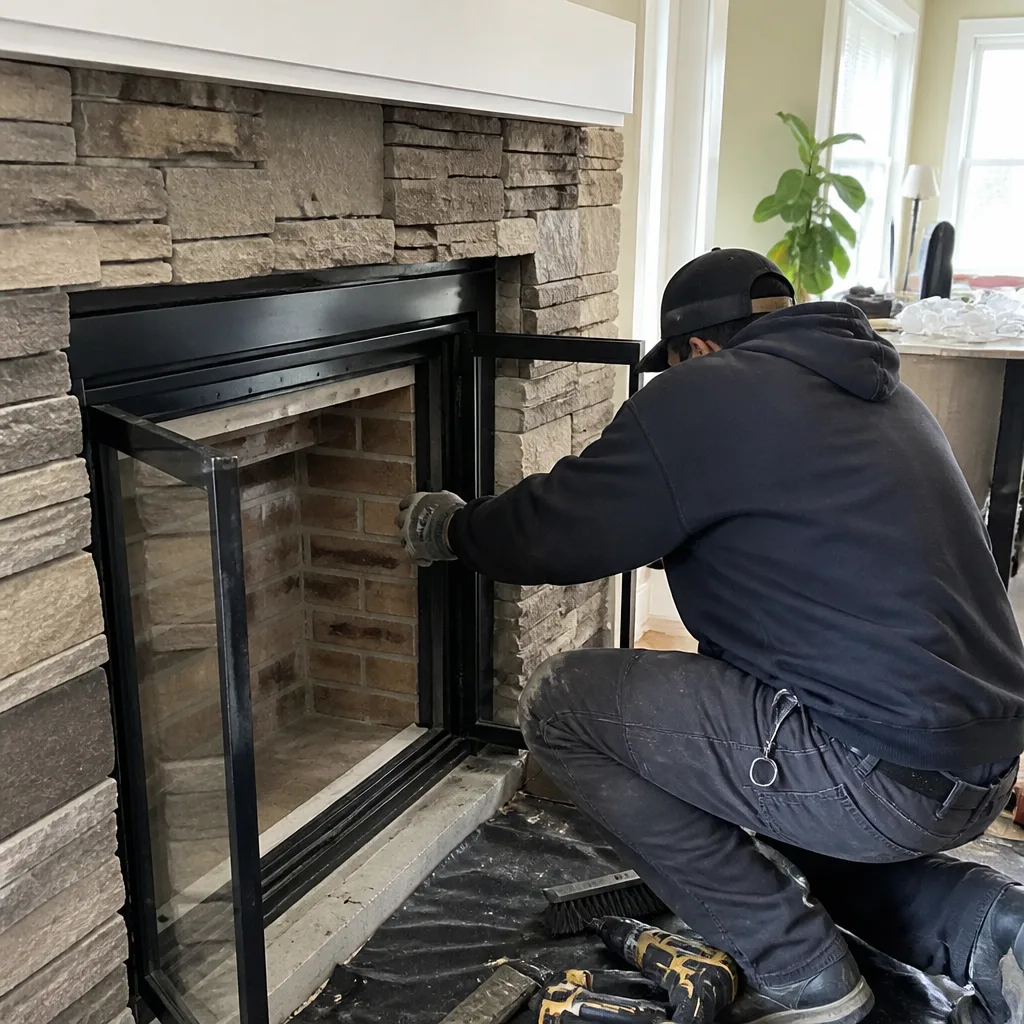
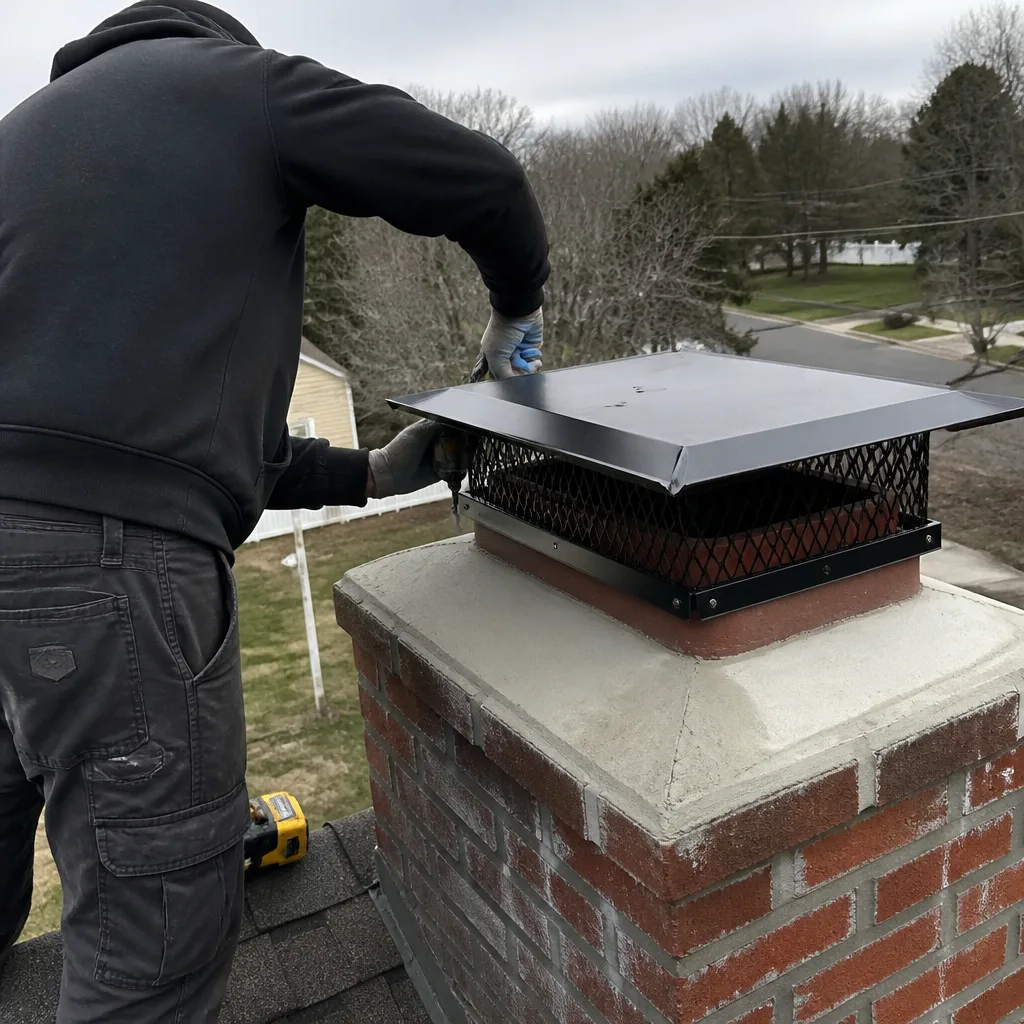
Level 1 sweep and inspection to the NFPA 211 annual standard - flue, crown, cap, and flashing checked and photographed
Chimney sweep logs do not sweep chimneys. They loosen some creosote - which then falls where a brush and vacuum still have to collect it.
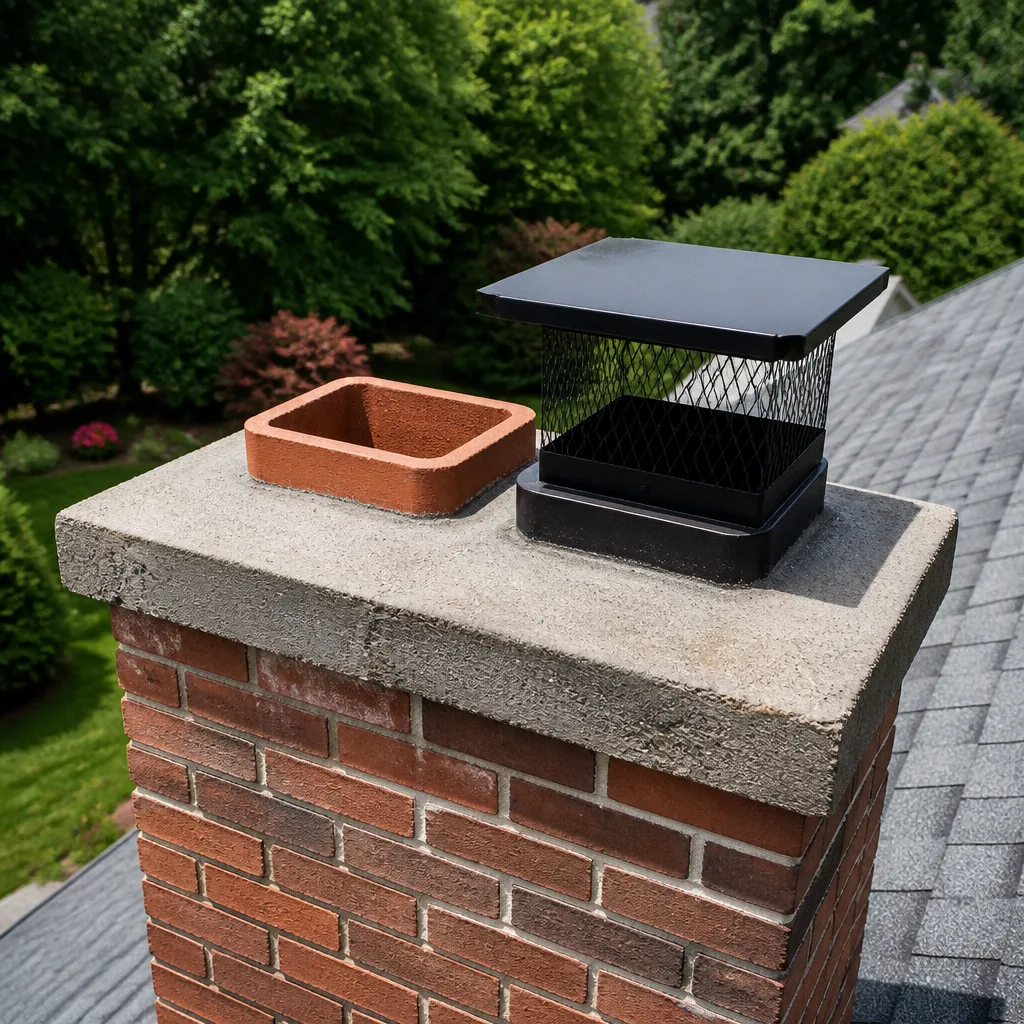
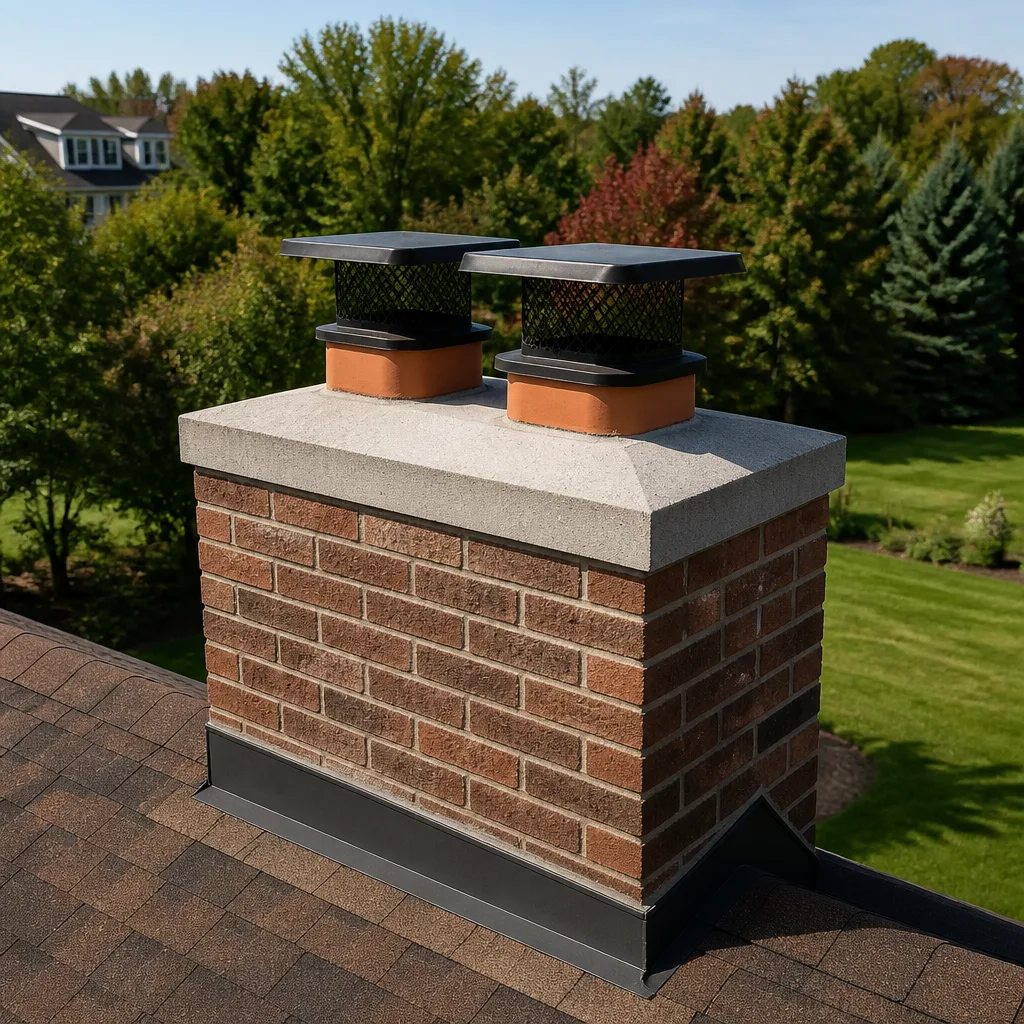
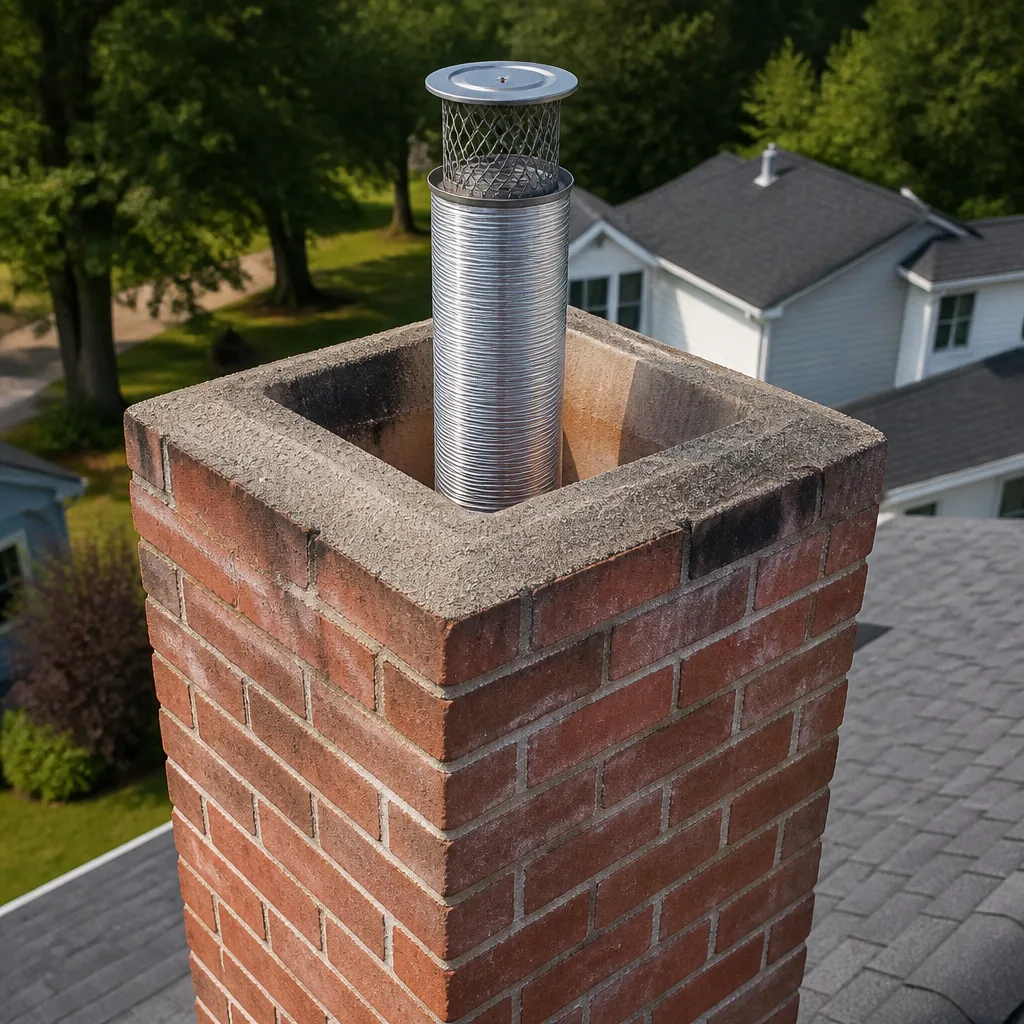
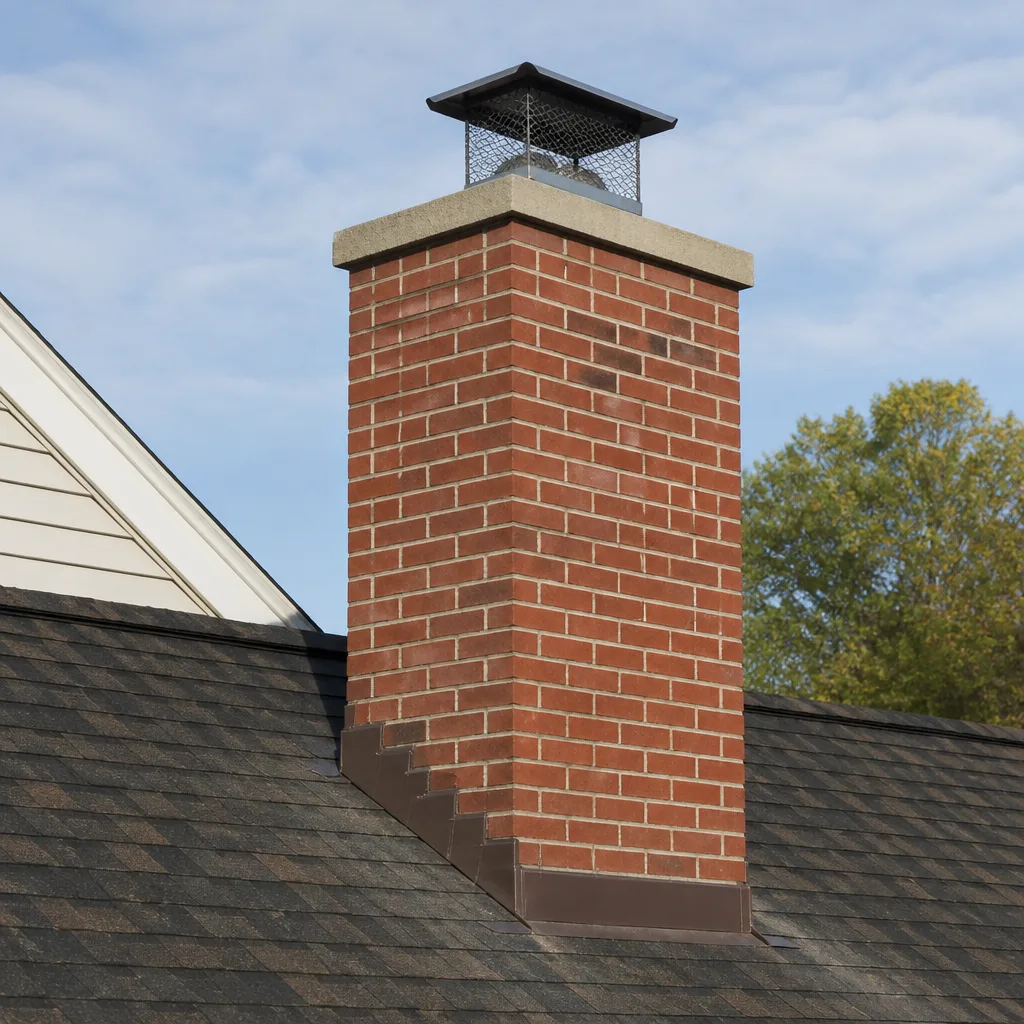
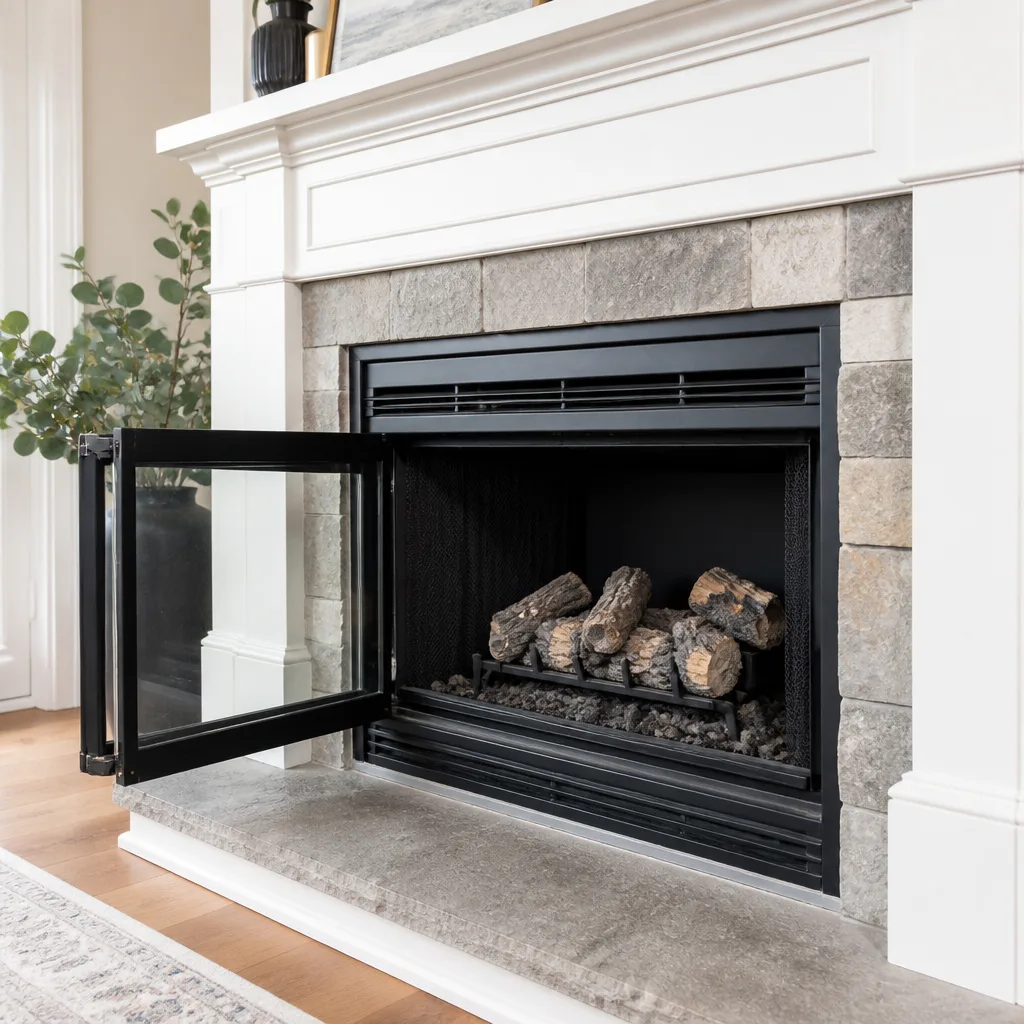
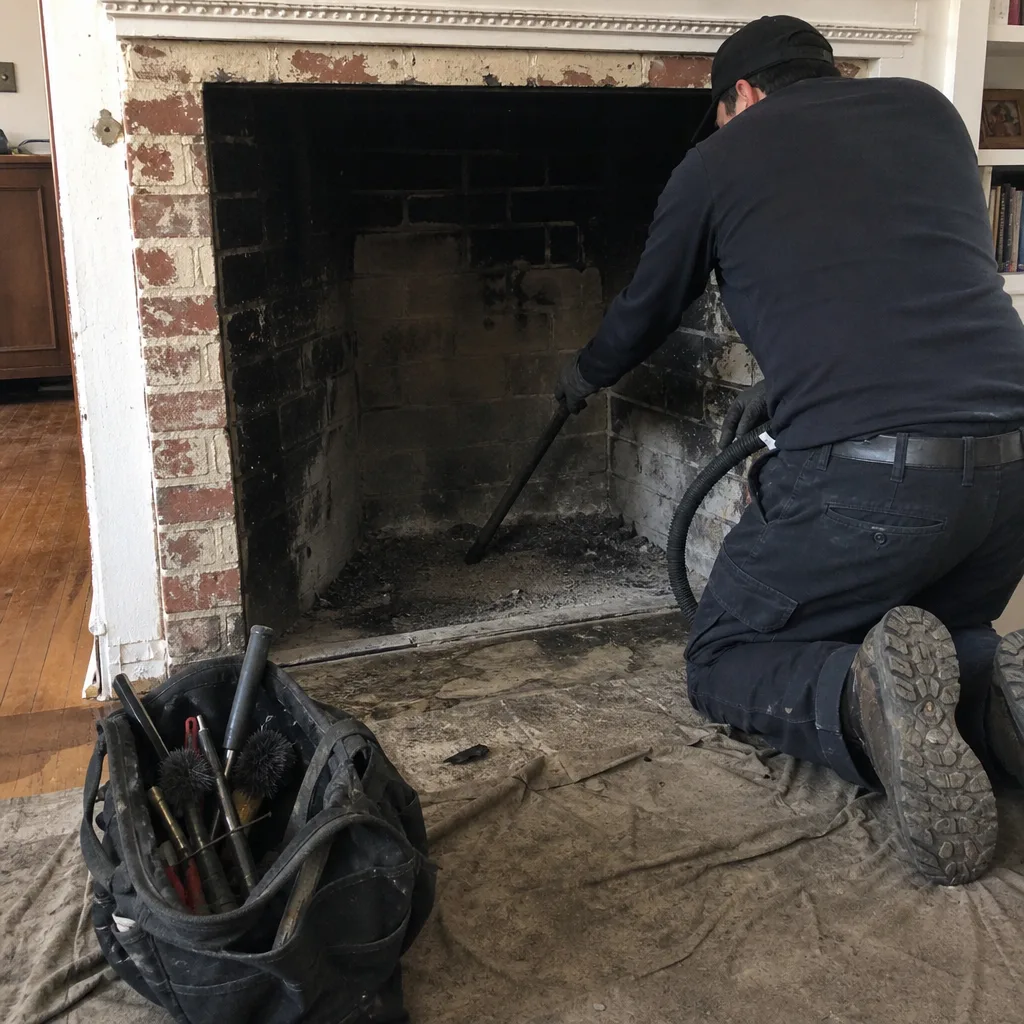 Before
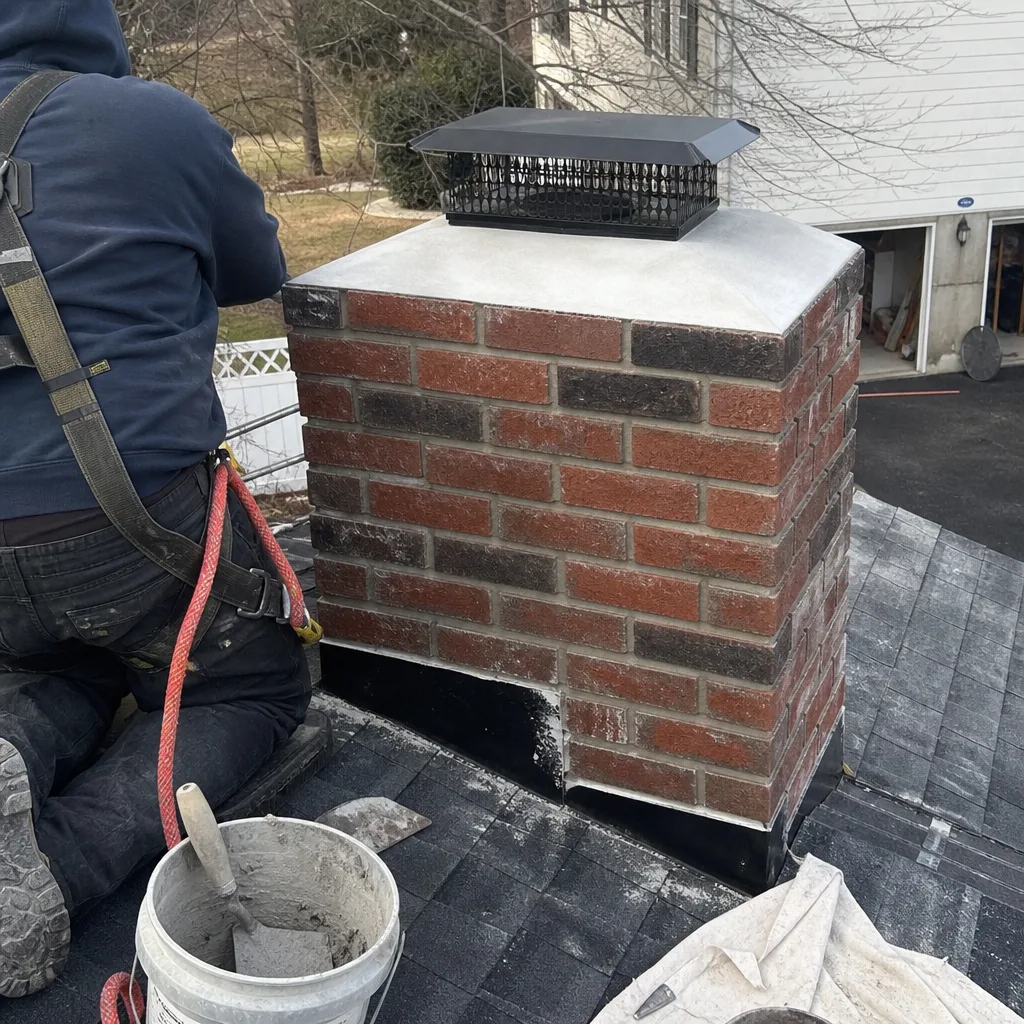 After
After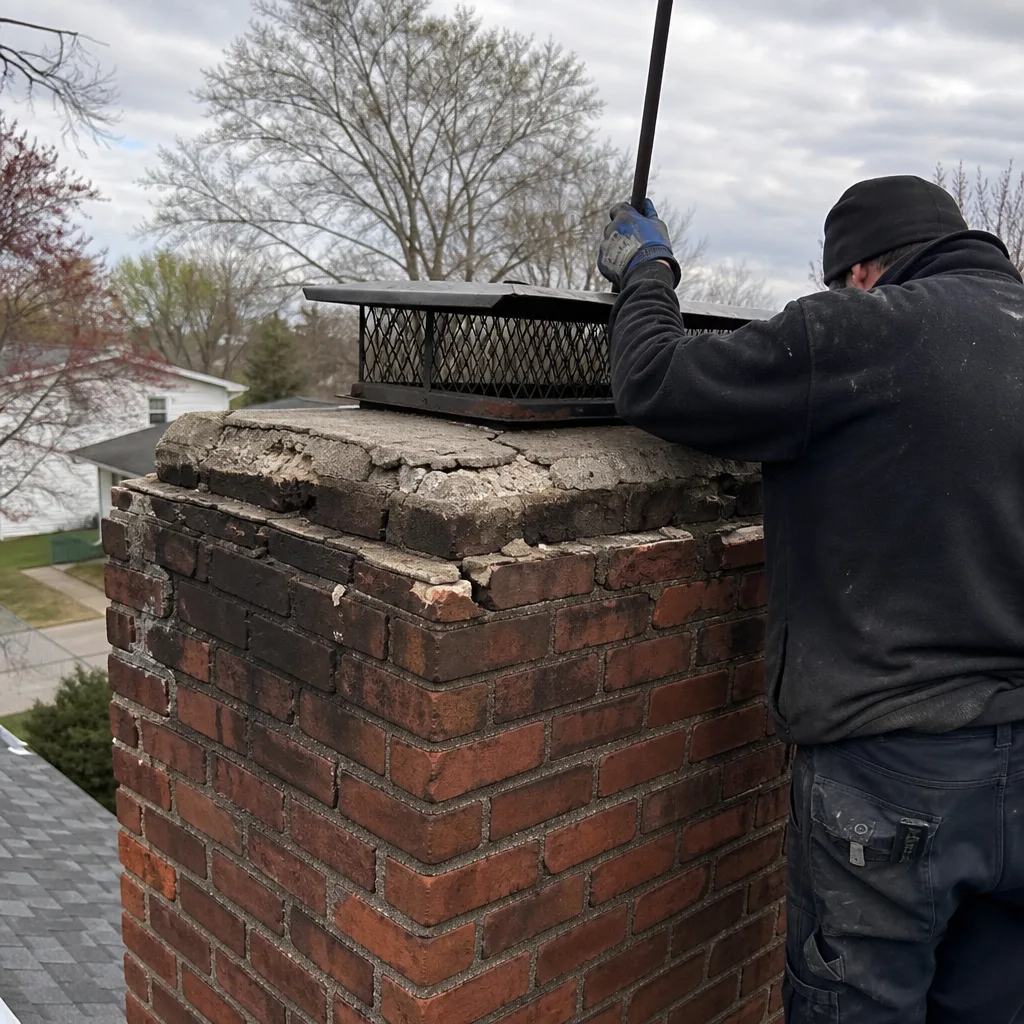 Before
 After
After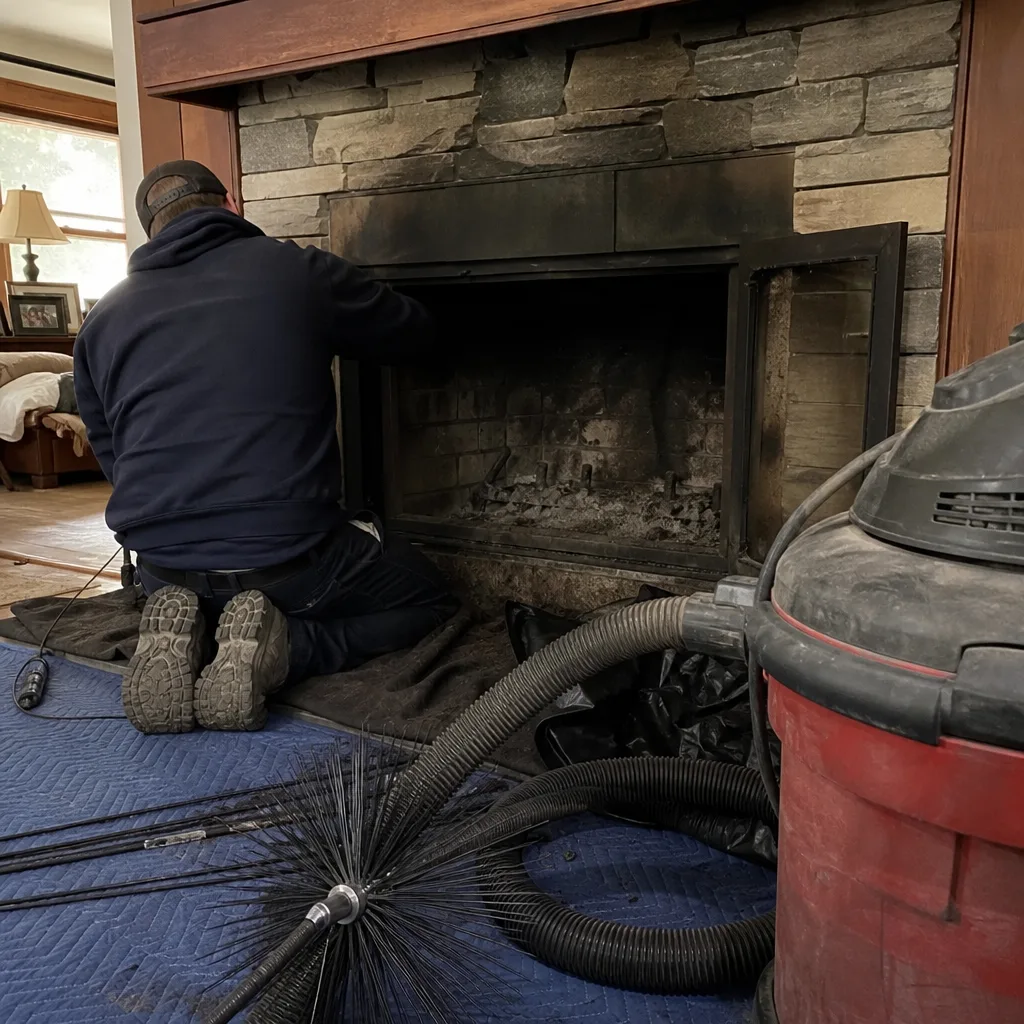 Before
 After
AfterChimney Cleaning Warning Signs: A Brentwood Homeowner’s Reference Guide
Most chimney problems don’t announce themselves. A roof leak soaks your ceiling the night it happens. A furnace failure strands you in February. But a chimney that’s slowly filling with glaze creosote, or a flue liner quietly cracking behind the brick, can sit unnoticed for two full burning seasons before anyone knows there’s a problem. And by then the repair bill has tripled. On Long Island, where freeze-thaw cycles work on masonry all winter and humid summers keep creosote sticky and volatile, Brentwood homeowners especially need to know what they’re looking at. This guide covers every warning sign that matters, what it actually means, and whether you need to act this week or whether it can wait until spring.
Quick Answer
The chimney warning signs that matter most are quiet: a white stain on the exterior brick, a damp smell near the fireplace in summer, a damper that’s suddenly stiff to operate, or a crack in the flue you can only see with a camera. In Brentwood, any one of these means schedule an inspection. Two or more means stop burning until a sweep has looked inside.
Table of Contents
- The White Stain on Your Brick: Efflorescence Is a Water Alarm
- Spalling Brick and Crumbling Crowns: When the Masonry Itself Is Failing
- The Smell Signs: What a Healthy Chimney Smells Like, and What Yours Is Telling You
- The Damper That Got Stiff: A Structural Clue Hiding in Plain Sight
- Draft Problems: Smoke Where It Shouldn’t Be
- Brown Staining on Interior Walls: What That Actually Means
- Creosote by Degree: The Difference Between a Brush Job and a Glaze
- How Long Can You Wait? An Honest Timeline for Every Warning Sign
The White Stain on Your Brick: Efflorescence Is a Water Alarm
Here’s the thing about that chalky white deposit spreading across your chimney’s exterior brick in Brentwood: it’s not mold, it’s not paint failure, and it’s not something you can ignore just because it’s been there for three years. Efflorescence happens when water moves through masonry, dissolves the natural salts inside the brick and mortar, and carries them to the surface. When the water evaporates, the salt stays behind. That white stain is proof that water is actively moving through your chimney right now.
On Long Island this is a bigger deal than in drier parts of the country. Our winters push water into hairline cracks, freeze it, and expand it. Every freeze-thaw cycle widens those cracks a little more. A chimney with visible efflorescence in Brentwood is one that has water getting behind the brick face, and inside of two winters that water turns small cracks into spalled brick faces and mortar joints that need repointing across the whole stack.
- Light, powdery white residue that brushes off easily means water has recently started moving through. Schedule an inspection this season. You have time, but not unlimited time.
- Thick, crusty deposits that don’t brush off mean water has been moving through for a while. The salts have built up layer on layer. You’re likely already looking at interior mortar deterioration.
- White stain plus visible cracks or missing mortar means the movement has already caused damage. This is a don’t-light-a-fire situation until someone has looked at the flue inside.
Efflorescence itself isn’t a fire hazard. But it’s the most reliable early indicator in Brentwood that your chimney crown, your flashing, or your brick face is letting water in. And water is what turns a $300 crown seal job into a $4,000 rebuild. That’s the math worth remembering. For a full read on what’s happening with your chimney’s structure, start with our Chimney Repair in Brentwood page.
Spalling Brick and Crumbling Crowns: When the Masonry Itself Is Failing
Spalling is what happens when the face of a brick pops off. You’ll see brick fragments on the roof, on the ground near the chimney, or a brick that looks like someone took a bite out of it. This isn’t cosmetic. Spalling means water got behind the brick face, froze, and expanded with enough force to shear the brick’s surface away. Once spalling starts, it doesn’t stop on its own. Each winter in Brentwood makes it worse.
The crown, that concrete slab on top of the chimney, is the other place failure shows up first. A healthy crown should overhang the brick by about two inches, directing rain away from the stack. When you see cracks running through the crown, or chunks missing from its edge, water is pouring directly into the masonry below it.
What you’re looking for:
- Brick shards on the roof or at the base of the chimney
- Brick faces that look peeled, with the inner clay showing through
- A crown with visible cracks, especially cracks wider than a nickel
- Missing crown edges or a crown that sits flush with the brick instead of overhanging
We’ve worked Brentwood chimneys since 1999, and the pattern is consistent. Homeowners who catch crown cracks early spend a few hundred dollars sealing them. Homeowners who don’t are looking at a full crown rebuild and top-section masonry repair within five years. Long Island’s winters don’t give second chances on this one. One thing worth knowing: a crown seal or repair under $200 qualifies for the standing $40 discount off any repair over two hundred dollars. But acting before the cracks widen is the bigger savings.
The Smell Signs: What a Healthy Chimney Smells Like, and What Yours Is Telling You
A healthy chimney doesn’t smell like much. Maybe a faint soot note right after a fire, gone by the next morning. That’s it. If your Brentwood home has a fireplace that smells damp in July or like a campfire in August, your chimney is talking to you. It’s just doing it quietly.
The smell signs that matter:
- Campfire smell on humid days, long after the last fire. This is creosote absorbing moisture from the air and off-gassing. It means there’s enough buildup on the flue walls that it’s becoming a sponge. A sweep fixes it. Ignoring it doesn’t.
- Damp, musty, or basement-like smell near the fireplace. Water is getting in somewhere. Could be the crown, could be the flashing, could be the chase top. The smell says moisture has found a path into the chimney system.
- An acrid, chemical smell when the fireplace isn’t in use. Third-degree creosote, the glazed kind, has a sharp, almost tar-like odor. This one is a don’t-burn warning. Glaze creosote is fuel, and a lot of it.
- Animal smell, musk, or the scent of decay. You’ve got something living or dead in the flue. In Brentwood, it’s usually raccoons, squirrels, or birds. A cap keeps them out. A sweep gets them out.
The smell test works because your nose is already trained to notice when something’s off in your house. Trust it. The problem is that most people rationalize it away: it’s an old house, it’s normal, the last owner lived with it. The last owner also left quietly. If your fireplace smells like anything other than nothing, there’s a reason.
The Damper That Got Stiff: A Structural Clue Hiding in Plain Sight
The damper is that metal plate just above the firebox that opens and closes to let smoke up the flue. It should move freely. Not effortlessly, but smoothly, with the same resistance in July that it had in January. When a Brentwood homeowner tells us the damper “suddenly got hard to open,” we don’t hear a minor inconvenience. We hear a structural clue.
Dampers get stiff for a few reasons, and none of them fix themselves:
- Creosote has built up on the damper track and hinge. The damper is the coolest spot in the system when smoke passes through, so creosote condenses there first. A sticky damper is often the first sign of a bigger buildup further up.
- The metal has warped from heat or rust. A damper that’s been fighting moisture for a decade will warp and bind. This is a sign the chimney needs work, not that the damper needs oil.
- The chimney’s shifting. In rare but real cases, a suddenly stiff damper means the chimney stack has moved slightly, torquing the damper frame. With Long Island’s clay soils and freeze-thaw cycles, this happens in Brentwood more than people want to believe.
“It’s just a little hard to open” is the most expensive sentence we hear all season. Because a stuck damper that gets left alone eventually breaks, and a broken damper sends conditioned air up the flue all winter while your furnace fights to keep up. By then you’re paying on your heating bill what the repair would have cost. Watch the damper. It knows things.
Draft Problems: Smoke Where It Shouldn’t Be
Smoke in the living room isn’t a personality quirk of an old fireplace. It’s a system telling you something’s wrong. The flue’s whole job is to carry smoke up and out. When smoke rolls back into the room, the flue isn’t doing its job. The only question is why.
Common draft problems and what they mean:
- Smoke only when you first light the fire. Cold air sits in the flue and blocks the updraft until the chimney warms. This is normal in older, uninsulated chimneys, especially on cold Brentwood mornings. Prime the flue by holding a lit piece of newspaper up near the open damper for thirty seconds before you start the fire.
- Smoke throughout the whole burn. You’ve got a restriction: creosote buildup, a partial blockage, a nesting animal, or a flue tile that’s shifted. Stop burning until it’s been looked at.
- Downstairs fireplace drafts fine, upstairs one doesn’t. Competing drafts in a multi-story house. It’s common enough, and usually fixable with a top-sealing damper or height extension on the flue.
- Smoke smell in rooms far from the fireplace. The flue is cracked or the damper isn’t sealing, and smoke is routing into wall cavities or the duct system. This one’s urgent.
A smoke complaint is one of the calls we can often diagnose over the phone, because the details usually point to the cause. Describe exactly when the smoke appears and where it goes, and a sweep who’s been doing this since 1999 can narrow it down before he’s even on the ladder. That’s how a Chimney Cleaning & Sweep in Brentwood visit starts: a conversation about what the chimney’s been doing, not a clipboard and an estimate for things you didn’t ask about.
Brown Staining on Interior Walls: What That Actually Means
Brown stains on the wall around your fireplace, or on the ceiling near the chimney chase, are not smoke damage from the fire. They’re moisture carrying creosote and soot through the wall structure. In plain English: the chimney is leaking inside your house, and what’s leaking is flammable.
Here’s what the stain pattern tells you:
- Stains directly on the wall face around the fireplace opening. Heat and moisture from the firebox are penetrating the surrounding masonry. You may have missing firebrick, cracked mortar in the firebox, or insufficient clearance to combustible material.
- Stains above the fireplace on the same wall. The flue is leaking into the chase. With prefab fireplaces, the stainless flue pipe may be rusted through. With masonry, the clay tile liner may be cracked. Either way, smoke and heat are now where they don’t belong.
- Stains on the ceiling or wall in a room above the fireplace. The leak has moved up a level. This is the most serious interior sign you can get.
Brown staining near a chimney is a don’t-burn warning sign, full stop. The stain proves that the smoke path and the living space are no longer fully separate. The distance between a faint stain and a house fire is a cracked flue tile and one hot fire. Don’t wait on this one in Brentwood. A camera inspection of the flue interior, which is standard on every service call, will show exactly what’s happening inside.
Creosote by Degree: The Difference Between a Brush Job and a Glaze
Creosote isn’t one substance. It’s a whole family of deposits that form when wood smoke hits the cooler walls of the flue. The type of creosote in your chimney determines how urgent the situation is and what it’ll cost to fix. In Brentwood, with our humid summers, creosote never fully dries out. That makes it more corrosive and more volatile than the same deposit would be in, say, Utah.
Here’s the scale we use, and it’s the same one Wendell will walk you through after a sweep:
- First-degree creosote: the brush job. Fine, powdery, dark brown or black. It coats the flue but hasn’t built up into anything structural. A standard sweeping removes it completely. This is what you should be seeing every year if you burn dry, seasoned hardwood.
- Second-degree creosote: the fluffy stuff. Crumbly, cornflake-like deposits that look like burnt marshmallow. It’s got air pockets and rough texture, and it ignites more readily than first-degree. It also catches embers like a screen. Brush it out and keep an eye on things.
- Third-degree creosote: the glaze. Shiny, hard, tar-like coating that’s been baked repeatedly. It looks like black glass. This is fuel, concentrated and dried, and when it ignites it burns hot enough to crack clay liners. A standard brush won’t remove it. Glaze creosote is one of the situations where a product like HeatShield or a chemical treatment works after mechanical removal, but this is professional territory. The chimney is now a hazard.
Our rule in the field: first-degree is a brush job, third-degree is a glaze. Catch it early. Once the glaze is there, you’re not sweeping your way out of it. That’s not a scare tactic, it’s just what the inside of the flue looks like. We’ll show you the camera footage and a plain-English verdict, every time, no exceptions.
How Long Can You Wait? An Honest Timeline for Every Warning Sign
Not everything is an emergency. A homeowner who’s told every crack is urgent learns to ignore all of them. That’s worse than the opposite. So here’s the honest version, based on what we see in Brentwood homes every season.
Schedule something soon: you’ve got months, not years
- Light efflorescence with no visible cracks. Book a sweep and crown inspection before next winter. Water’s moving, but nothing’s caved in yet.
- Campfire smell in summer. Book a sweep before burning season. The creosote’s absorbing moisture, but it’s not doing anything dangerous yet.
- A damper that’s slightly stiff. Fix it before you forget about it. It’ll be worse next time you notice it.
Stop burning until this is looked at: don’t light another fire
- Any brown staining on interior walls or ceilings. This one’s not negotiable. The flue path is compromised.
- Third-degree glaze creosote. Stop burning. Book the sweep and the follow-up treatment.
- Spalling brick with visible fragments falling. The chimney’s failing. Fire inside it isn’t safe.
- Smoke in the house throughout the burn. A blocked or cracked flue is sending smoke where it shouldn’t go. Carbon monoxide rides along with smoke.
Common Mistakes to Avoid
- Painting over efflorescence. The stain disappears for one season. The water keeps moving. Then the paint traps the moisture and accelerates the spalling. We see this on Brentwood homes every year, and it always costs more than sealing the brick would have.
- Treating a smoke problem with “burn hotter fires.” It sometimes works for a cold flue. It never works for a blocked one. If you find yourself saying “it only smokes a little,” book the inspection.
- Ignoring a smell because it’s “an old house.” Old houses had working chimneys. That’s why they’re still standing. A smell means something changed.
- Waiting until fall to think about the chimney. Every sweep on Long Island is booked solid by October. Spring and summer is when you get your pick of appointments, and the off-season discount season is real. Chimneys break in the off-season too.
- Assuming a roof leak is the chimney’s fault, or vice versa. They mimic each other. A good sweep will look at both and tell you plainly which one’s the problem, not sell you on whichever one he’s set up to fix that week.
- Buying a chimney cap online and expecting it to fit. Flue dimensions vary, and Brentwood’s wind patterns mean caps need to be secured properly. A cap that blows off in a nor’easter is a missile. Measure once, call a professional once.
- Cleaning the firebox and calling that a sweep. The firebox is where you see the ash. The flue is where the chimney fire starts. Not the same thing.
When to Call a Professional
Call when the warning signs are quiet but persistent: a summer smell, a winter stain, a damper that’s stiff, or smoke that only comes when the wind’s from the east. Call before burning season so you’re not competing with every other Brentwood homeowner who waited. Call when you’d rather know than guess. Top Hat Chimney offers free estimates in Brentwood. Call (934) 935-3847 and you’ll get a live person on the line, any hour, day or night. It may well be Wendell himself, and he’ll tell you straight whether the chimney needs attention this year or can safely wait. Either way, you’ll know. Top Hat Chimney home has the full picture of what we do and who we are.
Frequently Asked Questions
A standard chimney cleaning and inspection in Brentwood runs between $180 and $340 for most single-story masonry chimneys, with the inspection itself included in the sweep. Homes with taller chimneys, steep roof pitches, or second-story access typically add $40 to $80. Top Hat Chimney never charges a trip fee for calls inside our service county. Our team provides exact pricing before any work begins, so the number you hear on the phone is the number on the invoice. Call (934) 935-3847 for a firm quote.
A cleaning removes creosote, soot, and debris from the flue; an inspection evaluates the condition of the flue liner, crown, masonry, flashing, and damper. In practice, a professional Brentwood sweep does both at once: the cleaning is done first, then the camera goes up the flue to inspect what’s underneath the buildup. The camera footage and a plain-English verdict come with every Top Hat Chimney job, every time, no exceptions.
Once a year, burn or no burn. That’s the answer for Brentwood and for the rest of Suffolk County. Burning softwoods, burning green wood, or burning more than three cords a season can mean sweeping every six months. The reason we say annual even when you don’t burn much is that chimney damage happens in the off-season too: water entry, animal nests, liner deterioration, all proceed whether or not there’s a fire. A yearly look catches things while they’re small.
Most Brentwood chimneys survive one skipped year without incident. Two skipped years is where the math gets ugly: creosote builds to second-degree thickness, moisture damages the liner, and the cost of remediation jumps from a sweep to a repair. The danger isn’t one missed cleaning. It’s the habit of missing, because by the third year, the flue’s no longer safe and someone has to say so. Honest answer: skip once, forgive yourself. Skip twice, schedule the sweep.
A cracked or missing liner is real, and in Brentwood’s climate it’s a legitimate safety issue. But you should never take a liner recommendation on faith. The proof is in the camera footage. A cracked clay tile is visible. A rusted-through metal liner is visible. If a sweep recommends a liner but won’t show you the damage, get a second opinion. If he shows you the footage, and you can see the daylight through the crack, that’s not an upsell. That’s a roof already leaking smoke into your attic. We’ll walk you through the footage on every call, and we’ll always tell you when it can safely wait. For an honest second look at any written estimate, Top Hat Chimney does free second opinions in Brentwood any time.
You can brush a lightly soiled chimney yourself if you’re comfortable on a roof and the flue only has first-degree buildup. But the cleaning isn’t really the point. The inspection is. What you can’t do from the roof is see inside the flue at the level a camera sees. You can’t evaluate liner cracks, you can’t judge creosote degree, and you can’t safely assess a chase leak from outside. In Brentwood, with our roof pitches and freeze-thaw weather, the professional visit pays for itself in caught problems. Do the easy part yourself if you like. Let a trained sweep do the looking. If you’re using brushes from the top, work with a partner and a harness; chimney falls are a leading cause of preventable household injury, and no saved sweep cost is worth a shattered hip.
The Bottom Line
Quiet problems are the ones that cost the most. That’s the whole guide, really. The white stain, the summer smell, the stiff damper, the faint brown outline on the wall: none of them scream. They whisper. And they whisper for one or two full burning seasons before anything dramatic happens, which is why every Brentwood homeowner who’s been at this a while knows to pay attention early. Once a year, burn or no burn. Watch the damper. Don’t ignore the smell. And when something’s off, call someone local who’ll show you the camera footage and tell you plainly what needs doing, and what doesn’t. See How to Hire a Chimney Cleaning Contractor in Brentwood: A Step-by-Step Guide for what to ask. Call (934) 935-3847 for a free estimate. Wendell’s been at this since 1999, and he’ll give you the honest word on your chimney. He’ll also tell you when the answer is “nothing to worry about yet,” which is a phrase you’ll hear from him more than you’d expect.
Written by Wendell Pike, Owner at Top Hat Chimney, serving Brentwood since 1999.