
Last updated September 10, 2026
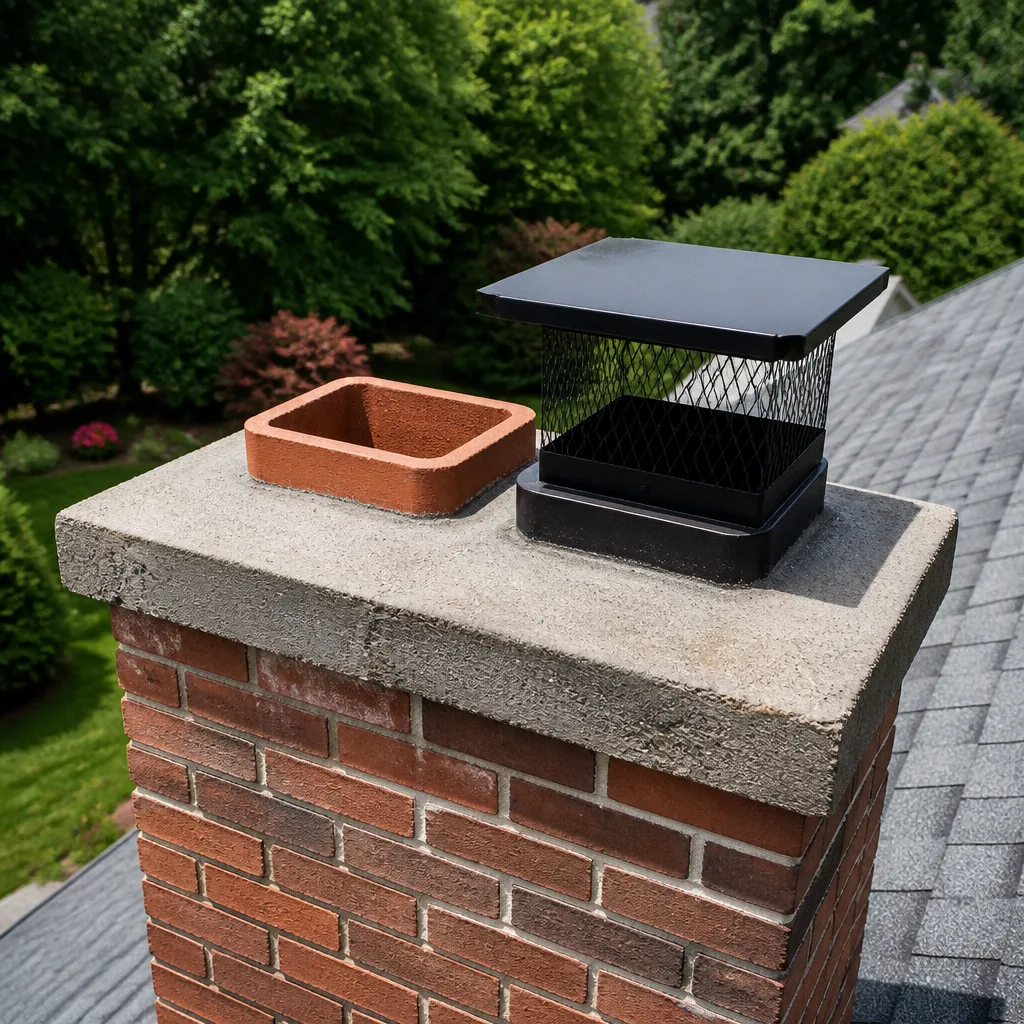
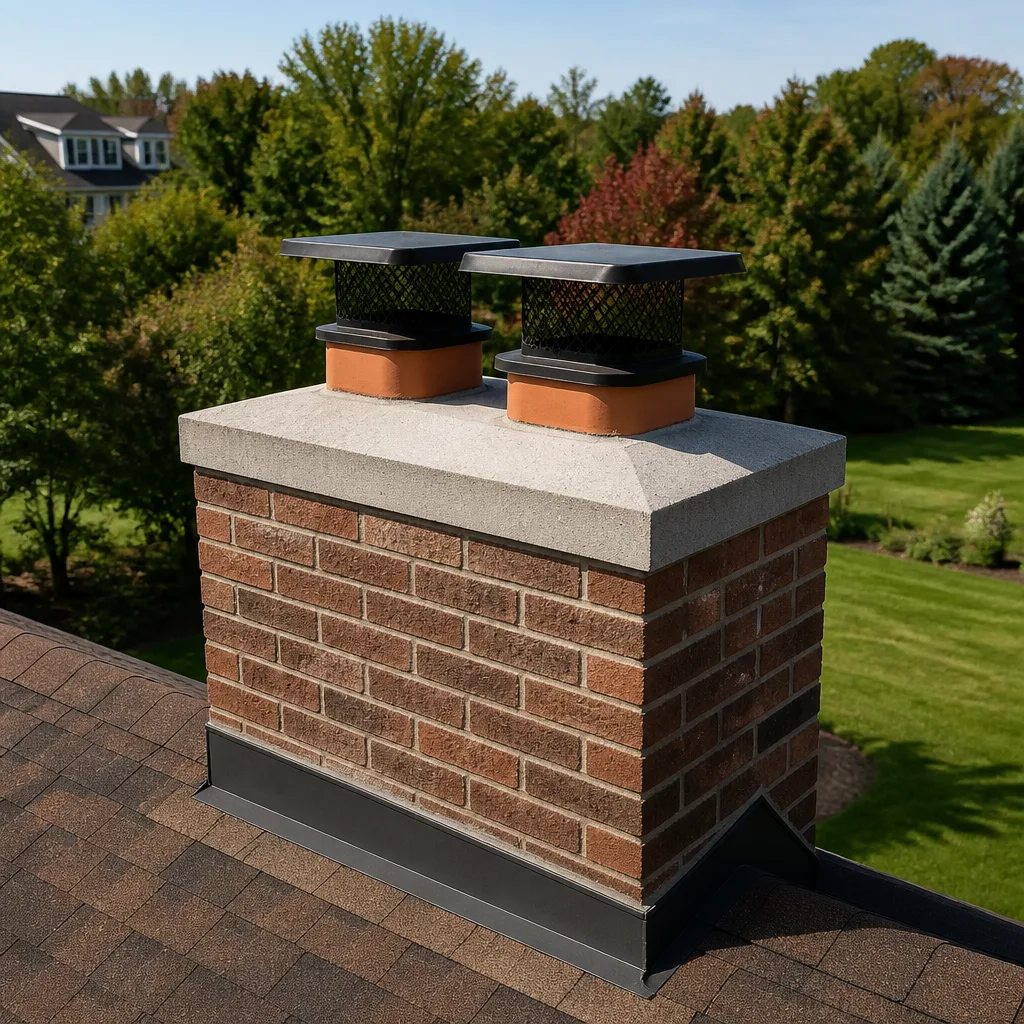
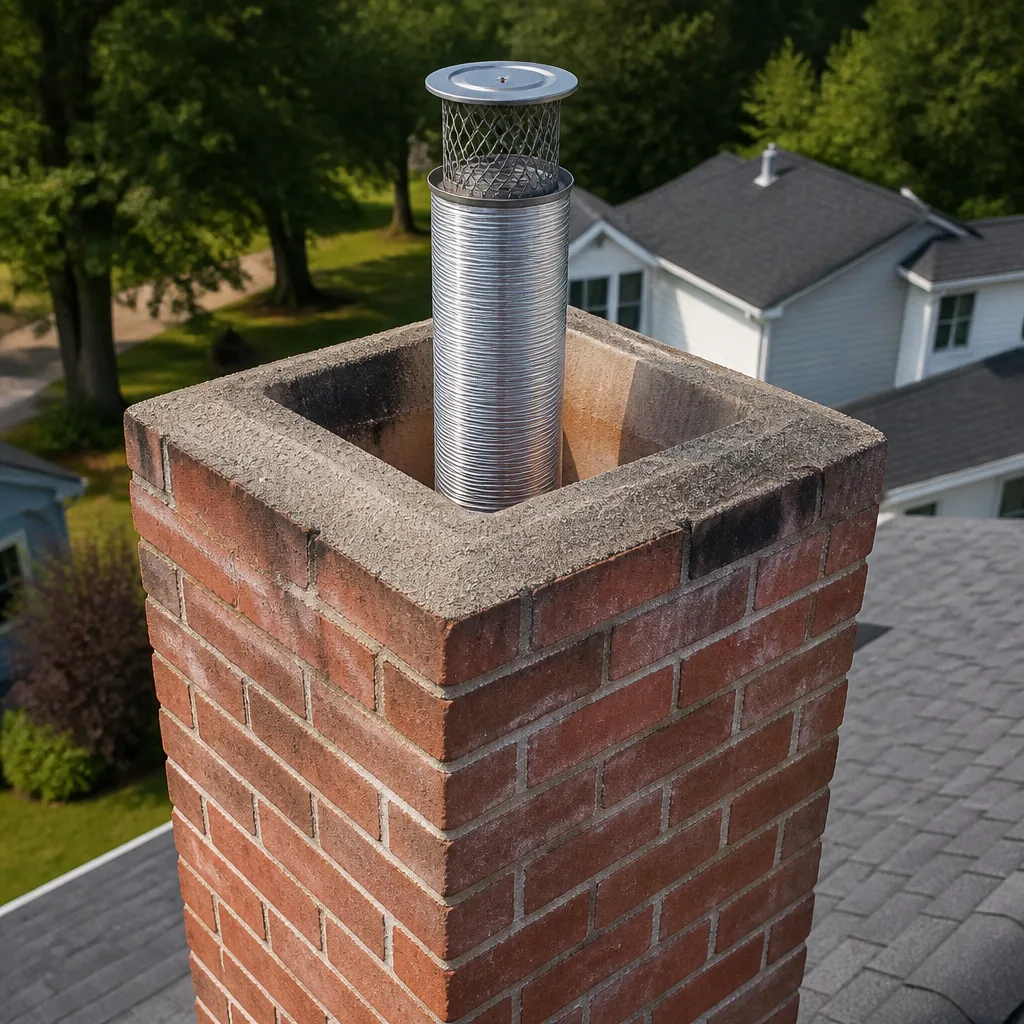
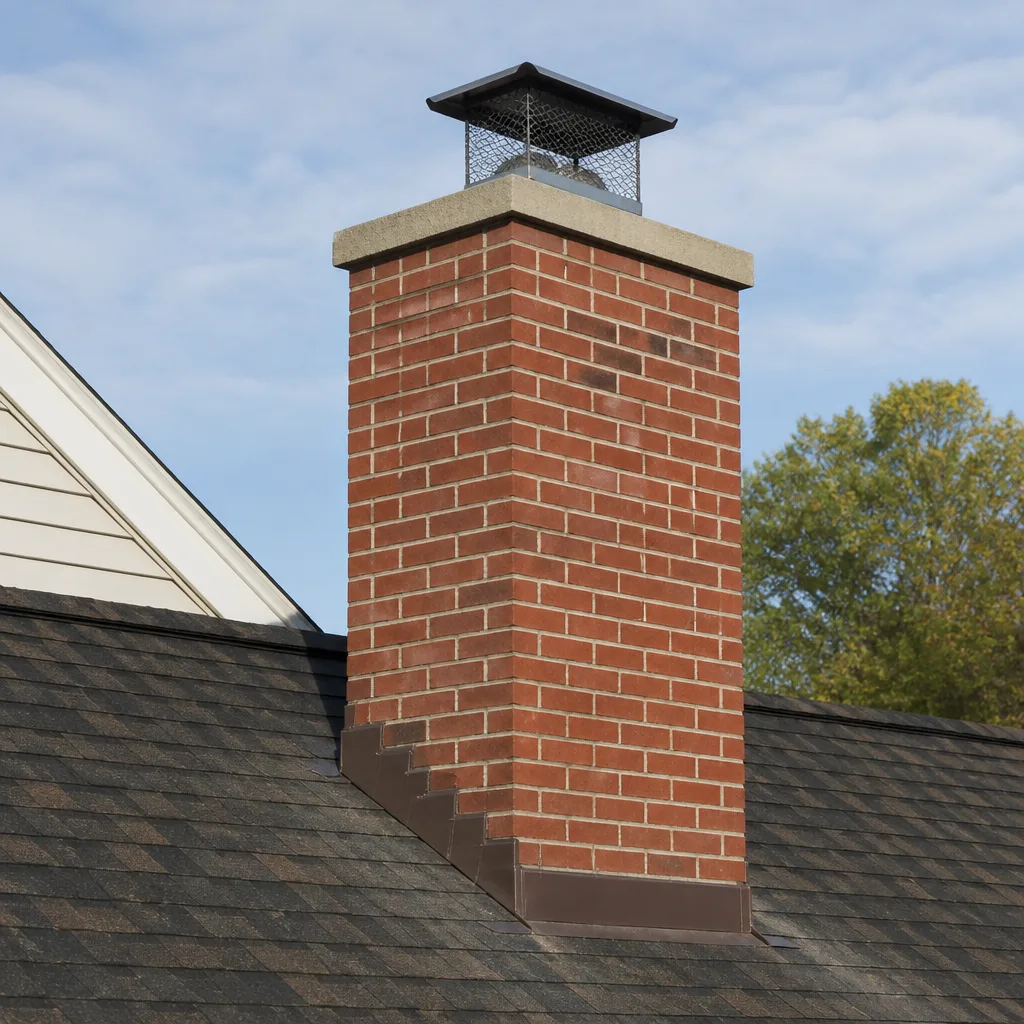
Level 1 sweep and inspection to the NFPA 211 annual standard - flue, crown, cap, and flashing checked and photographed
Chimney sweep logs do not sweep chimneys. They loosen some creosote - which then falls where a brush and vacuum still have to collect it.
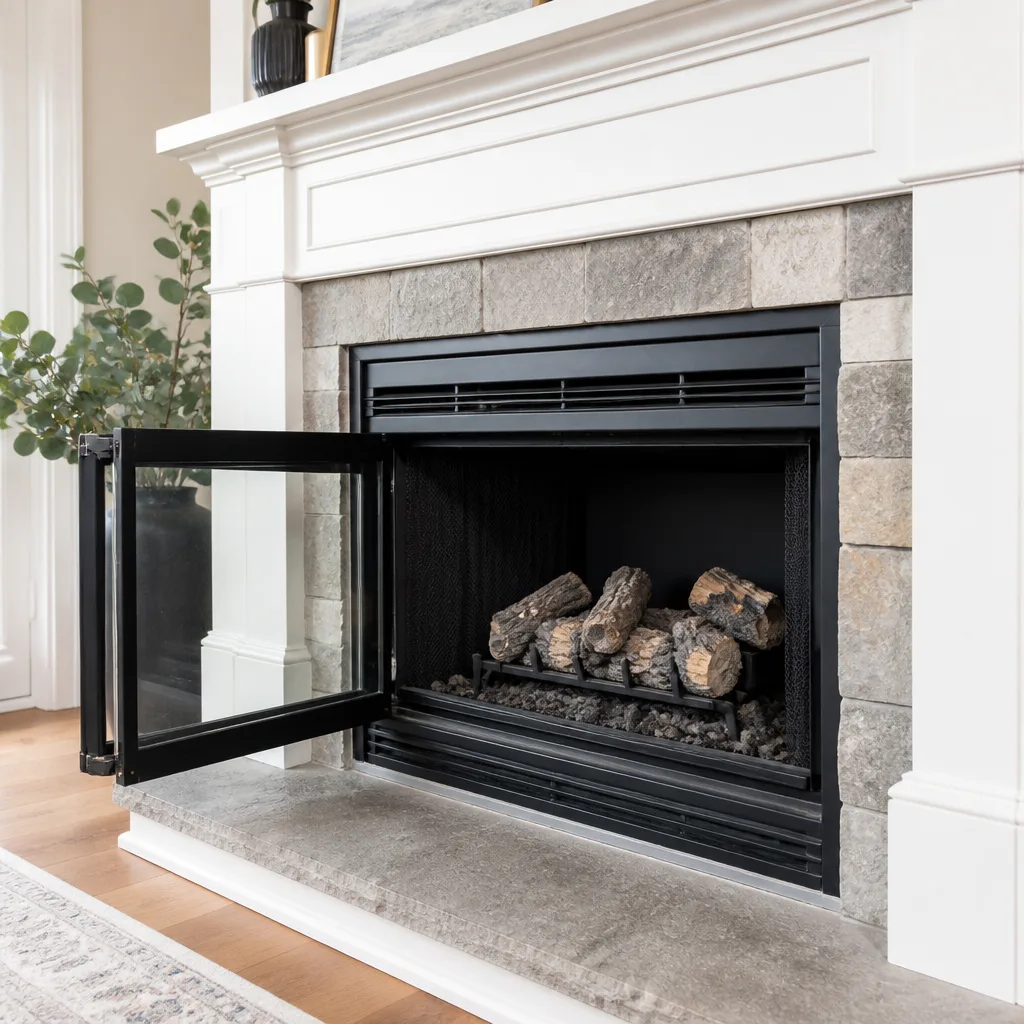
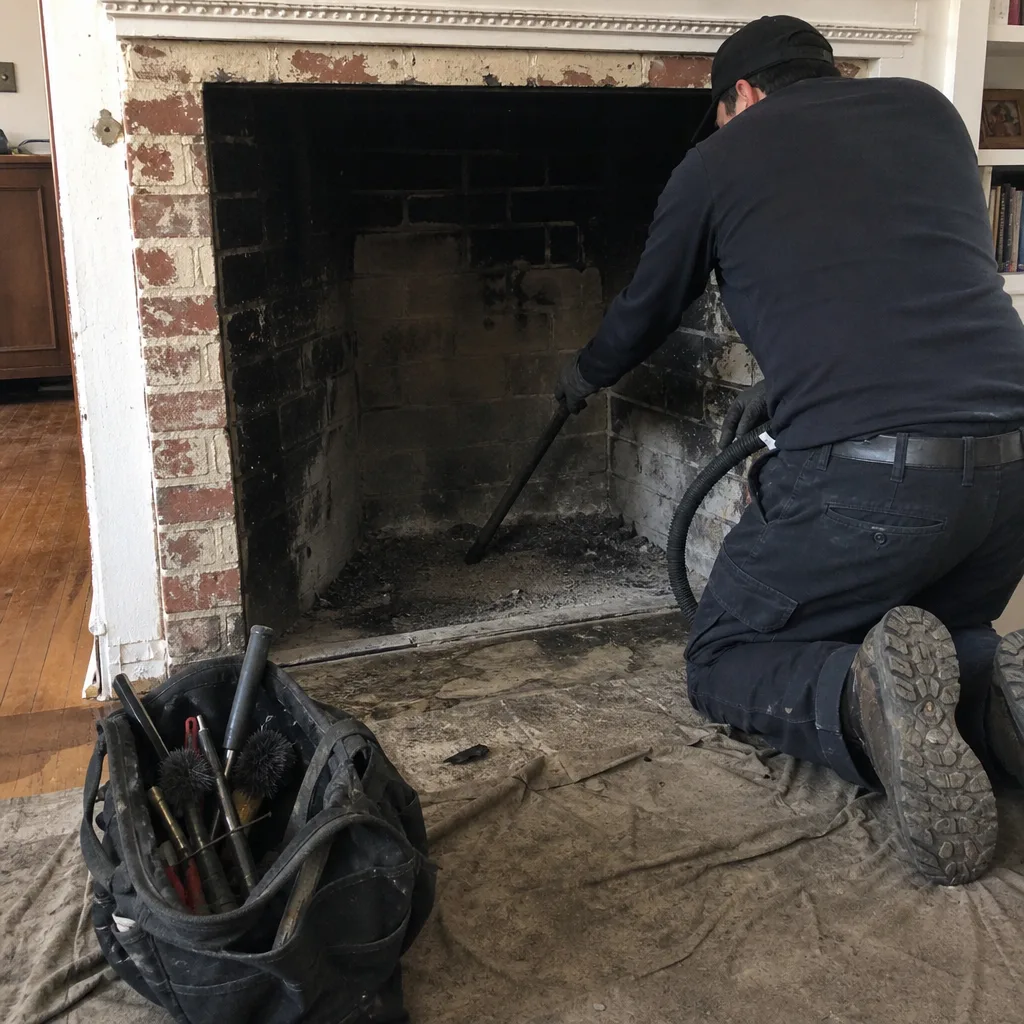 Before
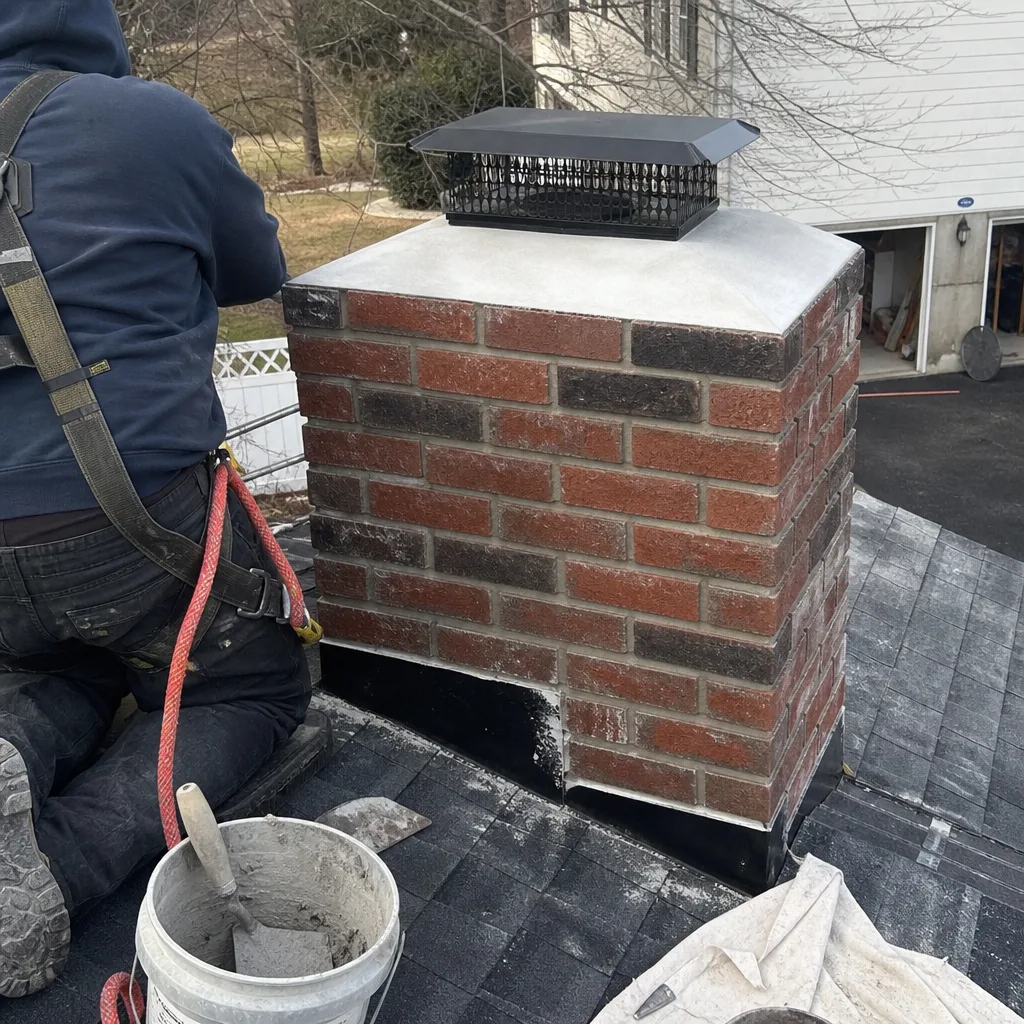 After
After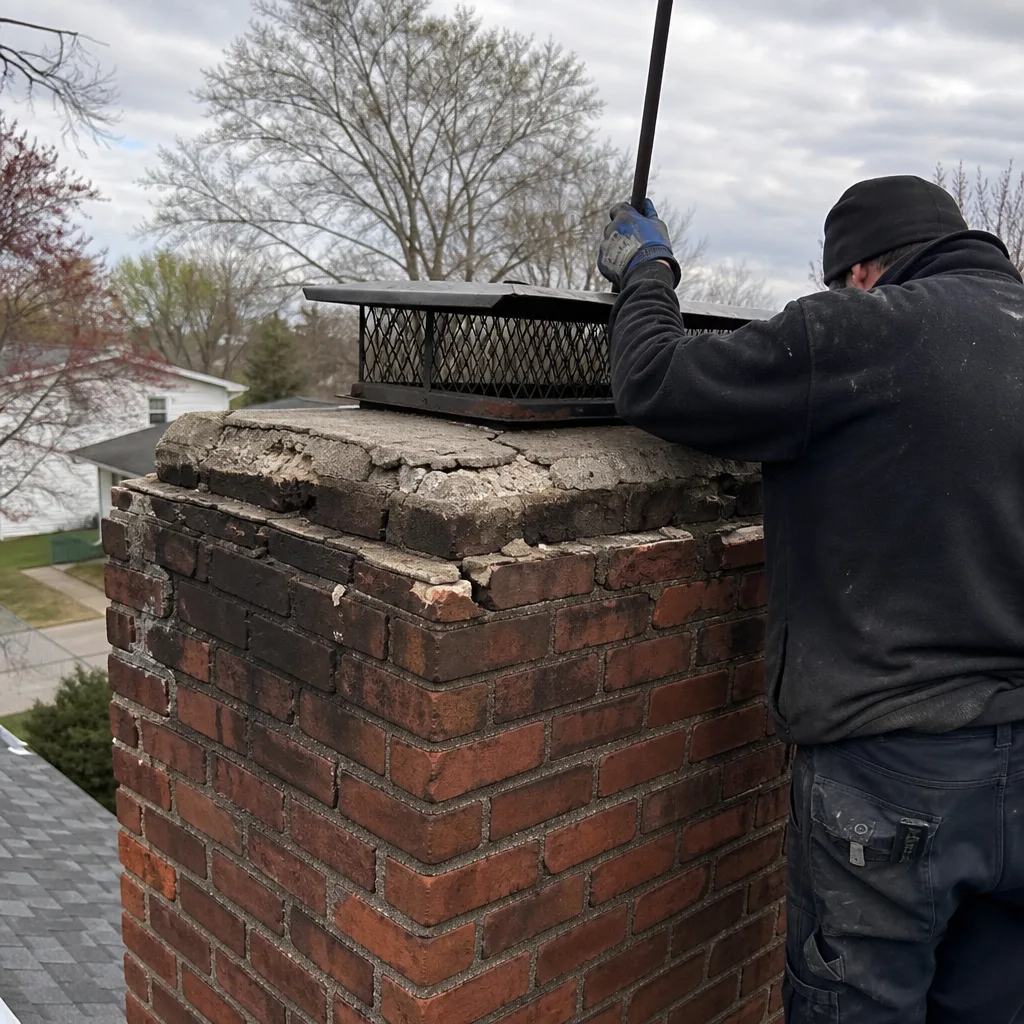 Before
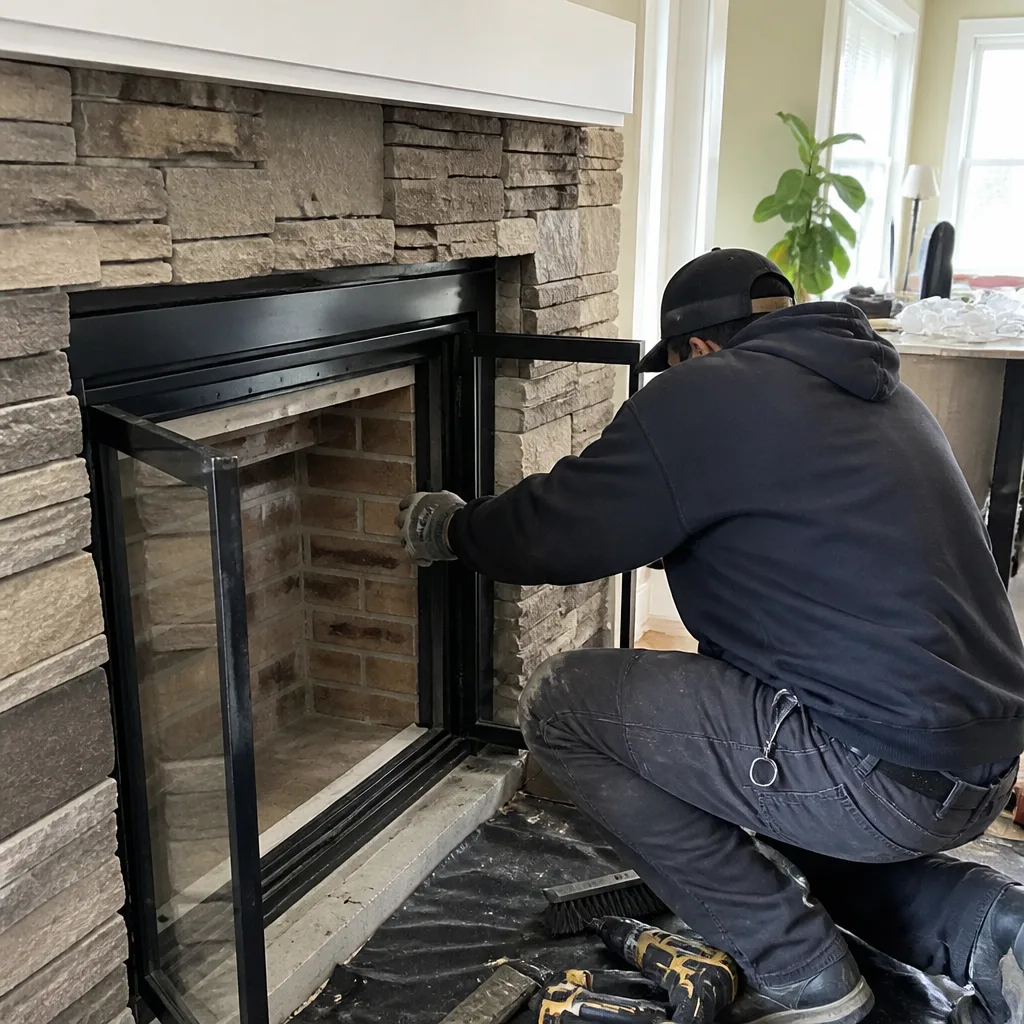 After
After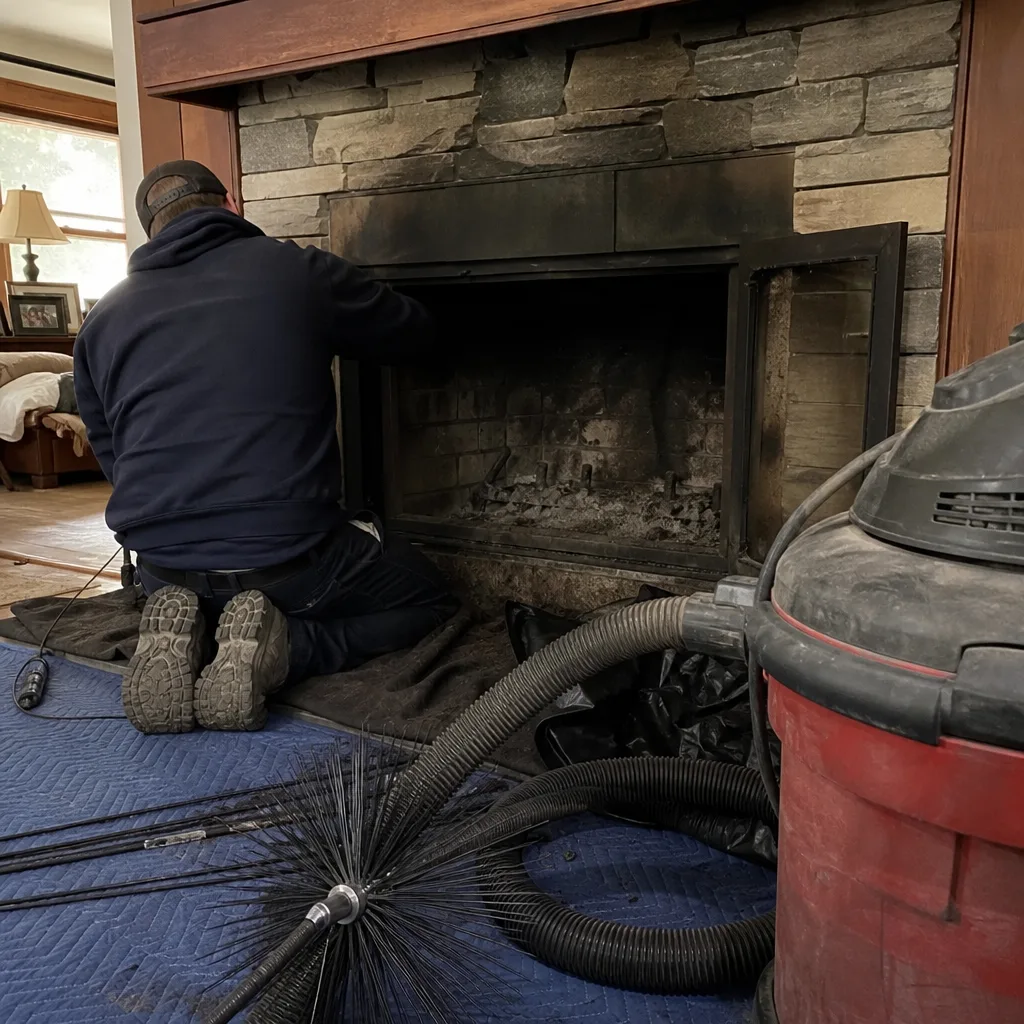 Before
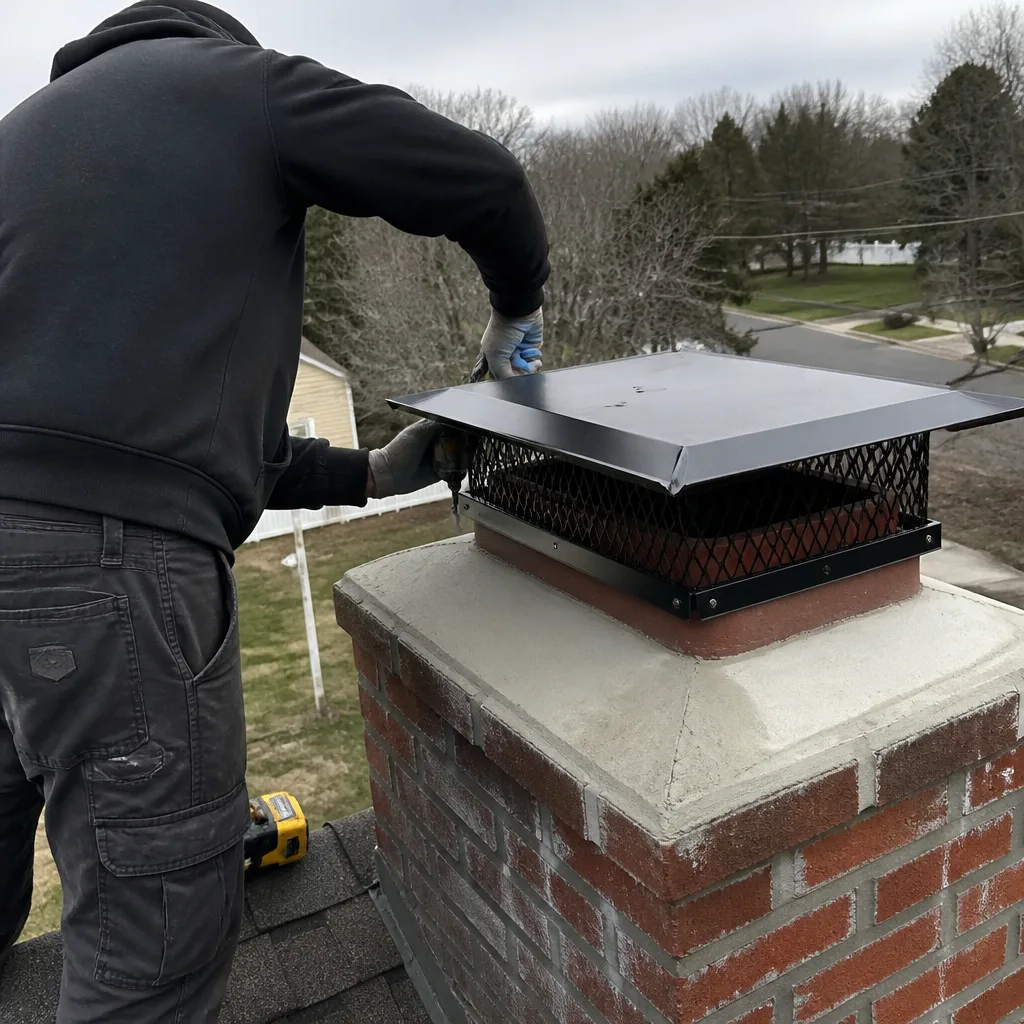 After
AfterDIY vs Professional Chimney Cleaning: The Brentwood Homeowner’s Decision Guide
Here’s a number that surprises most Brentwood homeowners: roughly 70% of chimney fires in Suffolk County start in flues that were “cleaned” by the homeowner within the previous twelve months. Not because the homeowner was careless. Because the tools they used couldn’t reach the problem. A straight flue is forgiving. A flue with an offset, a clay-tile liner, or a connector pipe with a bend is not. This guide draws the actual line between what you can do yourself with a brush and a Saturday afternoon, and what you should hand to someone who has been inside enough Suffolk County chimneys to know the difference. You’ll learn the real cost of DIY versus hiring a sweep in Brentwood, the flue configurations where a homeowner brush kit genuinely works, and the three messes we get called to undo every winter.
Quick Answer
DIY chimney cleaning makes sense for Brentwood homeowners with a straight single-flue wood stove connection and light first-degree creosote, and it costs about $60 to $90 for a basic brush kit. But if your chimney has a clay-tile liner with an offset, a fireplace with a damper you can’t remove, or glazed third-degree creosote, you should call a professional - a botched DIY cleaning in the wrong flue configuration compacts creosote into elbows and can turn a $250 sweep into a $2,000 repair. In our experience across Brentwood and the surrounding county, maybe one in five chimneys is genuinely safe for homeowner cleaning.
Table of Contents
- When DIY Chimney Cleaning Actually Works
- When DIY Cleaning Makes the Problem Worse
- The Real Cost: DIY Kits vs a Professional Sweep in Brentwood
- What You Can’t See From the Firebox: The Inspection Gap
- The Three Outcomes of a Botched DIY Cleaning (and What They Cost to Fix)
- How Often Should a Brentwood Chimney Be Swept?
- The Scenario Where We Tell You to Do It Yourself
- Step-by-Step: What a Safe DIY Cleaning Actually Looks Like
When DIY Chimney Cleaning Actually Works
The honest truth is that some chimneys in Brentwood are simple enough for a careful homeowner to clean safely. The key word is careful, and the deciding factor is not your confidence level. It’s the geometry of the flue and the type of creosote you’re dealing with.
Here’s what a genuinely DIY-friendly chimney looks like:
- A straight run. If you can look up from the firebox (with a flashlight, firebox door open, flue damper open) and see daylight at the top without any visible bend, you have a straight flue. No offset, no elbow, no dogleg. This is the configuration where a brush on a rod actually travels the full path.
- Single flue, single appliance. One stove or one fireplace connected to one flue. If you have a multi-flue chimney or multiple appliances sharing a stack, the geometry gets complicated and the risk of pushing debris into a second flue is real.
- Light creosote only. You’re looking at first-degree creosote: a fine, dusty, dark gray or brown powder that brushes off easily. Think soot, not tar. If you can wipe it with a finger and it comes off as powder, that’s first-degree. If it’s shiny, sticky, or flakes like dried molasses, that’s second-degree or worse, and a homeowner brush will skip right over it.
- A wood stove with a straight connector pipe. This is the single most common DIY-appropriate setup we see in Brentwood homes, particularly in the older neighborhoods off Washington Avenue and around the Islip border. The connector pipe is accessible, the run is often short, and the creosote tends to accumulate in a predictable single location.
If all four of those conditions are true, a homeowner with a drop cloth, a brush kit, and a working flashlight can do a reasonable job. Not as thorough as a professional sweep with rotary tools, but reasonable. We’ll walk through the exact steps later in this guide.
But here’s the catch, and it’s one every Brentwood homeowner should hear clearly: most chimneys in this area are not that simple. Clay-tile lined masonry chimneys with offsets were the default construction standard in Suffolk County for decades. If your home was built between 1950 and 1990, there’s a strong chance your flue has at least one offset somewhere between the firebox and the crown. And that changes everything.
When DIY Cleaning Makes the Problem Worse
An offset is the point in a flue where the clay tiles shift laterally to route around an obstruction or a structural beam. From the firebox, you can’t always see it. The flue looks straight for the first eight or ten feet, then angles fifteen or thirty degrees and continues. What happens when a homeowner pushes a brush through that offset?
The brush compresses creosote and debris into the elbow, packing it tight. A brush on flexible rods follows the path of least resistance, which means it skates over the compressed creosote at the bend and leaves a dense plug exactly where the flue is most vulnerable. The homeowner sees the brush come out the top, assumes the job is done, and goes back to burning. The plug remains. The next fire heats it, the creosote hardens further, and now you have a partial blockage that restricts draft and significantly increases fire risk.
We get called to undo this exact scenario several times a season. The homeowner tells us they cleaned the chimney themselves, and the draft has never been right since. The camera goes up and shows a compacted creosote dam at the offset. Removing it requires rotary chain tools and a vacuum running through the firebox, which is exactly what the homeowner was trying to avoid paying for.
The same problem occurs with second-degree and third-degree creosote. Those stages of creosote are not brushable in any meaningful way. Second-degree creosote is flaky and granular, like coarse sawdust stuck to the tile, and it requires at minimum a wire brush on a drill or a rotary loop. Third-degree creosote is glazed, shiny, and tar-like, and it must be chemically treated or mechanically removed with specialized tools - or, in the case of a deteriorated liner, the liner may need to be replaced entirely. A homeowner brush kit will polish the surface of glazed creosote and remove almost none of it. The homeowner thinks the flue is clean because the brush came up dark. It came up dark because it was sliding over a coating of tar.
Here’s the point we want every Brentwood homeowner to take seriously: the flue configurations where DIY cleaning is genuinely effective are visible and verifiable from the firebox. If you cannot see the entire flue path clearly and verify that it is straight, you should assume it is not. Most Suffolk County chimneys built before about 1995 have at least one offset, and clay tile has shifted over decades of freeze-thaw cycles in our climate.
The Real Cost: DIY Kits vs a Professional Sweep in Brentwood
Let’s do the math honestly, because it’s the question everyone asks and few people answer with real numbers.
A basic homeowner chimney brush kit - rods, brush, and a drop cloth - costs between $60 and $90 at local hardware stores or online. A slightly better kit with a poly brush (polypropylene, not steel, important if you have a stainless liner) runs $80 to $120. Add a chimney cleaning vacuum if you want to control the dust, and you’re at $200 to $300 for a consumer-grade unit that will clog repeatedly during a single cleaning.
A professional chimney sweep in Brentwood and the surrounding Suffolk County market typically costs between $180 and $350 for a standard cleaning and inspection, depending on the flue configuration, the height of the chimney, and the condition of the system. That price almost always includes a camera inspection and a written report, which is the part of the service that has real value beyond the brushing itself.
So the raw math says a homeowner with a straight flue who buys the $90 kit and cleans their chimney once a year saves roughly $100 to $260 per year after the first year pays for the kit. Over five years, that’s real money. We’re not going to pretend otherwise.
But here’s the other side of the math. If the same homeowner has an offset with compacted creosote and calls us in after their DIY attempt, the remediation we typically perform in Suffolk County involves a rotary cleaning with camera verification, and it runs $300 to $500 depending on severity. If the creosote plug caused a chimney fire or damaged the clay tiles, the cost escalates quickly: a stainless liner replacement from a brand like DuraFlex or Copperfield, installed in Brentwood, runs $2,500 to $5,000 or more. The $90 kit just cost you two thousand dollars.
The break-even logic only works when the flue is actually DIY-appropriate, and most people cannot verify that from the firebox. That’s the honest math, and it’s why this guide exists.
What You Can’t See From the Firebox: The Inspection Gap
The brush is only about thirty percent of what a professional chimney sweep in Brentwood actually delivers. The other seventy percent is the inspection - and it’s the part you cannot replicate with a hardware store kit.
When Wendell and his crew clean a chimney, the cleaning is the access step. The camera goes up after the brushing, and that’s when the real information appears. Here’s what we routinely see during professional cleanings and inspections that a homeowner with a brush will never know about:
- Liner cracks and spalling. Clay tile liners crack over time, particularly in Suffolk County where freeze-thaw cycles put constant stress on masonry. A vertical crack running through multiple tile sections is a serious fire-safety and carbon-monoxide risk. It cannot be repaired from the inside; the liner has to be rebuilt or a stainless liner installed. No amount of brushing reveals this.
- Damper plate warping. The damper is the metal flap that seals the flue when the fireplace is not in use. Heat cycling warps it, and a warped damper leaks conditioned air out of the house year-round and can allow smoke to backdraft on windy days. You can see the bottom of the damper from the firebox, but a proper inspection checks the seating and the frame from above and below.
- Smoke chamber corbeling damage. The smoke chamber is the angled transition above the damper that directs smoke up into the flue. In older Brentwood homes, the corbeled brickwork in the smoke chamber is often unparged (unfinished) and can have gaps, cracks, and loose mortar that trap creosote and create a hidden fire risk. This area is completely invisible from the firebox and is inaccessible to any homeowner brush.
- Chimney cap and crown deterioration. From the firebox you can’t see the crown at all. From the roof, a trained eye checks for hairline cracks in the crown mortar, rusted or missing caps, damaged spark arrestors, and deteriorated flashing. Water intrusion through a cracked crown is the single most common cause of liner damage we see in Suffolk County.
- Gaps between clay tiles at offsets. Remember that offset? The mortar joints between angled tile sections at the offset are the first place creosote accumulates and the first place cracks develop. A camera inspection shows exactly what’s happening at the bend, which is invisible from below.
This is why we say the camera footage and a plain-English verdict come with every job, no exceptions. If you’re going to burn wood in your home, you should know the condition of the flue. The brushing gets it clean; the camera tells you whether it’s safe.
Our chimney cleaning and sweep service in Brentwood includes the full inspection as standard.
The Three Outcomes of a Botched DIY Cleaning (and What They Cost to Fix)
Every winter, we get called out to fix DIY jobs that went sideways. There are three recurring scenarios, and each has a specific remediation cost in the Suffolk County market. If you’re weighing DIY against hiring a professional, these are the outcomes to understand before you pick up the brush.
Outcome 1: Compacted creosote at the offset. The homeowner brushes a flue with an offset, packs creosote into the bend, and burns all winter with a restricted draft. The fix: rotary cleaning with a camera to verify the offset is actually clear, which typically runs $300 to $500 in Brentwood. If a partial blockage contributed to a chimney fire, the price escalates to a full Level II inspection and potentially liner work.
Outcome 2: Brushed-through cracked tile that no one knew was there. The homeowner cleans the flue, and the brushing dislodges a cracked tile section that was already loose. The flue is now partially obstructed and unsafe to burn. The fix: removal of the damaged tile and installation of a stainless liner. Using a DuraFlex or Copperfield liner, installed to code in Suffolk County, that’s $2,500 to $5,000 depending on chimney height and access. This is the worst-case outcome because the homeowner did nothing wrong - the tile was cracked long before the brush touched it - but the cleaning converted a hidden problem into an acute one.
Outcome 3: A chimney fire that started after a “clean” flue. This is the scary one, and it doesn’t always make the news. The homeowner brushes the flue, sees the brush come out dark, and assumes it’s clean. The flue was not clean. It had second-degree creosote coating the tiles, and the brush polished it. The next hot fire ignites the residual creosote, and the resulting chimney fire can reach 2,000 degrees. Clay tiles crack, the surrounding structure gets scorched, and the chimney often needs a complete rebuild. Costs start at $8,000 and go up from there.
None of these outcomes are inevitable, and plenty of homeowners clean straight flues safely for years. But the consequences of guessing wrong on a flue with an offset or glazed creosote are severe, and this is one area where the cost of a professional’s judgment is cheap compared to the cost of remediation. Our chimney repair work in Brentwood exists because these scenarios are common, not rare.
How Often Should a Brentwood Chimney Be Swept?
The standard answer - the one from the Chimney Safety Institute of America and the National Fire Protection Association - is once a year, regardless of burn frequency. Once a year, burn or no burn. Chimneys break in the off-season too.
But the Brentwood-specific answer is slightly more nuanced. Here are our recommendations based on what we see across Suffolk County:
- Wood-burning fireplace used most winter nights: sweep every year, no exceptions. The creosote accumulation rate in our damp coastal climate is high, and the marginal cost of a sweep is nothing compared to the risk.
- Wood stove burning weekend fires: sweep every year. Wood stoves with catalytic or non-catalytic secondary combustion produce different creosote profiles than fireplaces, and the connector pipe needs attention even if the main flue looks okay.
- Occasional fires - a few times a season: sweep every other year at minimum. It takes longer for creosote to accumulate, but the masonry itself is still aging, and the annual visual check for water intrusion is worth it.
- Gas fireplace or gas insert: the recommendations are different. Gas appliances don’t produce creosote, but they do need venting inspection for carbon monoxide backdrafting, and the burner and pilot assembly need cleaning. Gas fireplaces should be inspected every year, though a full chimney sweep is not required. Our fireplace services in Brentwood cover both wood and gas.
- Chimney connected to an oil or gas furnace: the same flue carries acidic combustion byproducts that can attack the clay tile over time. Annual inspection is recommended, and in many cases the flue should be swept or relined depending on the condition of the tiles.
The pattern here is simple: the more you burn, the more often you sweep. But even if you never light a fire, the chimney is exposed to the Suffolk County weather, and water intrusion through the crown or flashing degrades the system year-round. An annual inspection catches the crown crack before it becomes a liner replacement.
The Scenario Where We Tell You to Do It Yourself
This section exists because it has to. If a chimney sweep tells you every job requires a professional, you can’t trust them on the jobs that actually do.
Here’s the scenario: you’ve got a freestanding wood stove connected to a straight connector pipe that runs directly up into a stainless liner, and the liner is straight to the crown. No offset. No masonry chimney. No clay tile. You burn dry hardwood, you’ve used a moisture meter to confirm your wood is below twenty percent moisture content, and your fires burn hot and clean. You look up from the stove connection with a flashlight and you can see the path is straight. The creosote is dusty and powder-like, not sticky or shiny.
In that scenario, buy the $90 brush kit and clean it yourself. Once a year, every year, done. You’ll save the cost of a professional sweep, and the flue is simple enough that a careful homeowner can do an honest job. The connector pipe comes apart, the brush runs up the liner, the debris falls into the stove where you vacuum it out. It’s not complicated, and the geometry is forgiving.
What we would tell you to add: after you brush, replace the connector pipe gaskets if they’re worn, check the door gasket on the stove with a dollar bill (close the door on the bill; if it slides out easily, the gasket needs replacing), and verify the cap screen is clear of debris. Those are simple checks that prevent most of the problems we see with wood stove installations in Brentwood.
And if at any point you’re not sure whether your flue is genuinely straight, or the creosote feels sticky, or you’ve never had the system inspected, call us. We’ll come out, run the camera, and tell you what you have. If it’s a straight flue with light creosote, we’ll tell you to buy the brush kit and call us in five years. That’s not a lost sale; that’s the honest answer, and it’s the only way this works. Ask anyone on your street.
Step-by-Step: What a Safe DIY Cleaning Actually Looks Like
If you’ve read this far and determined that your flue is genuinely DIY-appropriate, here’s how to do it right. This is for a straight-run wood stove or a straight fireplace flue with light creosote only. We’re not going to give a step-by-step for anything beyond that, because the dangerous configurations need professional tools and experience.
- Confirm the flue is straight. From the firebox or stove connection, use a bright flashlight and look up. If you can’t see daylight, or you see any bend or shadow that suggests an angle, stop here and call a sweep. You cannot verify an offset from below, and that’s the whole ballgame.
- Check the creosote. Reach into the flue (cold, obviously) and scrape a small sample. If it’s powder-like and comes off easily on your finger, you’re in first-degree territory. If it’s flaky, granular, sticky, or shiny, stop and call. A brush will not remove second- or third-degree creosote.
- Set up the containment. This is the part people skip and regret. Tape a drop cloth over the fireplace opening or around the stove connection point. Run a shop vacuum with a fine-dust filter (not a standard filter, which will just recirculate creosote dust into your living room). Seal the room off if you can. Creosote dust is carcinogenic and gets everywhere.
- Remove the damper or connector pipe. For a fireplace, remove the damper plate if it’s removable (many are). For a wood stove, disconnect the connector pipe from the stove. Bag the pipe sections and clean them outside.
- Brush from the top or bottom, depending on access. Top-down is cleaner if you have a roof you can safely access with a proper ladder and a spotter. Bottom-up through the firebox is messier but avoids roof work. Either way, run the brush in a straight line, full length, with firm strokes. Do not twist the brush in a rod-and-elbow motion. Straight in, straight out.
- Run the brush two or three times. Once is never enough. The first pass breaks up the creosote. The second pass removes what the first pass left. The third pass confirms the flue is clean. Between passes, vacuum what has fallen into the firebox or stove.
- Inspect your work with a light. Shine the flashlight up from below and check for any patch that looks darker or shinier than the surrounding flue. If you see one, run the brush again in that spot. If you can’t reach it, it’s time to call a professional.
- Reassemble everything and test the draft. Replace the damper or connector pipe, light a small piece of newspaper, and confirm the smoke goes up the flue and not into the room. If the draft is sluggish and nothing is visibly blocking the flue, call us. A slow draft after a cleaning usually means you’ve pushed debris into a low point you can’t see.
Follow those steps and you’ll get a reasonable cleaning on a straight flue with light creosote. Skip the containment step and you’ll spend the next week cleaning creosote dust off every surface in the room. Skip the inspection step and you won’t know whether the flue actually got clean. The details matter.
Common Mistakes to Avoid
- Assuming the flue is straight because the chimney looks straight from outside. The exterior chimney tells you nothing about the internal flue geometry. Offsets happen inside the structure. Verify from the firebox with a light, or don’t DIY.
- Using a steel brush on a stainless liner. Steel brushes scratch stainless liners and can damage the interior surface. Poly brushes are the right tool for stainless. If you don’t know what material your liner is, don’t brush it.
- Skipping the containment step. A shop vacuum with a standard filter will recirculate the finest creosote dust right back into your living room. Use a fine-dust filter and seal the opening.
- Brushing a flue with glazed or tarry creosote. The brush will slide over it and you’ll think the job is done because the brush looks dirty. It looks dirty because it slid through tar. Glazed creosote requires chemical treatment and mechanical removal, not a homeowner brush.
- Climbing the roof without a plan. Top-down cleaning requires roof access, a sturdy ladder, a spotter, and appropriate fall awareness. If you’re not comfortable on a roof, brush from the bottom or call a professional. The fall from a Brentwood roof is not worth saving two hundred dollars.
- Ignoring the damper in a fireplace. Many fireplaces have a fixed damper that cannot be removed. The brush will hit it, bend, and fail to clean the flue above it. If your damper is not removable, you probably can’t clean the flue from the firebox, and roof access becomes mandatory.
- Burning unseasoned wood after a DIY cleaning. All that work for nothing. Wet wood produces dense, sticky creosote that re-coats the flue within a few fires. Wood should be split, stacked, and covered for at least a year (two for oak) before burning. Use a moisture meter; it’s a $30 tool that saves you hundreds.
When to Call a Professional
You should call a professional chimney sweep if you have any of the following: a flue you cannot visually verify as straight from the firebox, glazed or sticky creosote that a brush will not remove, a chimney with a known offset, a clay-tile liner that has never been camera-inspected, visible smoke damage or water staining in the masonry, a backdrafting fireplace that fills the room with smoke, or a chimney fire that has already occurred and needs a Level II inspection before anyone burns again. Also call if you simply don’t want to mess with roof access or creosote dust. The cost of a professional sweep in Brentwood is modest compared to what these problems cost when ignored. Top Hat Chimney offers free estimates in Brentwood - call (934) 935-3847, and we’ll tell you honestly whether your chimney needs a sweep or a repair.
Frequently Asked Questions
A professional chimney sweep in Brentwood typically costs between $180 and $350 for a standard cleaning and camera inspection, depending on flue configuration, chimney height, and system condition. The price includes the brushing, a camera inspection, and a written report. We provide upfront pricing before any work begins, so the number you hear on the phone is the number on the invoice. Call (934) 935-3847 for a free estimate.
Not always - and this is where the camera footage matters. If a sweep tells you the liner is cracked or deteriorated, ask to see the camera video of the damaged areas. A legitimate professional will show you the footage and explain what it means in plain English. At Top Hat Chimney, the camera footage and a plain-English verdict come with every job, no exceptions. If the liner is genuinely compromised, we’ll tell you, and we’ll show you. If it can safely wait, we’ll tell you that too.
Once a year, regardless of burn frequency, per national fire safety standards as well as our local recommendations. Brentwood’s damp coastal winters contribute to creosote accumulation even with moderate burning, and freeze-thaw cycles stress the masonry year-round. An annual sweep and inspection catches problems before they become expensive. Call (934) 935-3847 to schedule a sweep.
Creosote accumulates in layers, and with each burning season it thickens and hardens. What started as first-degree powder becomes second-degree flakes, then third-degree glaze. Eventually the flue constricts, draft suffers, smoke backs up into the house, and the risk of a chimney fire rises sharply. And because the creosote is insulating and corrosive, it accelerates the deterioration of the clay tiles beneath it. A $250 sweep becomes a $5,000 liner job. The fire hazard is the urgent concern; the liner deterioration is the slow-moving one.
Chimney cleaning logs (the ones you burn in the firebox) can help convert glazed creosote into a more brushable form, but they do not clean the chimney. They are a preparatory treatment, not a substitute for mechanical removal. If you’re relying on a cleaning log as your annual maintenance, you’re not doing annual maintenance. After using a cleaning log, the flue still needs to be swept.
There are real local chimney sweeps in Brentwood, and you should prioritize them. National franchises have their place, but too many Brentwood homeowners have told us the same story: a quote on the phone, a different price at the door, and an unreachable office after the job. Look for a locally owned company with a published address and a license number. Top Hat Chimney has been serving Brentwood and Suffolk County since 1999, and Wendell Pike puts his name on the work. When you call (934) 935-3847, a live person answers, and it may well be Wendell himself.
The Bottom Line
The decision between DIY and professional chimney cleaning in Brentwood comes down to one question you can answer yourself: is the flue straight, and is the creosote light enough to brush? If you can verify both from the firebox, a $90 brush kit and a careful afternoon will do the job, and you should keep your money. If you can’t verify both - if there’s a bend you can’t see past, if the creosote is sticky or shiny, if the damper won’t come out - call a professional. The brush is the easy part. The inspection is what keeps your house standing, and the camera doesn’t lie. Your flue doesn’t care how the fire looks. It cares how it breathes. We’ve been cleaning and inspecting Brentwood chimneys since 1999, and we’d rather tell you the truth than sell you a service you don’t need. Call (934) 935-3847 for a free estimate, and we’ll let the camera tell us both what your chimney actually needs.
For more on our services, see our Top Hat Chimney home page, or read about chimney cleaning and sweeping in Brentwood, chimney repair in Brentwood, and fireplace services in Brentwood.
Written by Wendell Pike, Owner at Top Hat Chimney, serving Brentwood since 1999.