
Last updated September 10, 2026
Level 1 sweep and inspection to the NFPA 211 annual standard - flue, crown, cap, and flashing checked and photographed
Chimney sweep logs do not sweep chimneys. They loosen some creosote - which then falls where a brush and vacuum still have to collect it.
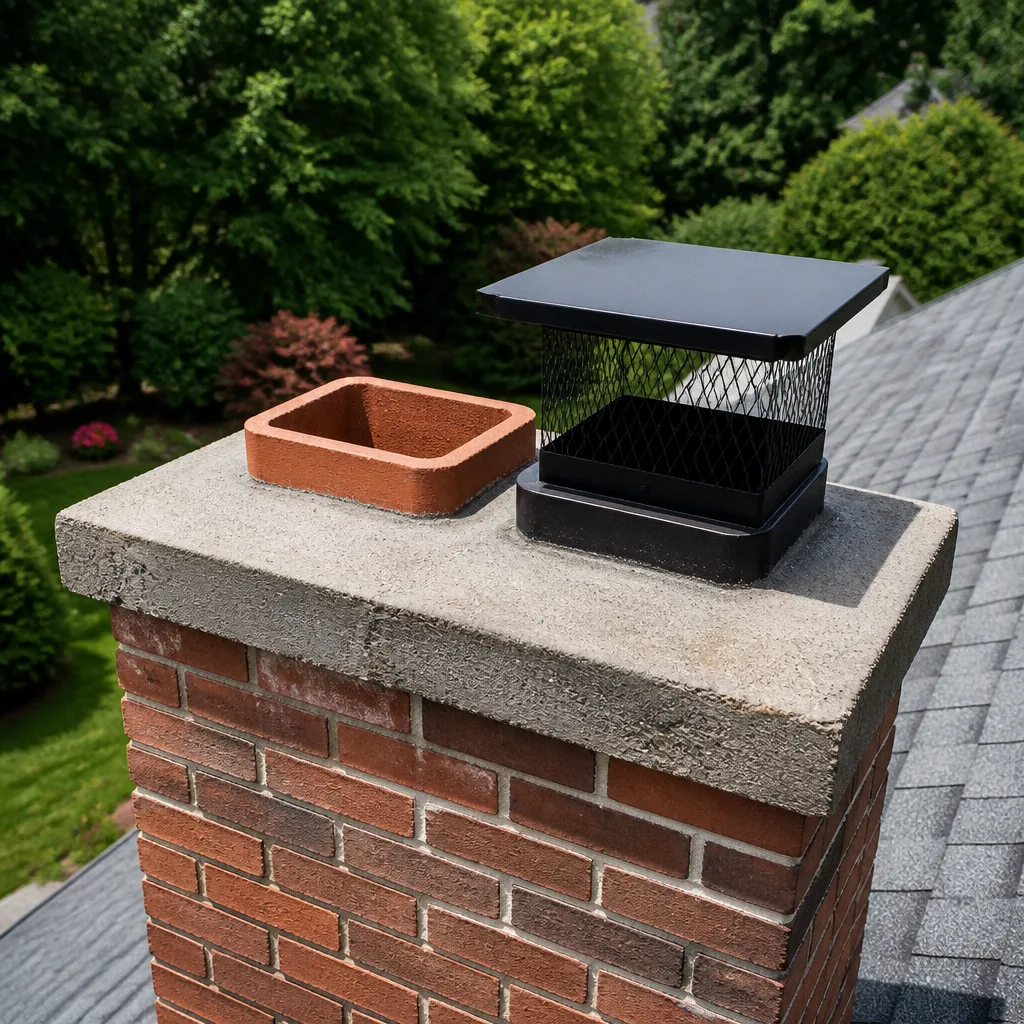
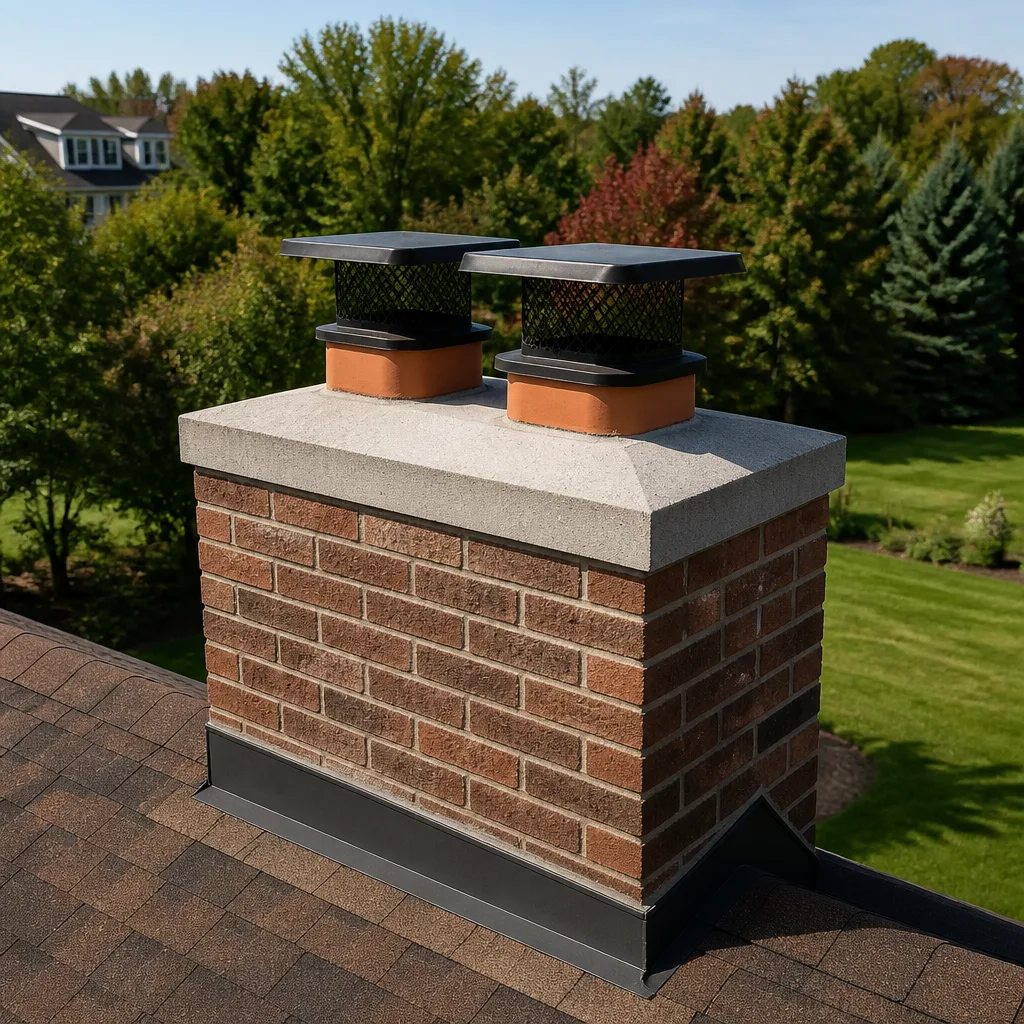
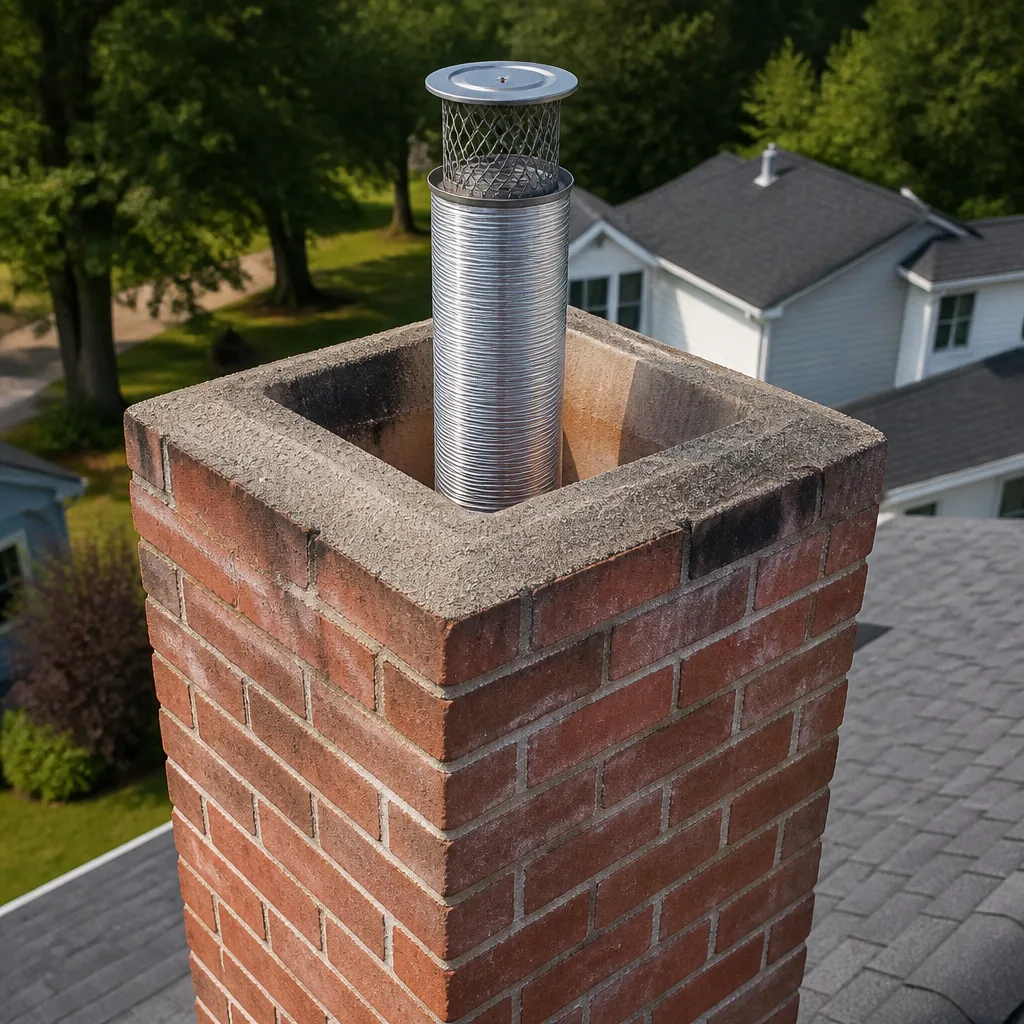
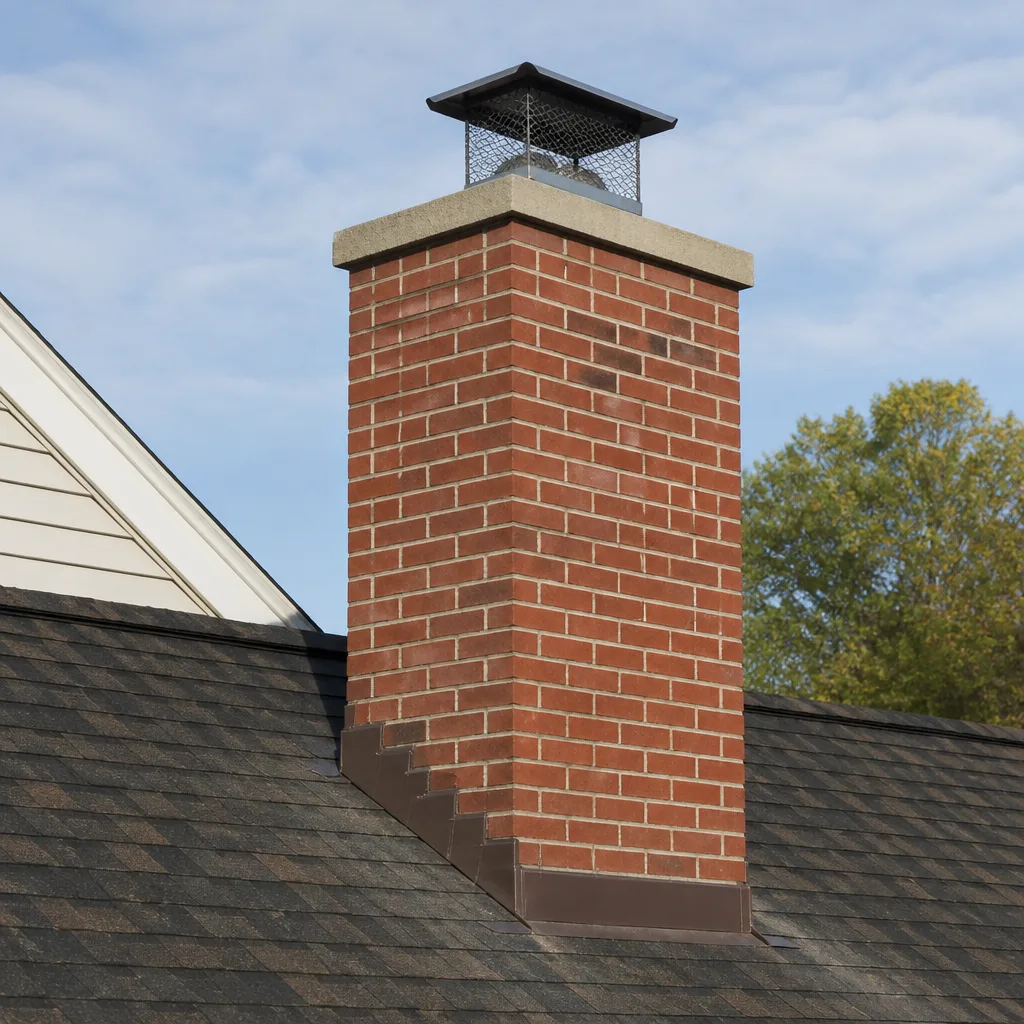
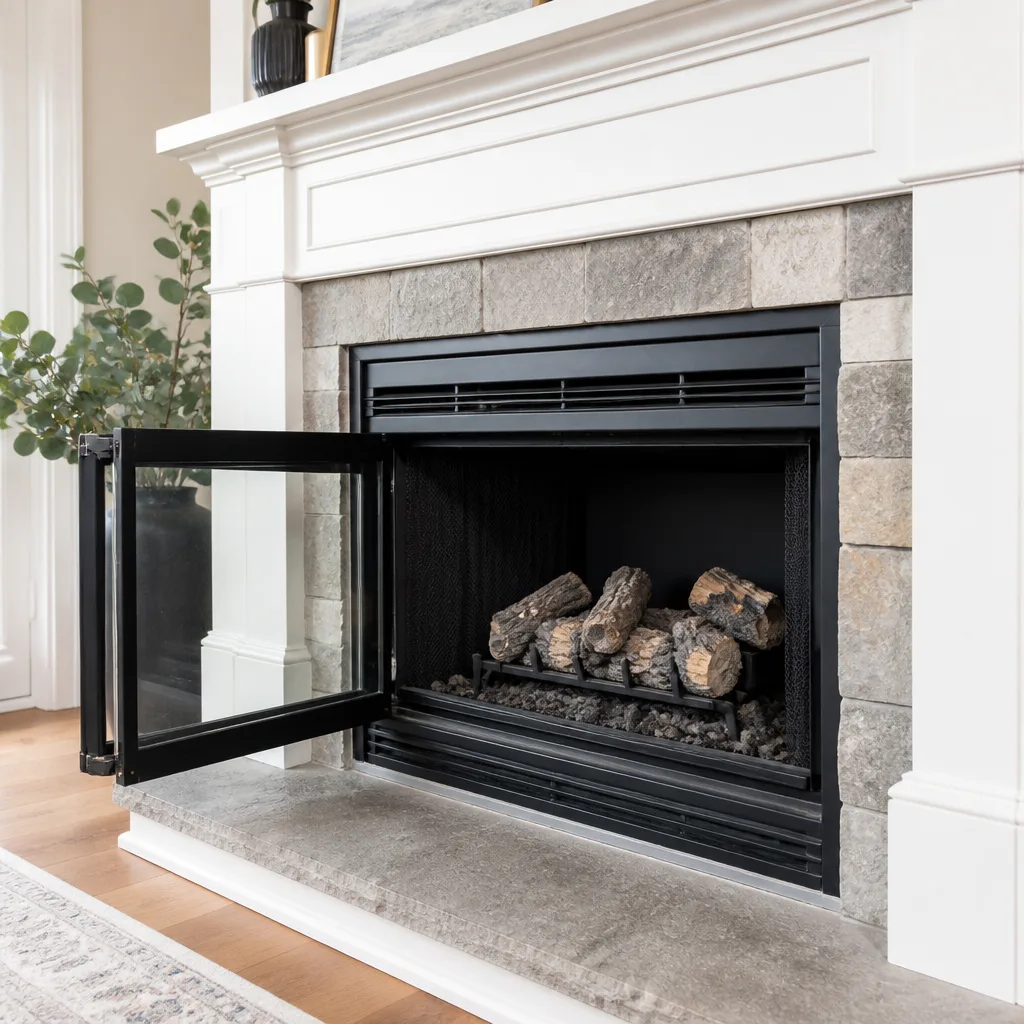
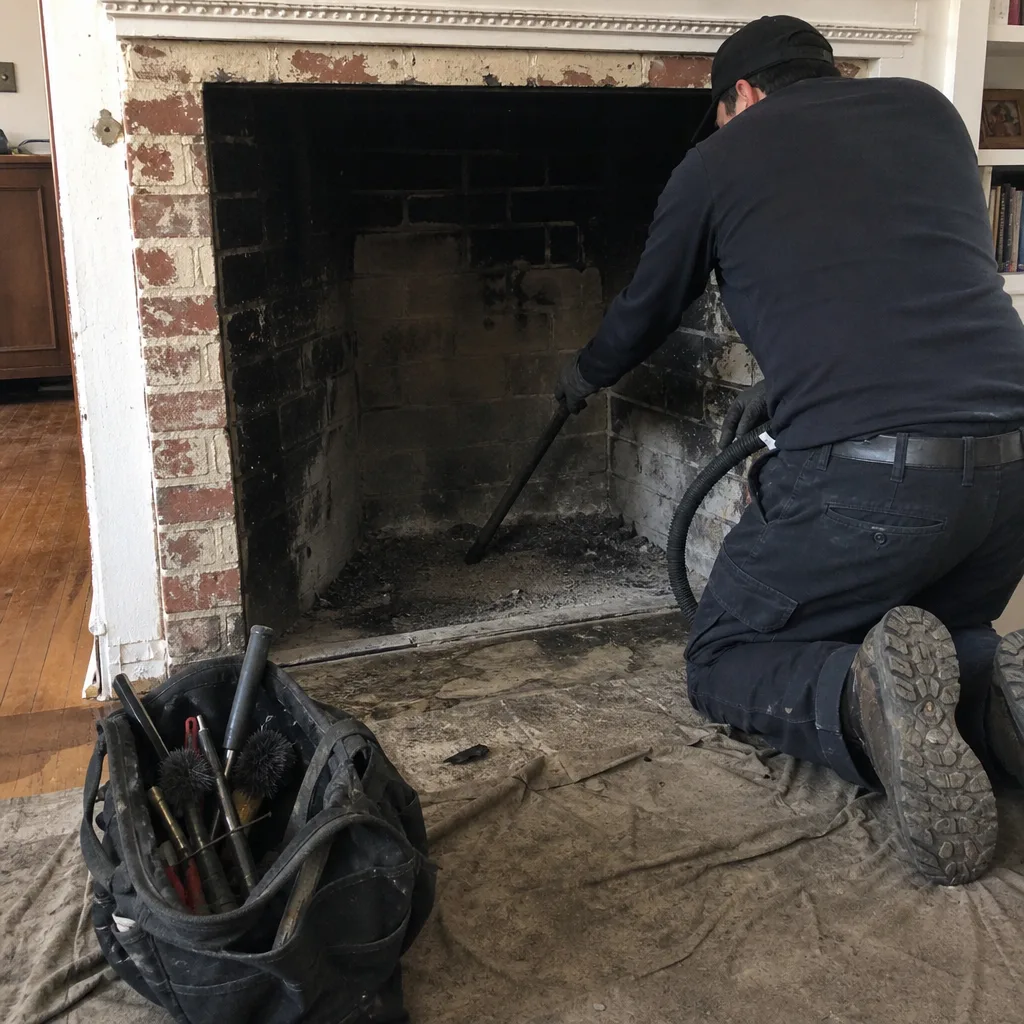 Before
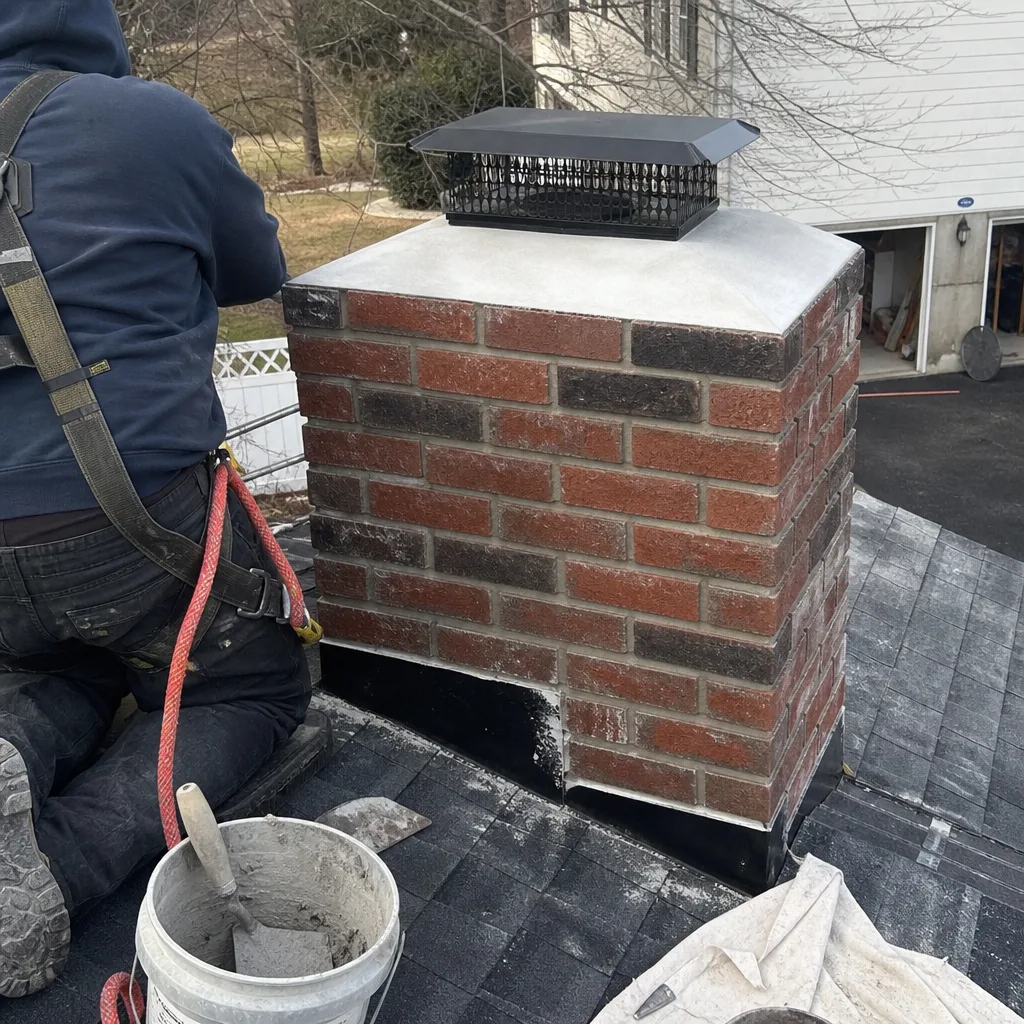 After
After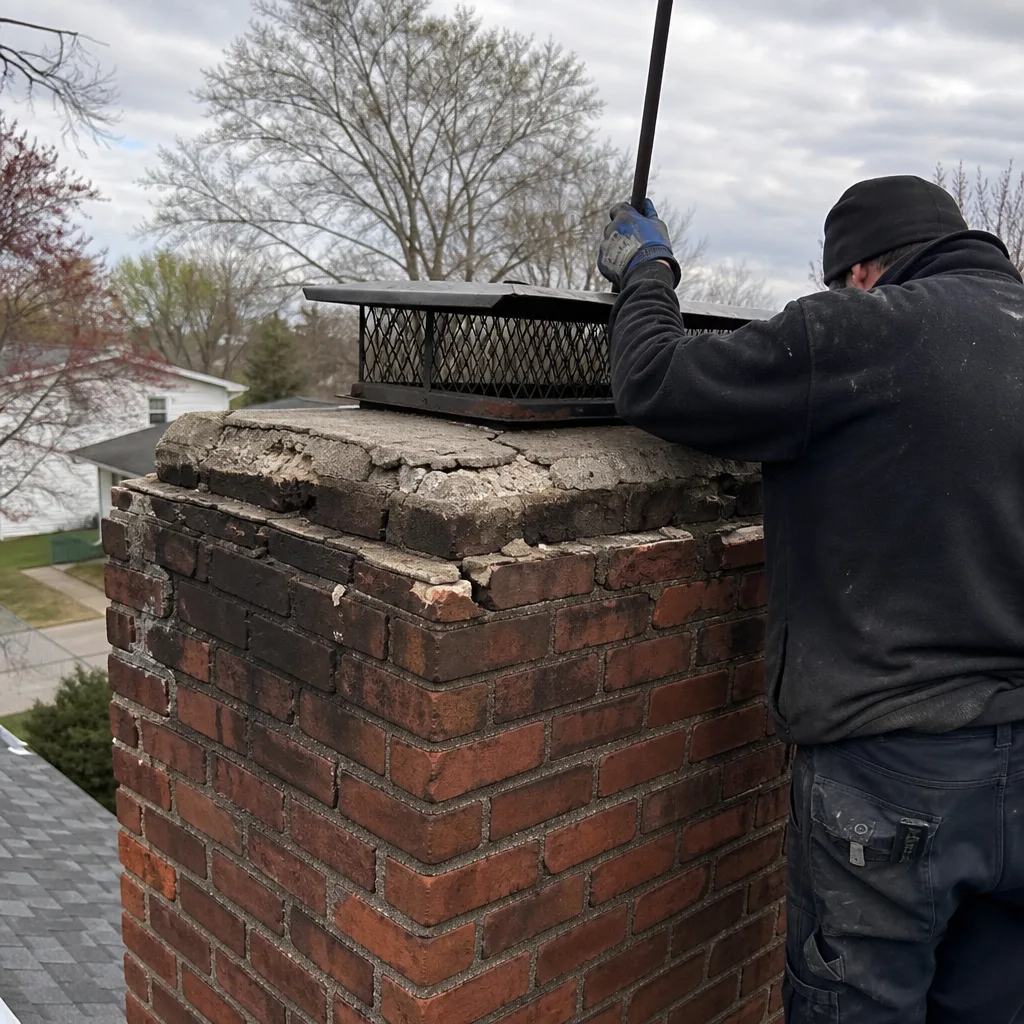 Before
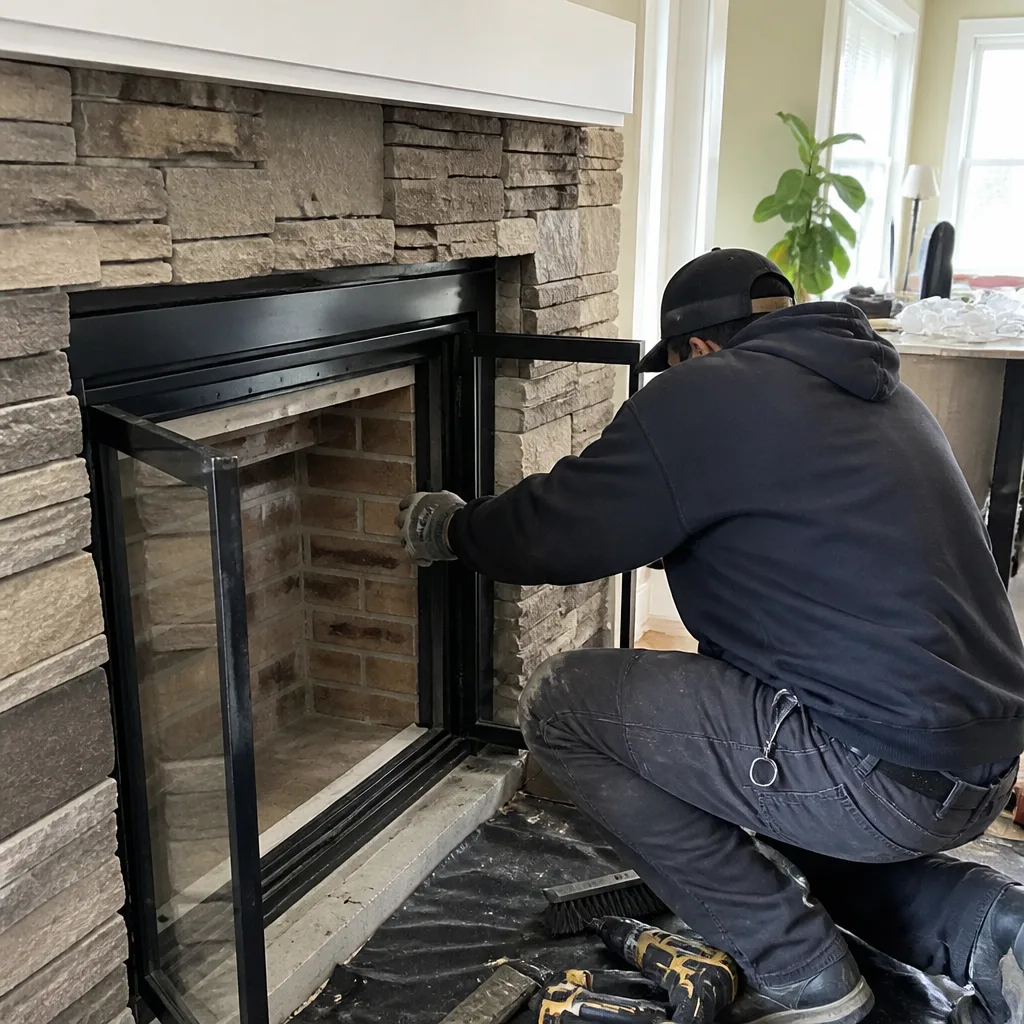 After
After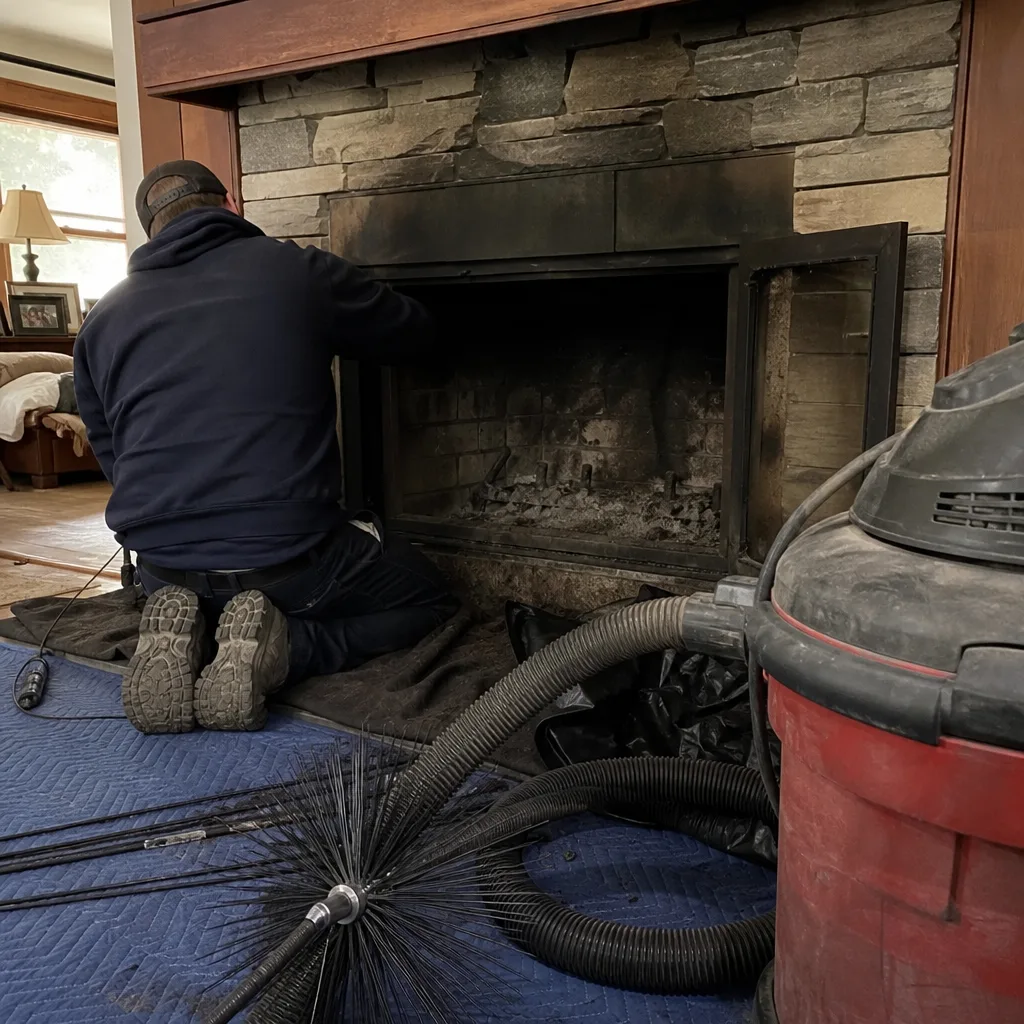 Before
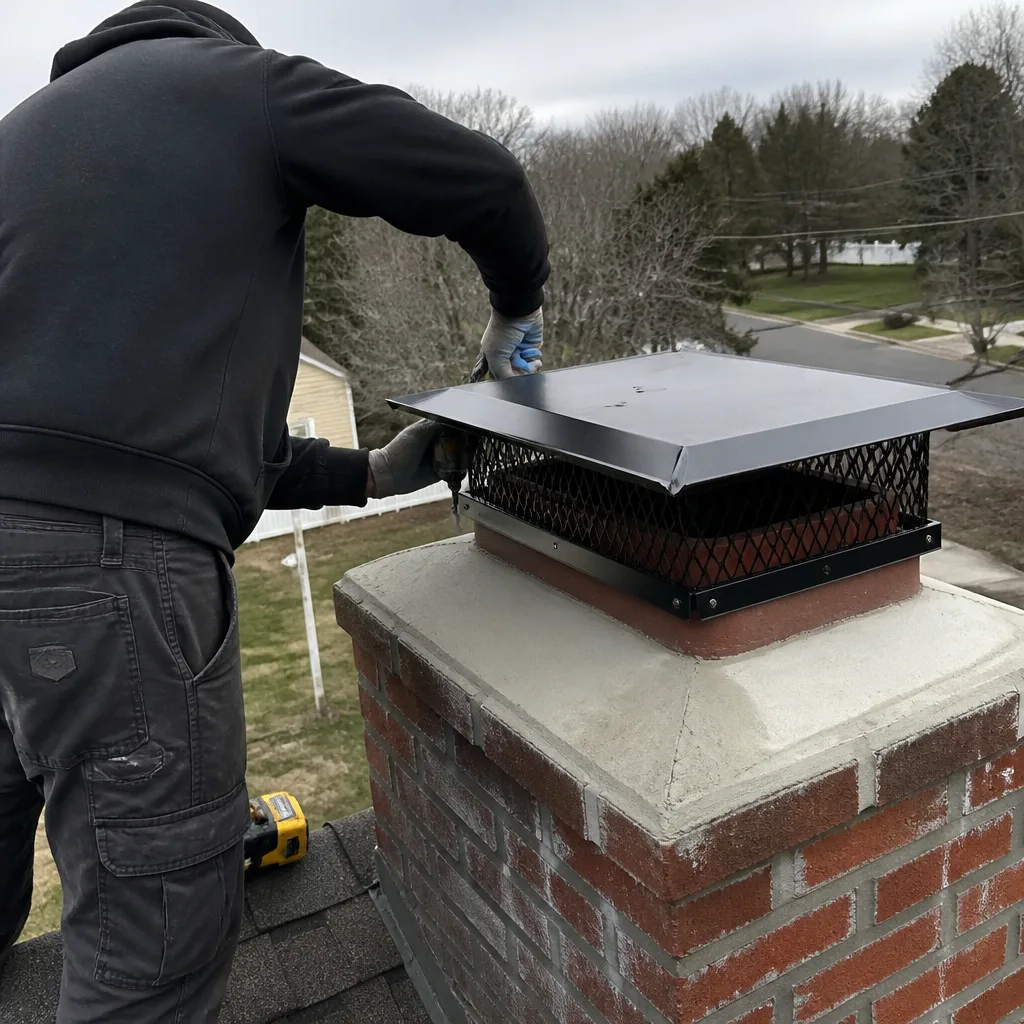 After
AfterChimney Cleaning Permits, Codes & Inspections in NY: What You Need to Know
A chimney liner replacement done without a permit in Suffolk County can surface as an open violation during a title search and hold up a home closing. It happens more than real estate agents like to admit, and it’s the kind of surprise that turns a routine sale into a three-month headache. In Brentwood, where housing stock runs from 1950s capes to newer colonials, we’ve watched buyers and sellers scramble over exactly this. This guide-along with our Complete Guide to Chimney Cleaning in Brentwood-lays out which chimney jobs in New York actually need a permit, which ones never do, how code enforcement works in practice from Suffolk County to the Adirondacks, and how to protect yourself when you hire a sweep or buy a house. You’ll learn what a legitimate Certificate of Insurance looks like, what happens when an unlicensed contractor touches your chimney, and how to pull an inspection record when the seller can’t find the paperwork.
Quick Answer
Most routine chimney cleanings and inspections in New York require no permit at all. A standard sweep is classified as maintenance, not construction. But structural changes almost always trigger a permit: liner replacements, rebuilds, relocations, and sometimes even cap installations, depending on your local enforcing agency. The dividing line in Brentwood and across Suffolk County is whether the work alters the chimney’s structure, venting path, or fire-resistance rating. When in doubt, call your town’s building department before the first brick comes off.
Table of Contents
- Which Chimney Jobs Need a Permit in New York (and Which Never Do)
- How NYS Building Code Section 1001 and NFPA 211 Actually Work Together
- Suffolk County Enforcement in Practice: What Brentwood Homeowners Should Expect
- What a Legitimate Sweep’s Certificate of Insurance Must Cover in NY
- The Insurance Gap: When an Unlicensed Contractor Does Chimney Work
- Buying a Home in Brentwood? How to Get the Chimney Inspection Record
- What a Code-Compliant Chimney Inspection Actually Looks Like
- Common Mistakes to Avoid
- When to Call a Professional
- Frequently Asked Questions
- The Bottom Line
Which Chimney Jobs Need a Permit in New York (and Which Never Do)
New York’s building code treats a chimney as part of the building envelope, not as a standalone appliance. That means the permit question turns on one thing: does the work change how the chimney is built, or does it simply restore what’s already there? A cleaning doesn’t change anything. A rebuild changes everything. Here’s the breakdown, job by job, based on what we see enforced in Brentwood and across Suffolk County.
Work that never requires a permit in New York:
- Routine chimney sweeping. Removing creosote and soot with brushes, rods, or a rotary whip is maintenance. No permit, no filing, no inspection. This is true in every town and county in the state.
- Level 1 and Level 2 chimney inspections. Looking at the flue with a camera, checking the firebox, examining the cap from the roof. Inspection is not construction. No permit.
- Minor masonry repointing. Filling small mortar joints on the exterior chimney body where the structure is sound. Most towns treat this as cosmetic repair. If you’re replacing more than a few square feet of mortar, though, some building departments want to know.
- Cap replacement. Swapping an existing cap for a like-for-like replacement is typically a repair, not an alteration. But here’s the nuance: if the original cap is missing and you’re adding one for the first time, a strict inspector may view that as an alteration. Brentwood homeowners should ask, but in practice, replacement caps sail through.
- Damper repair or replacement. The damper sits inside the firebox and doesn’t affect the flue path. No permit.
Work that always requires a permit in New York:
- Chimney liner installation or replacement. Dropping a new stainless liner from brands like Olympia Chimney or Gelco changes the flue’s internal dimensions and combustion characteristics. It requires a permit everywhere we work on Long Island. No exceptions.
- Full or partial chimney rebuild. Tearing down and rebuilding a chimney from the roofline up, or rebuilding the firebox, is structural work. Permit required.
- Chimney relocation. Moving a chimney to a different part of the roof. This triggers structural, framing, and fire-separation reviews. Permit required.
- Converting a wood-burning fireplace to gas or vice versa. Changing fuel type alters venting requirements and clearances. Permit required, and your gas utility will likely need to sign off too.
- Installing a new chimney where none existed. New construction, new penetration through the roof, new footings. Permit required, obviously.
The gray zone in New York is crown repair and re-crowning. A small patch is repair. Removing the entire crown and pouring a new one is arguably an alteration. In Brentwood, we’ve seen the Town of Islip building department take different positions depending on the extent of the work. When we re-crown a chimney, we call first. It takes ten minutes and avoids a stop-work order later.
If you’re looking at Chimney Repair in Brentwood, the permit question is one your contractor should answer for you, in writing, before work starts. If the answer is vague or changes from phone to doorstep, that’s your signal to keep looking.
How NYS Building Code Section 1001 and NFPA 211 Actually Work Together
New York State adopted the International Building Code as its base, and Section 1001 of the NYS Building Code covers chimneys and fireplaces. That section tells you the minimum construction standards: wall thickness, flue liner requirements, clearance to combustibles, and termination height above the roofline. What Section 1001 does not tell you is how often to clean your chimney or when creosote becomes a fire hazard. For that, the state defers to NFPA 211, the National Fire Protection Association’s standard for chimneys, fireplaces, and venting systems.
Here’s the practical interaction, because in twenty-nine years of sweeping in Brentwood we’ve never once had a homeowner ask us to explain code hierarchy over coffee. What they ask is, “Is my chimney safe?” and the answer depends on both documents.
Section 1001 sets the construction standard. If your chimney was built in 1954 with a terracotta liner and has a cracked flue tile, it doesn’t meet the current code. That doesn’t mean it’s going to collapse tomorrow. It means the chimney no longer meets the fire resistance standard that the code assumes when your homeowner’s insurance policy was written. Code doesn’t grandfather chimneys into permanent safety. It grandfathers them until conditions change, and a cracked flue tile is a changed condition.
NFPA 211 sets the maintenance standard. The language most people quote is the “examination at least once a year” line, but the more important instruction is this: a chimney shall be cleaned whenever creosote buildup reaches 1/8 inch thickness. First-degree creosote is a brush job. Third-degree is a glaze, catch it early. That’s not a company slogan. It’s NFPA 211 in plain English. The standard doesn’t care how your fire looks. Your flue doesn’t care how the fire looks. It cares how it breathes.
The enforcement mechanism is where these two documents come together. When an insurance adjuster investigates a chimney fire claim in New York, they’ll ask two questions. One: was the chimney maintained to NFPA 211? Two: did the chimney meet Section 1001 at the time of the fire? If the answer to the first is no, the claim can be denied for neglect. If the answer to the second is no, and the missing piece caused the fire, the claim can be denied for a known defect. A sweep who knows Brentwood chimneys can tell the difference between the two in about fifteen minutes with a camera in the flue.
Suffolk County Enforcement in Practice: What Brentwood Homeowners Should Expect
New York is a home-rule state for building code enforcement. That means the same code section can be read slightly differently from one town to the next. In Suffolk County, you’re dealing with ten separate town building departments plus the villages. Brentwood falls under the Town of Islip. Central Islip falls under the same. Bay Shore, also the Town of Islip. Different towns, different inspectors, different levels of rigor.
What we see in practice in the Town of Islip:
- Liner replacements are scrutinized. The inspector will want to see the permit, the liner manufacturer’s specifications, and proof that the installer followed the listed instructions. Brands like Famco and Copperfield publish installation manuals that inspectors recognize by name. If you’re installing a liner in Brentwood, use a listed product and keep the paperwork.
- Rebuilds get a close look at the footings if the chimney is on an exterior wall. Suffolk County has brutal freeze-thaw cycles. Water gets into brick, freezes, expands, and spalls the face off. An inspector who sees a rebuilt chimney with original footings is going to ask questions. They’re right to.
- Cap replacements rarely trigger anything. We’ve never had a permit pulled for a like-for-like cap swap in Brentwood. Not once in twenty-nine years.
- Discontinued chimneys become enforcement targets. If you removed a furnace and left a dead chimney capped off, some town inspectors will flag it as an unmaintained structure during a resale inspection. It’s not a violation by itself, but it will show up in the report.
Climate matters here in ways a code book can’t capture. Brentwood gets freeze-thaw cycles every winter, and chimneys break in the off-season too. A liner that passes inspection in August can crack by February if the crown was already failing and water got in. That’s not a code failure. It’s a timing failure. The code assumes you’ll maintain the chimney after the inspector leaves, which is exactly why the annual inspection cycle from NFPA 211 is not a suggestion. It’s the enforcement mechanism for everything the inspector can’t see.
If you’re in the middle of a sale and the buyer’s inspector flags a chimney issue, the Town of Islip will typically require a permit and a Certificate of Compliance before the closing can proceed. A free second opinion on any written estimate, the kind Wendell offers, is worth more than ever in that situation. You need someone who can tell the difference between a real code violation and an inspector covering every surface with a clipboard.
What a Legitimate Sweep’s Certificate of Insurance Must Cover in NY
Every legitimate chimney company in New York carries a Certificate of Insurance, and any homeowner can ask to see it before work starts. The question is what to look for, because a piece of paper with an insurance company logo is not the same as coverage that actually protects you when a chimney fire starts after a sweep.
Here’s what the certificate should show:
- General liability coverage with a limit of at least $1 million per occurrence. This covers property damage and bodily injury caused by the sweep’s work. If a technician drops a brush down your flue and cracks a terracotta liner, this is the policy that pays.
- Coverage for the specific trade. Chimney sweeps fall under a different classification than general contractors. If the certificate lists a roofing or handyman classification, the carrier can deny coverage for a chimney-specific claim. Ask to see the classification code.
- Certificate holder listed as the homeowner’s name and address. If you’re not named, you’re not notified if the policy lapses. Have the certificate issued to you, not just to the general contractor.
- Workers’ compensation coverage. If anyone is on your roof or in your home, and they’re hurt, worker’s comp is what prevents that person’s medical claim from becoming your liability. In New York, the penalties for hiring an uninsured contractor who gets hurt can fall on the property owner.
- Policy dates that cover the day of the work. Look at the effective and expiration dates. A lapsed policy is the same as no policy.
Wendell puts his name on the work, and the certificate we hand over has the same name on it. That’s not a marketing line. It’s the difference between the guy who runs into you on Saturday at the hardware store and a franchise that rotated in last spring. In Brentwood, where a fair number of us have been here for decades, word travels fast. A sweep who won’t show his insurance isn’t going to last long, but he’ll take your money before he goes.
The Insurance Gap: When an Unlicensed Contractor Does Chimney Work
Here’s the scenario we hear about most often, and it’s the one most homeowners don’t see coming. You hire a handyman or a Craigslist contractor to replace a chimney liner or rebuild a crown. He does the work, takes the check, and leaves. Two winters later, a chimney fire damages the roof and the attic. Your insurance company sends an adjuster who discovers the liner was replaced without a permit and by a contractor who had no license and no insurance. The claim is denied, or reduced, because the work was performed by an unqualified person outside the permitting system. The insurance company’s position is simple: you introduced the risk, and you failed to mitigate it.
This isn’t hypothetical. It’s the most common chimney insurance denial pattern in New York outside of pure neglect. The gap works like this:
- Your homeowner’s policy covers sudden and accidental damage from fire and smoke.
- It excludes damage caused by faulty workmanship or by modifications made without required permits.
- When an unlicensed contractor does the work, the exclusion attaches to the entire chimney, not just to the part he touched.
- The contractor is gone. He has no insurance to pursue. Your only recovery is out of pocket.
The fix is simple and not exciting: hire a licensed, insured chimney contractor, pull the permit when the job requires one, and keep the paperwork. In Brentwood, Top Hat Chimney home has been doing it that way since 1999, not because it’s easier, but because it’s the only way that survives a claim review. A $40 discount on a repair over $200 is not worth a denied $40,000 claim. No one has ever told us they saved money by hiring the unlicensed guy after the fire happened.
Buying a Home in Brentwood? How to Get the Chimney Inspection Record
Brentwood’s housing market moves fast, and chimney inspections are often the last thing anyone thinks about until the home inspector flags something on the roof. Here’s the sequence that actually plays out, and how to handle it without losing the house.
Step 1: Ask the seller for records before the inspection. If the seller had the chimney swept or inspected in the last five years, they should have an invoice or a written report. Many don’t. That’s not a red flag by itself. People lose paperwork. But the absence of records means you’re buying the chimney blind, and you should treat it that way.
Step 2: If records exist, check for three things. Was the sweep licensed and insured? Did the report include camera inspection, or was it a visual from the fireplace level only? Did it list creosote thickness or just say “cleaned”? A report that says “cleaned” with no measurements is not an inspection. It’s an invoice.
Step 3: If records don’t exist, request a Level 2 inspection. A Level 2 inspection includes a video scan of the flue interior, an examination of the exterior from the roof if accessible, and an evaluation of clearances in the attic where the chimney passes through. In Brentwood homes built in the 1960s and 70s, the attic clearance is where problems hide. Framing too close to the flue, missing fire-blocking at the ceiling line, insulation jammed against the brick. A Level 2 finds it. A Level 1 misses it.
Step 4: Pull the permit history from the Town of Islip. If the home has a newer liner or a rebuilt chimney, the town will have a record of the permit and the final inspection. This is public record, and you can request it. If the liner is clearly new but there’s no permit record, you’ve found the kind of open violation that holds up closings. The seller can apply for a retroactive permit, but that takes time, and in a seller’s market, it can kill the deal.
Step 5: Get an estimate before you close. If the chimney needs work, the cost should be factored into the negotiation, not discovered in November. A chimney cleaning and inspection in Brentwood runs predictable numbers, and we’ll give you a straight quote without a trip charge inside the county. The camera footage and a plain-English verdict, every time, no exceptions. That’s been the rule since 1999.
If you’re looking at Fireplace Services in Brentwood as part of a purchase, the same record logic applies. A fireplace with no inspection history deserves a Level 2 before you sign anything.
What a Code-Compliant Chimney Inspection Actually Looks Like
Most Brentwood homeowners don’t know that chimney inspections come in three levels, defined by NFPA 211. Knowing the levels matters when you’re paying for an inspection, because a Level 1 for a routine sweep is not the same as a Level 2 for a home sale, and no one should pay Level 2 money for a Level 1 glance.
Level 1 inspection: This is the standard inspection done during a routine sweep. The sweep checks the accessible portions of the chimney: the firebox, the damper, the visible flue from above and below, and the exterior from ground level. There’s no camera, no roof climb unless the chimney is easily accessible, and no attic. A Level 1 is appropriate when you’ve used the same chimney the same way every year and nothing has changed. In Brentwood, most annual cleanings include a Level 1.
Level 2 inspection: This is required whenever you’re buying or selling a home, when a chimney fire has occurred, when a weather event like a hurricane or a severe ice storm has hit the area, or when you’re changing fuel type from wood to gas. The Level 2 adds a video scan of the flue interior, a roof-level inspection of the crown and cap, and an attic check for clearance issues. After every major hurricane that brushes Long Island, we run Level 2 checks on chimneys we’ve served for years. Chimneys break in the off-season too, and a storm is off-season with a grudge.
Level 3 inspection: This is the invasive one. The sweep removes portions of the chimney structure to access concealed areas. It’s only required when a Level 2 finds something that needs a closer look, and it’s the kind of inspection that gets a permit. Level 3 inspections in Brentwood are rare, but they happen most often after chimney fires or when a buyer wants to know whether a cracked liner is the whole story or just the part he can see.
The inspection doesn’t end with the camera. A code-compliant report includes creosote thickness measurements, flue dimensions, clearance violations, crown condition, cap condition, and a written recommendation. If the recommendation is “replace the liner,” you should see the camera footage that justifies it. We hand it over every time, because a recommendation without evidence is a sales pitch, and a sweep who won’t show you the footage is a sweep who’s betting you won’t ask. Ask anyone on your street about that. In Brentwood, they’ll tell you they’d rather see it with their own eyes.
Common Mistakes to Avoid
- Assuming all chimney work is permit-required. It isn’t, and paying for a permit on a routine sweep just feeds the building department’s filing cabinet. The opposite mistake is worse: assuming nothing requires a permit. Liner replacements and rebuilds do, and unpermitted structural work surfaces during title searches.
- Treating a “cleaned” invoice as an inspection report. A sweep that says “cleaned” without creosote measurements, flue condition notes, or clearance observations is a receipt, not a record. If you’re buying a home in Brentwood and that’s all the seller can produce, ask for a Level 2 before you close.
- Hiring a handyman to replace a liner because it’s cheaper. In Brentwood, we’ve seen unpermitted liner replacements surface as open violations during title searches, and the seller had to pull a retroactive permit at the worst possible time. The insurance gap is even worse. A denied chimney fire claim dwarfs any upfront savings.
- Paying for a Level 2 without knowing it. Some companies charge Level 2 prices for a Level 1 inspection because homeowners can’t tell the difference. Now you can. A Level 2 includes video, attic, and roof access. A Level 1 is visual.
- Ignoring a cracked crown because “the fireplace works fine.” The crown is the roof of the chimney. Once water gets in, freeze-thaw does the rest. A cracked crown in Brentwood will spall brick within two winters and turn a few hundred dollars of crown repair into a few thousand of masonry work.
- Not asking to see the Certificate of Insurance before work begins. The time to check coverage is before someone is on your roof, not after. Ask to be listed as the certificate holder and confirm the policy is current for the day of the work.
- Assuming a home inspector covered the chimney thoroughly. Home inspectors in New York are generalists. They’ll flag an obviously damaged cap or a visible crack, but they’re not running a camera through the flue or measuring clearances in the attic. A general home inspection is not a chimney inspection. The buyer learns that when the first fire of December fills the living room with smoke.
When to Call a Professional
Call a sweep when you can see creosote glaze the thickness of a credit card on the flue walls, when smoke spills into the room instead of rising, when the damper won’t operate, when you smell smoke in rooms far from the fireplace, or when you see crumbling mortar and spalled brick on the exterior-these are all chimney cleaning warning signs every Brentwood homeowner should know. Call after any chimney fire, no matter how small, and before you buy or sell a home in Brentwood. Call when your chimney has been idle for years, because critters and water don’t take the season off. And call when you look at the work a handyman did and you don’t have a permit or an inspection record, because that’s the kind of thing that surfaces later at the worst time. Top Hat Chimney offers free estimates in Brentwood, call (934) 935-3847 and Wendell or one of his crew will give you a straight answer before a single tool comes off the truck.
Frequently Asked Questions
No. Routine chimney cleaning and sweeping is classified as maintenance, not construction, and no permit is required anywhere in New York State, including Brentwood and all of Suffolk County. The moment the work changes the chimney’s structure, the permit question changes with it. Give us a call at (934) 935-3847 if you’re not sure which side of the line your job falls on, the estimate is free and the answer is straight.
A Level 1 inspection in Brentwood typically costs $150 to $250, and a Level 2 inspection with video scanning runs $250 to $450 depending on roof access and attic conditions. Level 3 inspections are quoted case by case because they involve opening the structure. We never charge a trip fee inside our service county, and the price Wendell quotes on the phone is the number on the invoice. Call (934) 935-3847 for an exact quote.
Yes. Replacing a chimney liner changes the flue’s internal dimensions and venting characteristics, which triggers a permit in the Town of Islip and across Suffolk County. The inspector will want the liner’s listing documentation and proof the installer followed the manufacturer’s instructions. We’ve seen unpermitted replacements in Brentwood turn into title-search violations, and the retroactive permit is always more expensive than the one pulled before work started. Call (934) 935-3847 and we’ll walk you through the whole paper trail.
Once a year, burn or no burn. NFPA 211 says a chimney must be cleaned whenever creosote reaches 1/8 inch thickness, and in New York’s burning season that often means annually. Third-degree creosote is a glaze that catches fire with a vengeance, and it’s far easier to brush out first-degree creosote at an annual cleaning than to recover from a chimney fire. For Brentwood wood-burning households, an annual sweep plus a Level 1 inspection is the standard that keeps insurance companies happy and fires where they belong.
Skipping a few years turns first-degree creosote into second or third, and that’s when the risk curve turns steep. A chimney fire in a Brentwood home can burn hot enough to crack a terracotta liner, and once the liner is compromised, the fire has a path to framing. The other thing that happens when chimneys sit unused is water damage and animal nesting, both of which get worse every year. The $40 off any repair over $200 won’t undo a fire, but an annual sweep prevents one. Call (934) 935-3847 to get current, and we’ll tell you the truth even if the answer is that your chimney is fine.
Most New York homeowner’s policies cover sudden and accidental chimney fires if the chimney was properly maintained and permitted work was done by a licensed contractor. If the chimney was neglected, or if an unlicensed contractor did unpermitted work, the insurer can deny the claim on the basis of known defects or excluded faulty workmanship. Keep your cleaning records, your inspection reports, and your permits. Call us at (934) 935-3847 and we’ll make sure your chimney is in a condition that a claims adjuster would approve of.
The Bottom Line
New York draws a clean line through the chimney world: cleaning is maintenance and needs no permit, structural work touches the code and needs a paper trail. In Brentwood, where freeze-thaw punishes chimneys every winter and title searches catch what homeowners forgot, the difference between a permit and no permit can be the difference between a closing that happens and a closing that stalls. The insurance angle is the one nobody thinks about until the fire happens, and by then the unlicensed contractor is gone and the denial letter is on the way. Pull the permit when the job calls for it, keep the records, and hire a sweep who answers the phone when you call. For more guides & resources on keeping your chimney safe and your paperwork straight, visit our blog. That’s been how we’ve worked since 1999, and it’s how you protect a house that’s supposed to be keeping you warm, not keeping you up at night.
Written by Wendell Pike, Owner at Top Hat Chimney, serving Brentwood since 1999.