
Level 1 sweep and inspection to the NFPA 211 annual standard - flue, crown, cap, and flashing checked and photographed
Chimney sweep logs do not sweep chimneys. They loosen some creosote - which then falls where a brush and vacuum still have to collect it.
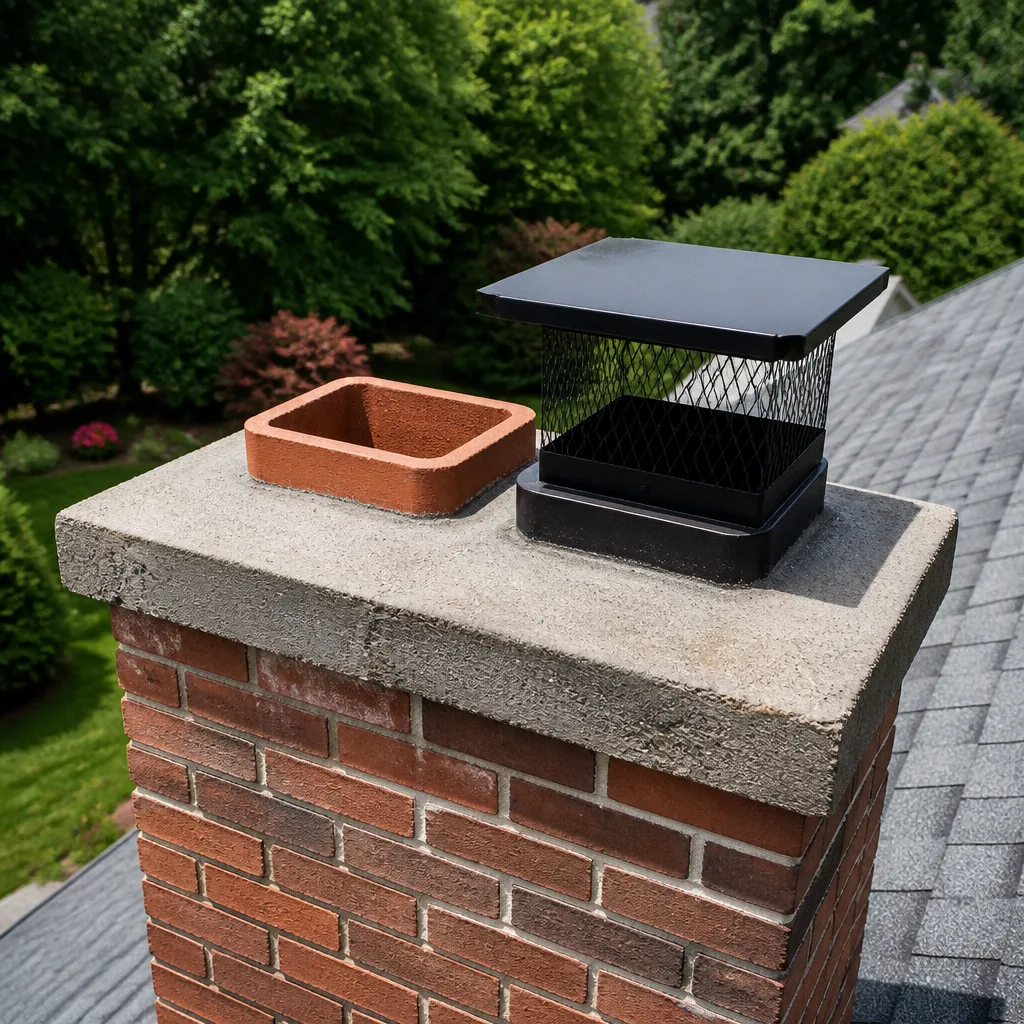
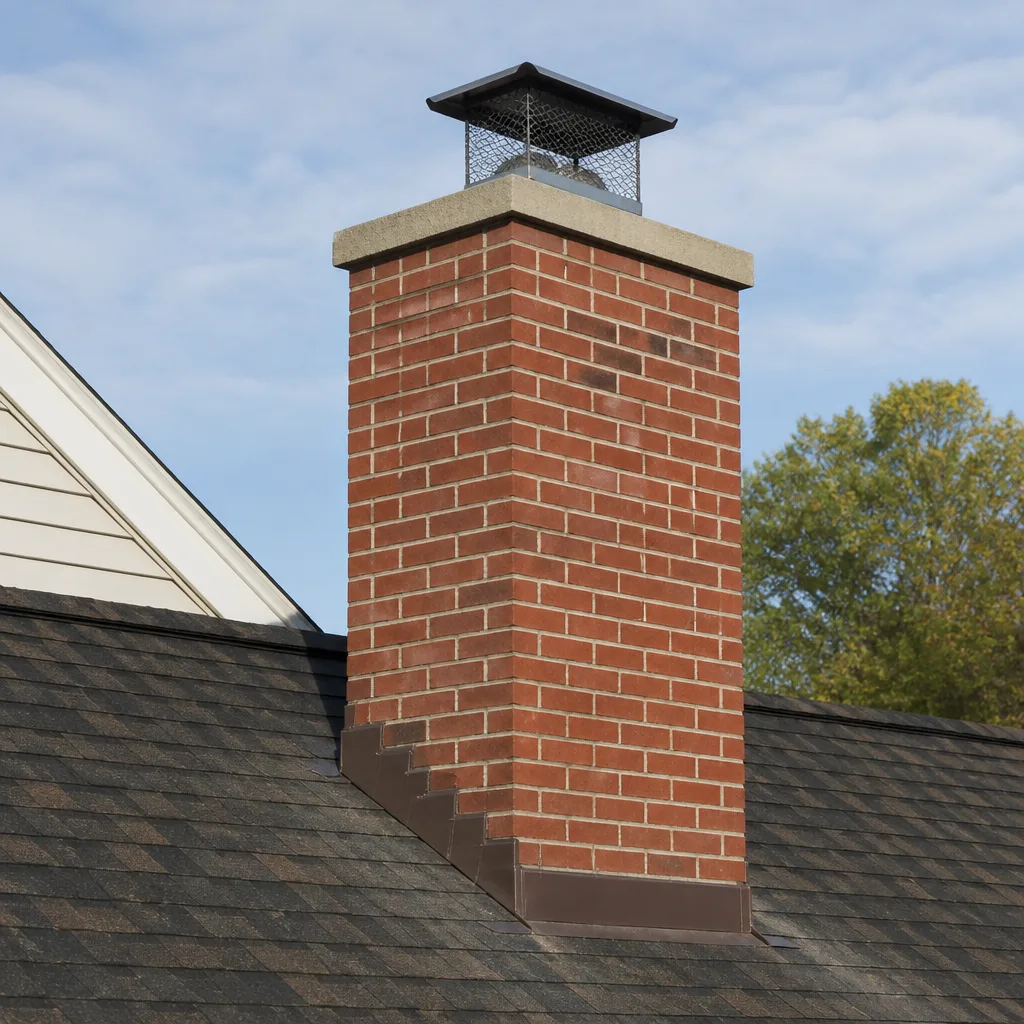
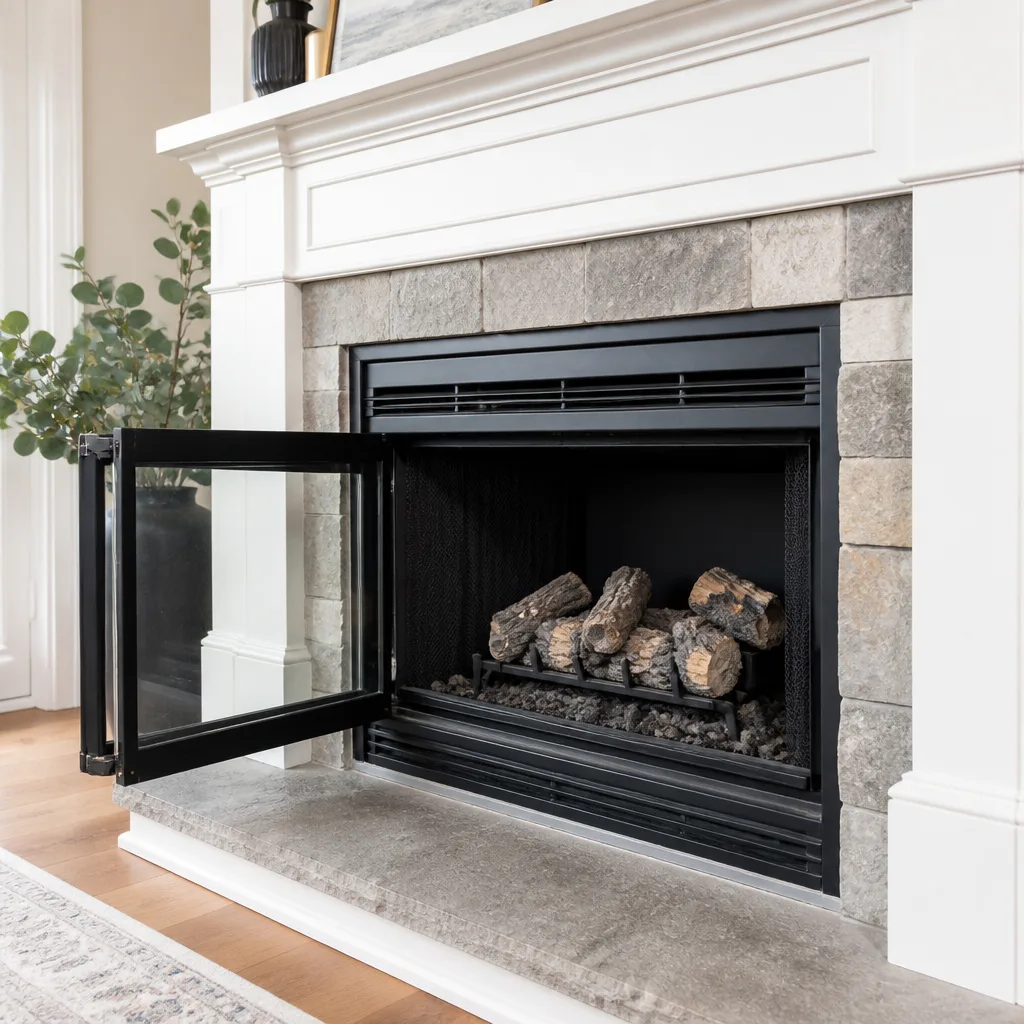
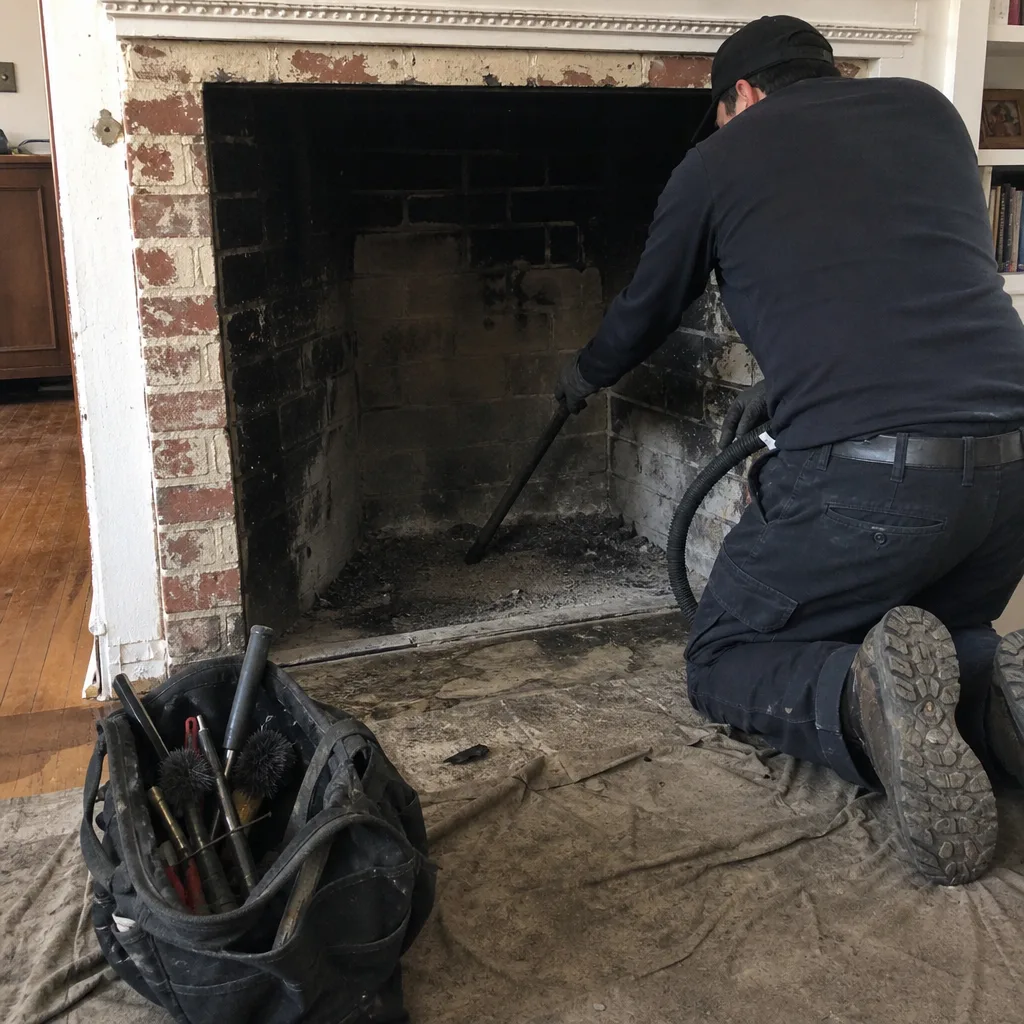 Before
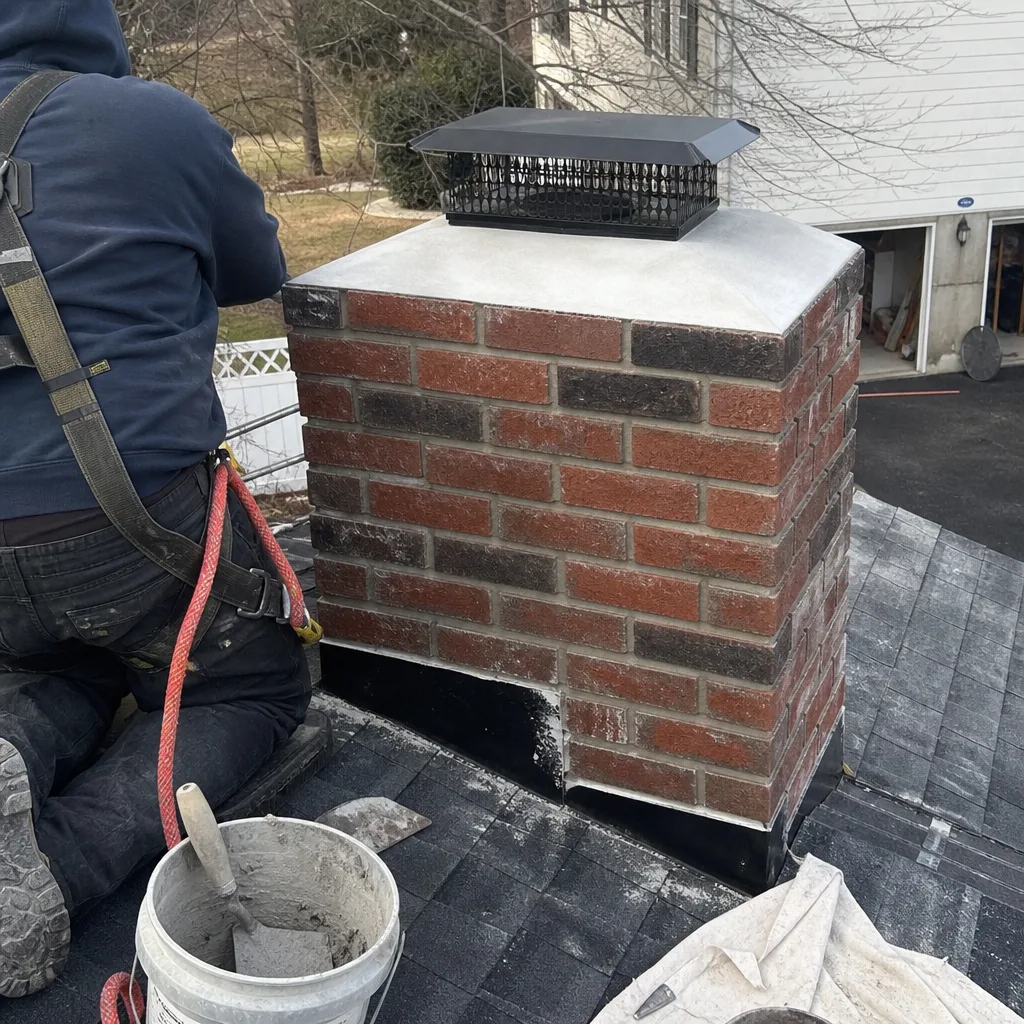 After
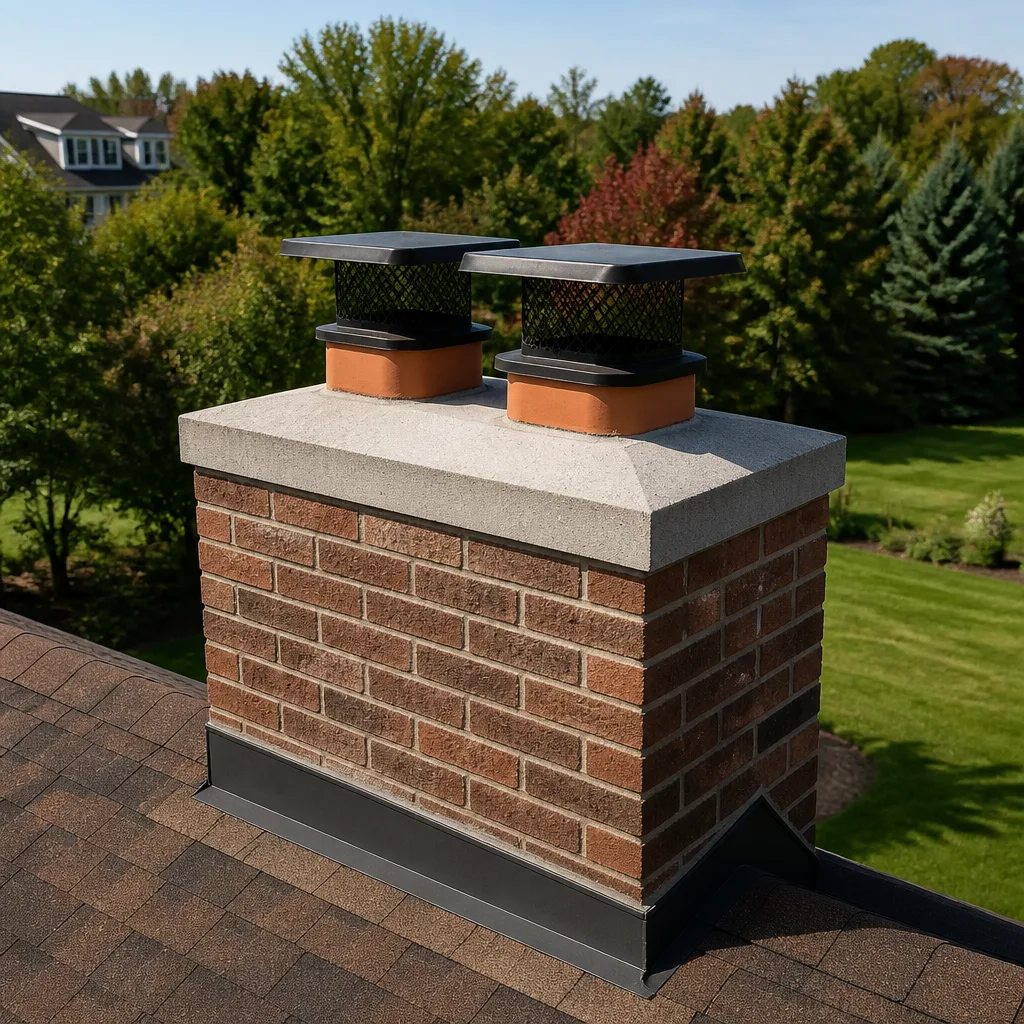
After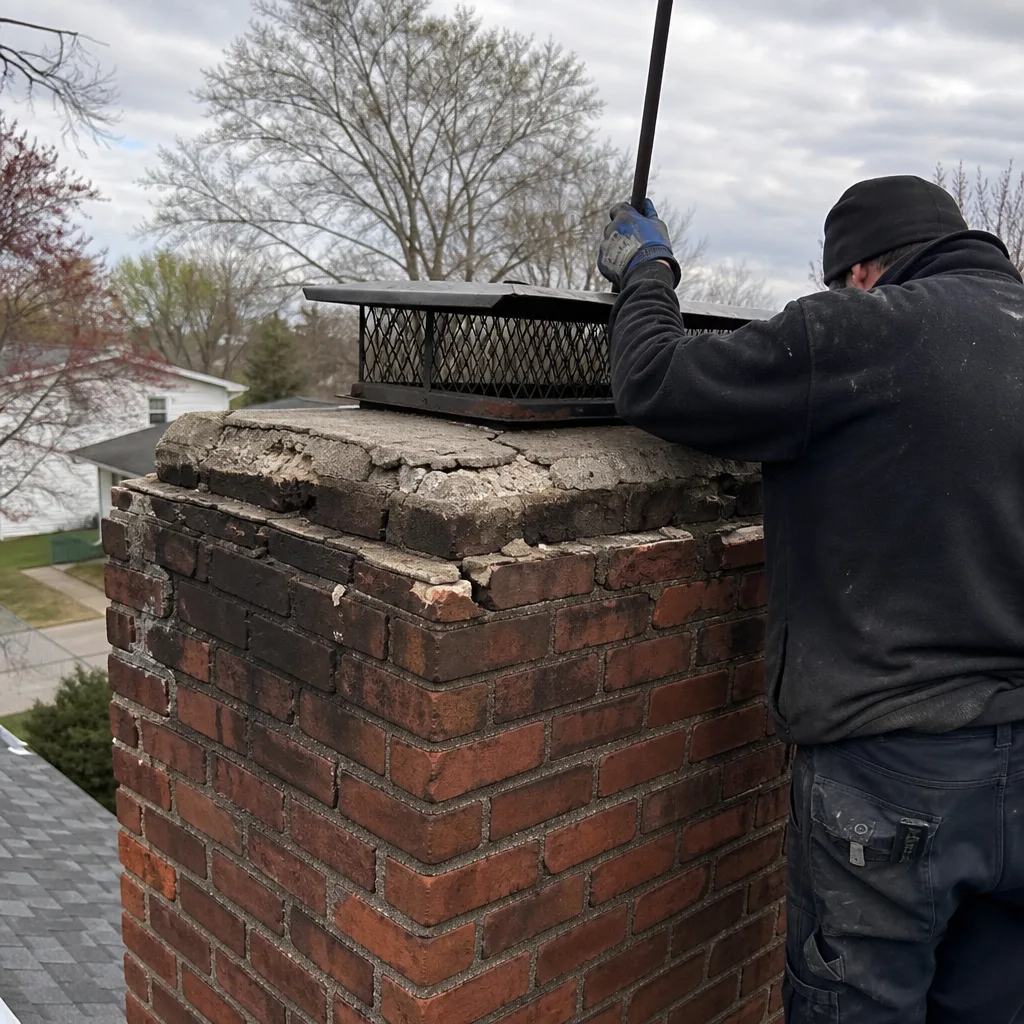 Before
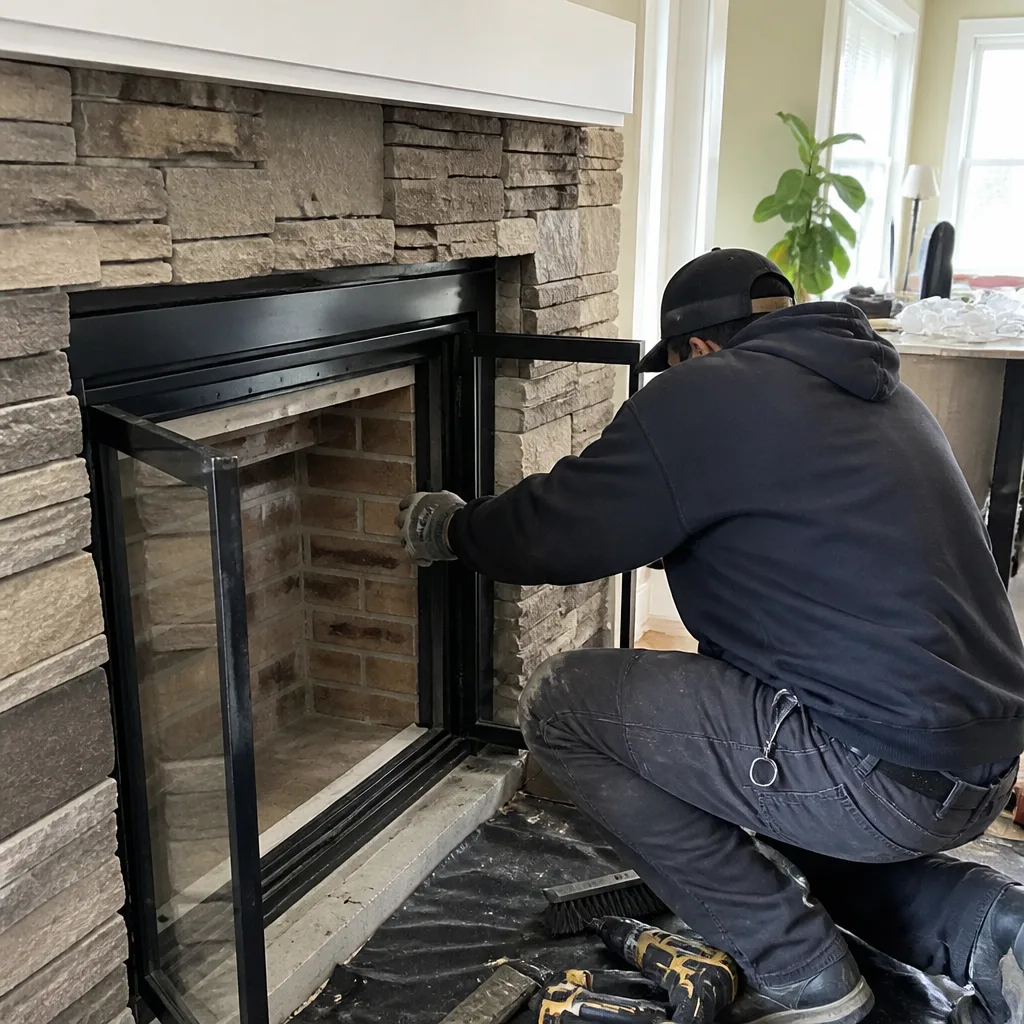 After
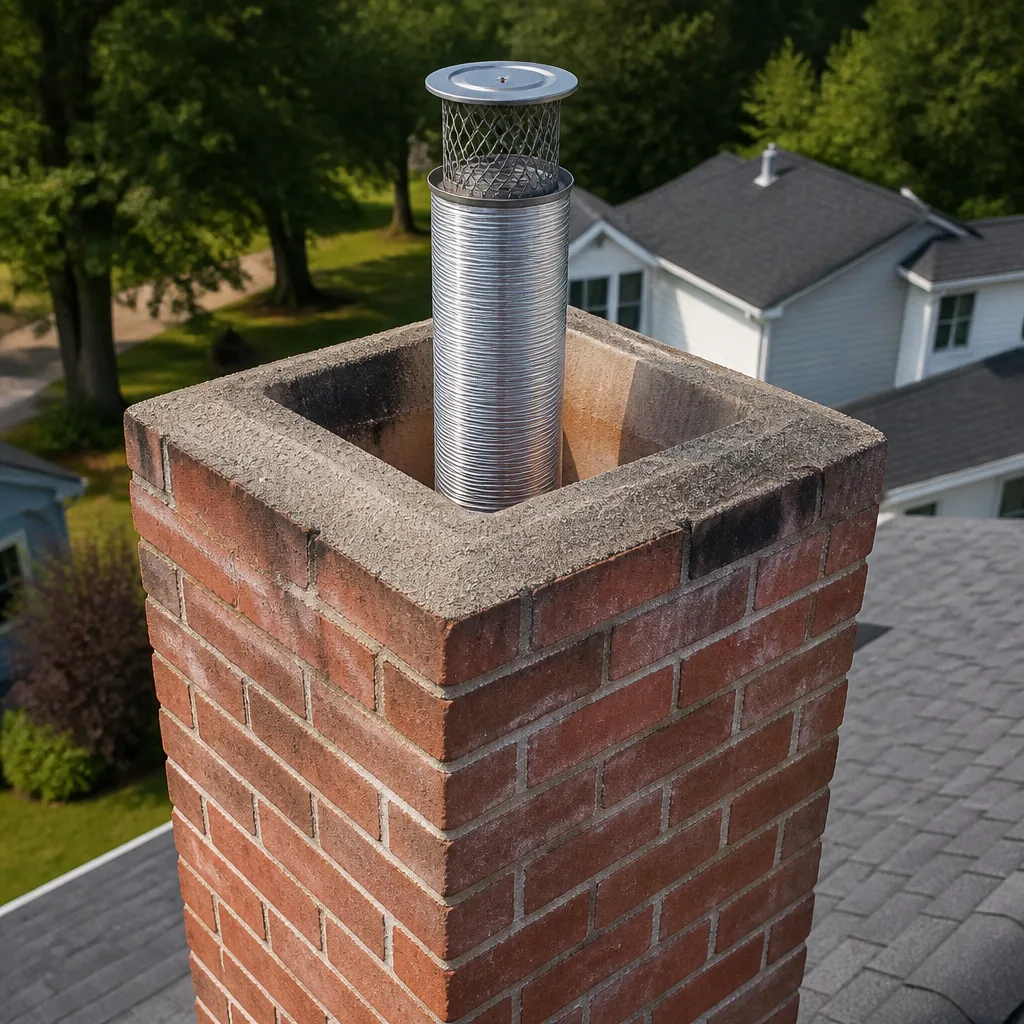
After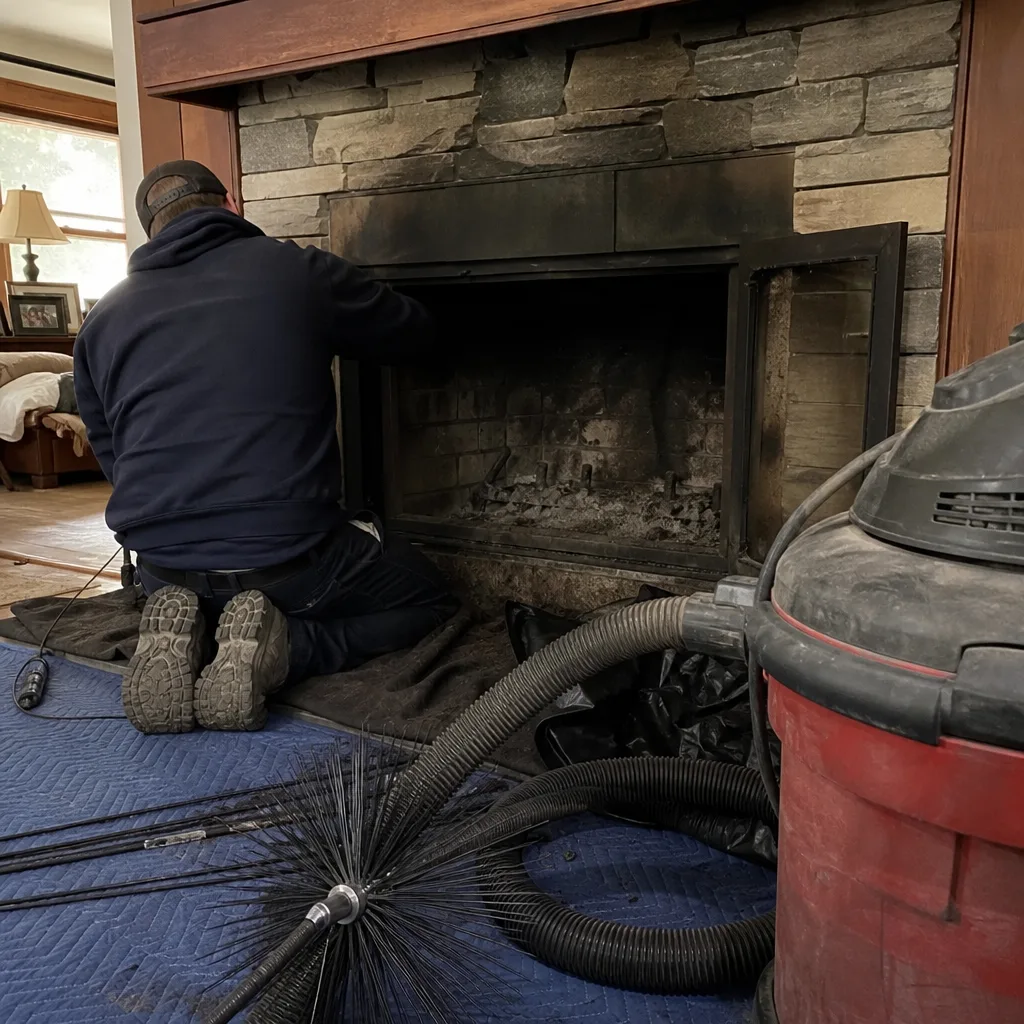 Before
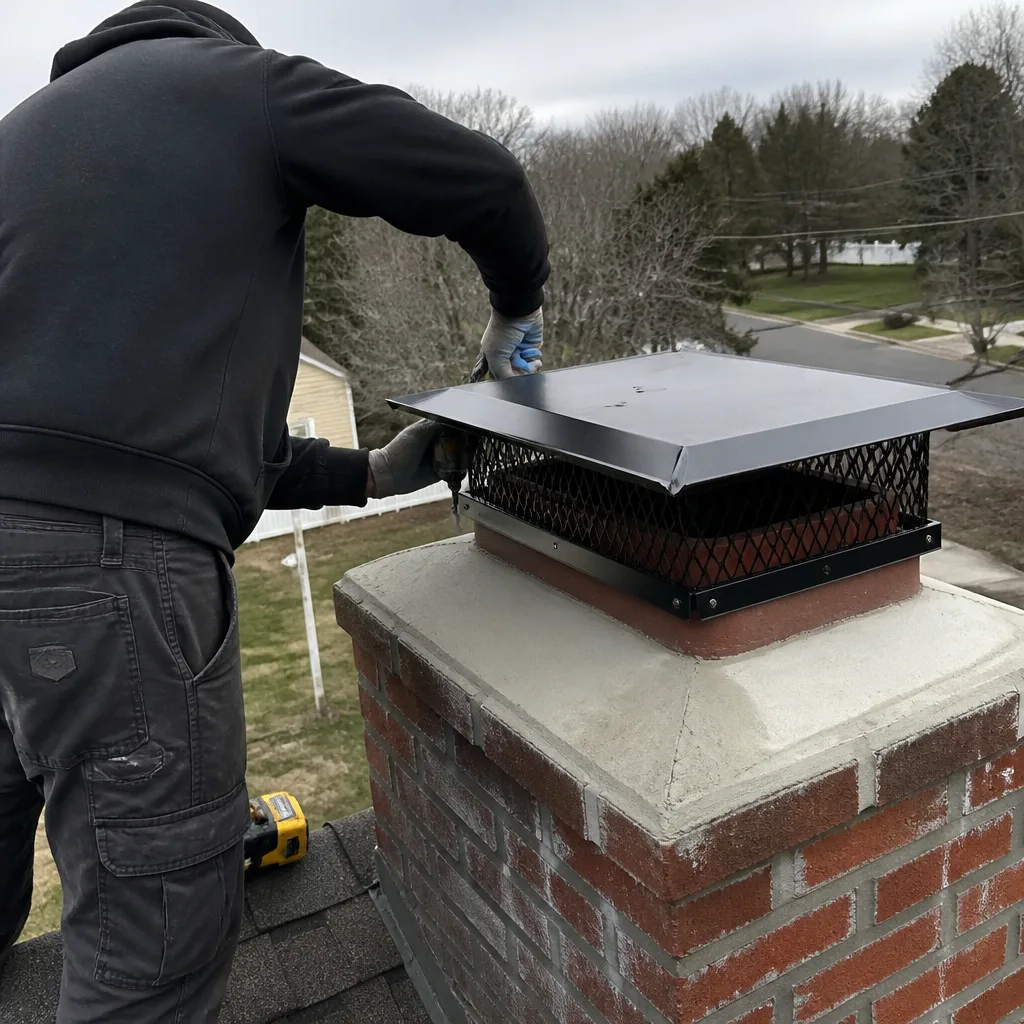 After
AfterChimney Liner & Rebuild in Central Islip: Salt Air and Old Flues Don’t Mix
Chimney liner repair and rebuild work in Central Islip usually costs between $1,800 and $6,500 depending on whether you need a stainless steel liner dropped into an existing flue or a full masonry rebuild from the roofline up. The two culprits we see most on Central Islip chimneys are salt air off the Great South Bay eating through caps and flashing, and oil-to-gas conversions leaving old clay tile liners to crack apart from acidic condensation. A camera inspection settles which problem you actually have. Call (934) 935-3847 and we’ll book one.
What makes Central Islip different from Islandia or Hauppauge is the age and layout of the housing stock. The Capes and ranches built here between the late 1940s and mid-1970s almost all share the same original masonry chimney: one flue for the fireplace, one for the oil burner. Fifty to seventy-five years later, those dual-flue stacks are showing their age, and the salt air five miles off the bay isn’t doing them any favors. We’ve been inside enough of them to know what fails first.
Key takeaways:
- Stainless steel liners in Central Islip typically run $1,800 to $4,200 installed, depending on flue height and access.
- A full chimney rebuild from the roofline up usually falls between $4,500 and $6,500 in this market.
- Salt air corrodes galvanized caps and flashing within a decade, letting water into the flue.
- Oil-to-gas conversions leave cool, acidic exhaust condensing inside clay tile liners, cracking them from within.
- Every liner recommendation comes with camera footage you can watch yourself. No exceptions.
Why Top Hat Chimney Is Central Islip’s Chimney Liner & Rebuild Company
Wendell Pike started Top Hat Chimney in 1999, and he’s been working the same Long Island communities ever since. He puts his name on every job, and the 90-Day Done Right Promise is stamped on every invoice in writing. If the liner or rebuild isn’t right, one call brings him back. No argument, no re-quote.
The crew that shows up at your Central Islip door is background-checked, uniformed, and gets a real arrival window that we call to confirm if anything slips. We answer the phone with a live person around the clock, and it may well be Wendell picking up at midnight. That matters when you’re staring at water running down the face of your chimney during a nor’easter and need to know if it can wait until morning.
We also know Central Islip’s housing stock in a way a national franchise can’t. A ranch off Carleton Avenue with a 1958 clay tile flue is a different job than a split-level near Lowell Avenue that was converted to gas in 2009. We price both honestly before a single tool comes off the truck. The number you hear on the phone is the number on the invoice.
Our Chimney Liner & Rebuild Services in Central Islip
Stainless Steel Liner
For most Central Islip homes that converted from oil to gas, the right fix is a stainless steel liner sized to the new, cooler exhaust. We install DuraFlex and Famco liners that carry a lifetime warranty against corrosion. The duct gets down-sized to match the gas appliance, which also improves draft and stops the acidic condensation problem at the source.
Flexible Liner
Older Capes and ranches in Central Islip often have flues with slight offsets or settlement, and a rigid liner won’t make the turn. A flexible Copperfield or HeatShield liner follows the existing masonry without tearing out walls. It’s the most common liner we install in this community’s 1950s tract chimneys, and it typically avoids a full rebuild altogether.
Liner Replacement
When the original clay tile liner has spalled, cracked, or separated at the joints, it has to come out or be relined over. We’ll show you the camera footage first, in plain English, and explain what in your specific chimney is failing. Then we quote the replacement at a flat price before work starts. No one at Top Hat has ever recommended a liner replacement without camera evidence you can see for yourself.
Partial Rebuild
Sometimes the liner is fine and the problem is above the roofline. We rebuild chimneys from the crown down through the first few courses of brick when a nor’easter has soaked a cracked crown and popped bricks loose. A partial rebuild in Central Islip usually runs $2,400 to $3,800, depending on how many courses of brick need to come out and how much flashing has to be replaced.
What Fails First on a Central Islip Chimney: Liner, Crown, or Flashing?
On a Central Islip Cape Cod or ranch, the answer is almost always the galvanized flashing and cap first, then the clay tile liner, then the crown. The sequence is predictable because the salt air off the Great South Bay attacks the thinnest metal first. Once the cap rusts through and flashing separates at the roofline, water gets behind the brick and into the flue. Then the freeze-thaw cycle from November through March does the structural damage.
Here’s the full failure chain we see over and over on homes near the bay:
- Galvanized caps and flashing corrode first. Within 8 to 12 years near the bay, the galvanized coating is gone and rust perforation begins. The cap stops keeping rain out, and the flashing stops keeping roof water out.
- Water saturates the clay tile liner. Once water gets inside the flue, it soaks the porous clay tiles. When Central Islip temperatures drop below freezing, that water expands and spalls the tile faces.
- Acidic gas exhaust accelerates the cracking. On homes converted from oil to natural gas, the cooler exhaust condenses acidic moisture inside the flue. That acid eats the mortar joints between clay tiles, and combined with freeze-thaw spalling, the liner fails from both directions.
- The crown cracks and the rebuild becomes necessary. Nor’easters soak the exposed crown, and water works down through hairline cracks. By the time the brick face starts popping off, a partial rebuild is often the only option that lasts.
Salt air isn’t a minor detail here. It’s the reason we install stainless steel caps and flashing on every Central Islip liner job, even when the customer asks for the cheaper galvanized option. We’ll quote both, and we’ll tell you plain which one we’d put on our own house.
A Real Job in Central Islip: Split-Level off Lowell Avenue
On a split-level off Lowell Avenue, Wendell’s tech found third-degree creosote glazing the smoke chamber and the clay tile flue liner cracked from years of condensed gas exhaust after an oil-to-gas conversion. The homeowner had called for a routine cleaning. The camera told a different story. We installed a DuraFlex stainless steel liner, rebuilt the spalled chimney crown, and replaced the corroded galvanized flashing with stainless steel so the salt air off the Great South Bay wouldn’t eat through it in another five years.
That job is the rule in Central Islip, not the exception. Routine cleaning turns into a liner inspection here more often than in communities with newer housing. Your flue doesn’t care how the fire looks. It cares how it breathes.
Why Central Islip’s Oil-to-Gas Conversions Destroy Clay Tile Liners
Central Islip’s post-WWII Capes and ranches almost always have a single masonry chimney serving both a fireplace and an oil-fired furnace flue. When these homes were built, that oil burner exhausted hot, dry gases that moved through the flue quickly and kept the clay tiles relatively warm. Suffolk County’s broad shift toward natural gas and heat pumps changed that physics entirely.
Gas burns cooler and produces more water vapor. The exhaust leaving a gas appliance is maybe 300 degrees cooler than the old oil exhaust, so it condenses inside the oversized flue before it reaches the top. That condensation is mildly acidic. It soaks into the old clay tile liner, eats the mortar joints, and gradually spalls the tile faces from the inside out. The homeowner can’t see any of this happening. No smoke, no smell, no visible damage. But after a few heating seasons, the liner is cracked and unsafe, and the chimney needs a stainless reline to bring it back into code.
First-degree creosote is a brush job. Third-degree is a glaze, catch it early. The same applies to your liner. Once a year, burn or no burn. Chimneys break in the off-season too.
Pricing for Chimney Liner & Rebuild in Central Islip, NY
Here are the numbers we quote in Central Islip, with real ranges so you know what to expect before you call.
| Service | Typical Range in Central Islip |
|---|---|
| Flexible stainless liner (gas conversion) | $1,800 - $3,200 |
| Rigid stainless liner replacement | $2,500 - $4,200 |
| Partial rebuild from crown down | $2,400 - $3,800 |
| Full chimney rebuild from roofline | $4,500 - $6,500 |
| Camera inspection (Level 2) | $150 - $250, credited toward any repair |
What drives the cost is flue height, roof pitch, and how much masonry has to come out to access the liner. A one-story ranch is simpler than a two-story split-level. A flue with an offset is more work than a straight drop. We also subtract what you’d otherwise pay: we give a free second opinion on any competing written estimate, no trip charge inside the county, $40 off any repair over $200, and 10% off always for seniors and veterans. Call (934) 935-3847 for an exact quote. Estimates are free.
Trusted Brands We Install in Central Islip
We install and service liners from DuraFlex, Famco, Copperfield, and HeatShield. These are the brands we stock in our truck for Central Islip jobs because they hold up to the salt air and the condensation problem better than generic liner. When you need a stainless cap, crown, or flashing replaced alongside the liner, we carry the matching components so it all fits together. Fast turnaround matters here. You don’t want to wait two weeks for a liner order while water keeps getting into the flue.
Serving Central Islip, NY - Our Local Coverage Area
We’re based in the Central Islip area and know this community well. Use the map below to see our service coverage - if you’re nearby, we can almost certainly help.
FAQs - Chimney Liner & Rebuild in Central Islip
Salt air accelerates corrosion on galvanized chimney caps and flashing, which lets water into the flue where it soaks the clay tile liner and freezes during Central Islip’s hard winter cycles. Once the liner is saturated and spalled, it needs to be replaced. Installing stainless steel caps and flashing stops the salt corrosion at the source, and we recommend stainless on every bay-area chimney. Call (934) 935-3847 for a camera inspection and a straight answer on what’s rusting on your chimney.
Gas exhaust is cooler and wetter than oil exhaust, so it condenses acidic moisture inside the old clay tile flue before it reaches the top, and that acid eats away the mortar joints and spalls the tile surfaces from within. The damage is invisible until a camera inspection reveals it. We see this exact pattern on most Central Islip oil-to-gas conversions, and the fix is a properly sized stainless steel liner that vents the cooler exhaust without condensing.
If you live within a few miles of the Great South Bay, you should get a Level 2 camera inspection every two years instead of the standard annual visual check. The salt air corrodes caps and flashing faster here than inland, and the water intrusion that follows damages the liner from the inside out before you see any exterior signs. A camera inspection costs a fraction of a liner rebuild, and we credit the inspection fee toward any repair we recommend.
On a Central Islip Cape Cod, the galvanized flashing and cap fail first, typically within a decade near the bay, because salt air corrodes them from the outside in. Once they fail, water gets into the flue and the clay tile liner begins to spall during freeze-thaw cycles. The crown usually cracks last, after water has already done the interior damage. We check all three in a single visit, and we’ll show you the camera footage before recommending any work. Get a free estimate at (934) 935-3847.
In most cases, a cracked clay tile liner in a Central Islip ranch can be fixed with a stainless steel reline rather than a full masonry rebuild, because the liner is dropped inside the existing flue and the surrounding brick stays in place. A full rebuild is only necessary when the brick and crown have also failed, which happens when water has been coming in for years. We’ll tell you plainly which one applies after the camera inspection, and we’ll never recommend a rebuild when a reline will safely do the job.
We Also Serve Cities Near Central Islip
If you’re in Islandia, Islip Terrace, Hauppauge, or Brentwood, we cover those communities too. The same pricing, the same 90-Day Done Right Promise, and the same camera-first approach. Call (934) 935-3847 and we’ll book the inspection at your address.
Get the Camera in There Before Winter
If your Central Islip chimney is 50 years old or more, or if your house switched from oil to gas, or if you’re within sniffing distance of the Great South Bay, get the camera in there before the next freeze-thaw cycle. The camera footage and a plain-English verdict, every time, no exceptions. We’ll tell you if the liner can wait, if the cap needs replacing, or if the whole stack needs a rebuild. Then you decide. Call Top Hat Chimney at (934) 935-3847 for a free estimate, and ask for Wendell. He’ll be the one telling you straight.
Written by Wendell Pike, Owner at Top Hat Chimney, serving Central Islip since 1999.